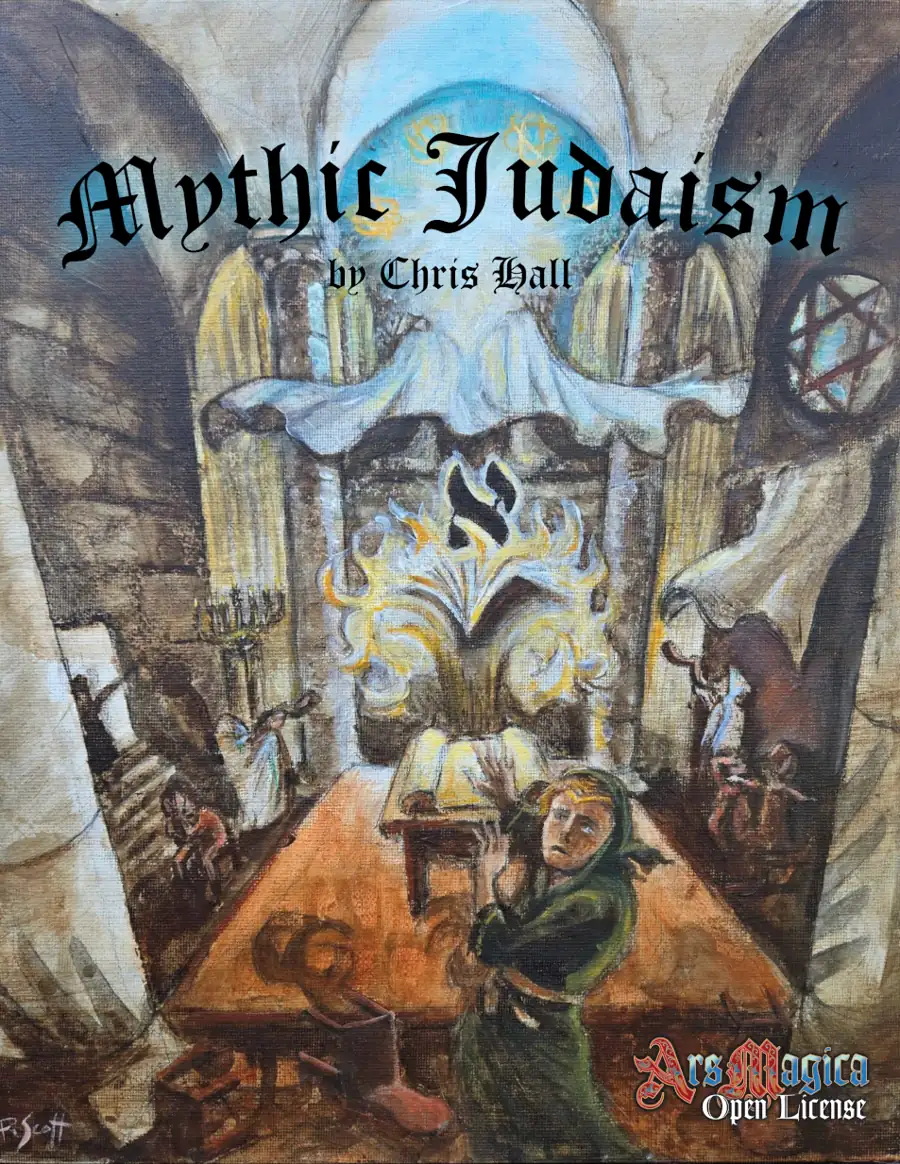
[Let's Read] Ars Magica: Mythic Judaism: Exploring Jewish folklore and culture in a fantasy Medieval Europe!

Libertad

Legend
d24cab9646bd.webp

Drive-Thru RPG Storefront

Atlas Games forum thread that was the precursor to this book.

Title Note: This is a third-party publication for Ars Magica 5th Edition. There's a chapter by the same name in Realms of Power: the Divine, which is available as a free web supplement. An official product for the preceding 4th Edition shares a similar title by the name of Mythic Judaism: Kabbalah. The 4th Edition book focused primarily on the namesake esoteric tradition, and Realms of Power: the Divine covered the 3 major Abrahamic religions rather equally. Mythic Judaism, the third-party book I'm reviewing, has a broader coverage on incorporating elements of medieval Jewish life, culture, and folklore for campaigns.

Ars Magica is a venerable RPG, notable for popularizing the concept of troupe-style games and containing the seeds of foundational concepts for the later World of Darkness. The default playstyle has PCs who are members of the Order of Hermes. This secret society of magicians spans the European continent in semi-autonomous Tribunals, and whose founding members were instrumental in creating a unified magic theory that came to be known as Hermetic magic. A central fixture of an Ars Magica campaign is the covenant, an extended community of mages and their various allies and minions designed by the players and Gamemaster together. Players cycle through the covenant's members on traditional adventures, which are interspersed with extensive rules for downtime as the magi perform various supernatural projects such as extending their natural lifespans, training apprentices, and building magic items. Ars Magica's most recent crowdfunding campaign for the Definitive Edition opened up the entire line to Creative Commons as a stretch goal, starting a promising trend for third-party content. Mythic Judaism is one of the larger and more notable products that came out of this.

When it comes to media portrayals of Jewish people in the medieval era, a heavy emphasis is placed on several key tropes: insular communities which highly prizes intellectualism and scholarly pursuits; disenfranchisement via antisemitic persecution, commonly relegated to socially undesirable jobs involving finances. While such aspects are important parts of Jewish history, a lot of the time we don't get deeper, holistic views on their inner lives and cultural practices. Most fiction views Jews through the perspectives of non-Jewish protagonists, with Jews taking the roles of victims at best, stereotypical villains at worst. The peculiarities of their religion are usually unmentioned save as "Christianity minus Jesus," with rabbis, synagogues, and the Torah inevitably contrasted and compared with Christian equivalents.

Mythic Judaism seeks to provide well-researched details on the daily lives, cultural traditions, and contemporary issues of the Jewish community in medieval times. It also draws upon Jewish mysticism and folklore for a Mythic Europe where magic, monsters, and the otherworldly have an active hand in the world. Its author, Chris Hall, is a practicing Jew, and discusses in an Author's Note at the end of the book of being inspired by the practice of midrash. This involves the creation of new stories from existing texts, and how the setting of Ars Magica is strongly equipped for gaming groups to create such stories via its historical fantasy. Stories that aren't totally realistic, but still have a touch of the real-world.

Mythic Judaism opens up with the basics of the Jewish people and their place in the early 13th century, the default era for Ars Magica. The book does talk about Jewish communities outside Mythic Europe, notably in the Islamic world. The first chapter largely talks about Jewish life and culture as it existed in the real world, with a minimal amount of fantastical details. Due to this, most of Chapter 1 is material that isn't truly "new" and is rather light on mechanical rules.

Jews can be found across Europe and beyond as a minority group. In the first century AD, the Temple in the city of Jerusalem was destroyed via conflict with the Roman Empire, and Jews were forcefully dispersed into a larger diaspora. These events forced the rabbis of subsequent generations to create a new system through interpreting old rules, so that their faith could survive without the important fixture of the Temple. These rules survive as a combination of the Written Torah, the compilation of the first five books of the Hebrew Bible (aka the Tanakh), and the Oral Torah, which are a multi-generation collection of traditions, rulings, and teachings over the centuries. This forms what is known as Rabbinic Judaism, which is the dominant form of Judaism in Europe, although there are other forms of Judaism that exist. A central feature of Judaism is observing the 613 mitzvot, or commandments, given by God for Jews to follow, and cover a wide variety of subjects on how to live one's life. Just like the practitioners of any religion, there are Jews who vary in their adherence. God has many names in Judaism, but most Jews refer to him as Hashem ("The Name") to avoid misusing these holy titles.

Most Christians in Mythic Europe track the years based on the Julian Calendar: 365 days a year, Jesus was born in 1 CE. Most medieval Jews instead use the Selucid calendar, known as the Era of Contracts, placing the starting year as the believed creation of the universe, known as I'briat ha'olam. As of 1220 CE, the Era of Contracts is in its 1531st year, or 4980 years since the universe's creation.

Jewish daily life revolves around the Shabbat, a day of rest that happens every week from sundown on Friday to Saturday night. All sorts of schedules and labor are planned around this, as a broad variety of labor is refrained from performing on the Shabbat. Thursday sees a flurry of activity, such as setting up coal fires to burn for 25 hours in order to cook food. At Friday sunset, men visit the synagogue to pray while women light candles to illuminate the streets, and Saturday morning sees the community come together to pray until noon. Sunset marks Shabbat's end with the Havdalah ceremony, where the scent of wine and spices fills the air.

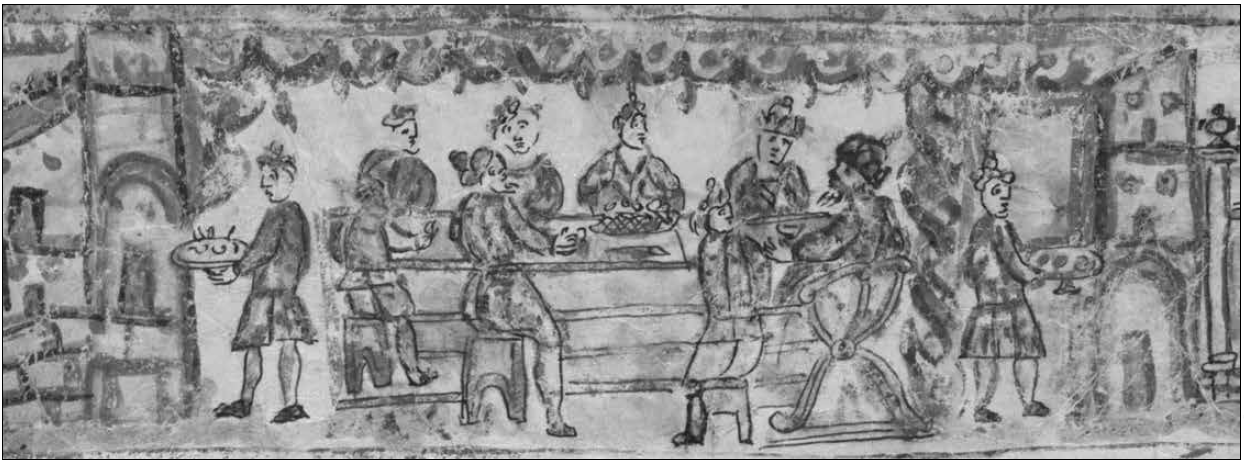
The Jewish calendar uses the cycles of the sun and moon to track time, but a more mathematically-precise method was invented in the 4th century to take into account leap months to keep the calendar in sync with the solar year. This was recently standardized by the scholar Maimonides (also frequently called the Rambam as his Hebrew acronym) in the late 12th century. Major Jewish holidays include Passover (celebrating the exodus from Egypt, is usually celebrated at home with a seder, a meal accompanied by songs and teachings), the 49 days of the Omer (a time where Jews are reserved save during Lag b'Omer, a night of bonfires, and the 2-day holiday of Shavuot to celebrate receiving the Torah at Mount Sinai), Rosh Hashanah and Yom Kippur (2 holidays within 10 days of each other, a time of introspection and repentance and most of the time is spent at the synagogue), and Sukkot (a week-long harvest festival where temporary huts are built for people to reside in while waiting to receive spiritual visitors known as ushpizin for blessings).
9849435926a6.PNG

The next section covers major events in the average Jewish person's life. In Jewish culture, a Jew is defined either as anyone born to a Jewish mother, or one who converts to Judaism. A Jew who fragrantly violates the mitzvot is still considered Jewish, although their actions distance them from Hashem. Newborn male Jews are circumcised after 8 days, meant to represent the covenant between their people and Hashem, after which their parents give them a name. Jewish girls also receive a name around this time, too. Jewish naming conventions usually have a personal name followed by their father's name. Ashkenazi Jews use, "ben," meaning "son of," and "bat," meaning "daughter of," while Mizrahi and Sephardic Jews use the Arabic words "ibn" and "bint" for son and daughter respectively. For example, Miriyam bat Yosef is Miriyam, the daughter of Yosef. Furthermore, Ashkenazi Jews have a custom to refrain from naming a child after a living relative, instead favoring the names of grandparents and great-grandparents who recently passed. Sephardic Jews, by contrast, favor naming their children after living relatives.

The Jewish age of adulthood is 12 for girls and 13 for boys, marking a time where a Jew bears full responsibility for adhering to the mitzot. Boys mark this occasion with a ceremonial reading of the Torah, a practice that will later become known as a bar mitzah. Celebrations for Jewish girls are less formal and vary greatly between communities, and are usually more private affairs. Jews typically wait to be wed several years later, with 18 being considered ideal. Three practices are used to officially bind a wedding: the first a marriage contract known as a ketubah, which is owned by the community that outlines the groom's responsibilities to the bride, and the loss or destruction of a ketubah prevents the couple from marital relations until a new one is made. The second practice is the kidushin ceremony, transferring the responsibility of the bride from her father to the groom. This event involves a canopy known as a chuppah that ends with the couple secluded for a few minutes to mark their marriage. As unmarried men and women are discouraged from being alone together, this represents their symbolic transition into marriage while also giving them some time to relax before more formal ceremonies.

The third practice is the niddah, which occurs after a woman's first menstrual cycle after marriage, where she visits a ritual bath known as a mikvah before resuming relations with her husband. While this practice exists in the Torah, successive Rabbinic laws and customs greatly differ, with some more restrictive rulings imposing a large hindrance for women's participation in the wider community, while other rulings are more lax. This is due to its relation with the concepts of tahor and tamei, or "cleanliness and uncleanliness." Sometimes this is interpreted as a value judgment, but can also mean one's readiness or lack thereof for holy activities, with sexual relations being considered holy.

Divorce is permitted within Judaism, although it is socially discouraged and only a man can initiate it. This is done by the husband giving a legal document known as a get to his wife, where he must pay her a specified amount outlined in the ketubah. Ashkenazi and Mizrahi communities only recognize the divorce if the wife accepts the get, but Sephardic communities can have the man divorce his wife unilaterally.

Jewish burial and funeral customs emphasize the timely burying of corpses. While dead bodies are considered to have a great deal of tamei, or ritual uncleanliness, all Jewish people have an obligation to bury dead bodies that would not otherwise be cared for. Caring for the dead is considered the highest form of kindness, as this is an act that can never be repaid. Most Jewish communities have groups known as chevra kadisha responsible for the caring for and burial of corpses. While embalmers, gravediggers, and similar occupations have a macabre perception in many cultures, Jewish culture considers these jobs to be respected vocations. Jewish funerals are times of mourning, where a person symbolically tears at their clothes upon learning the death of a loved one. A 7-day period known as a shiva is held after the burial, where the mourners' home is open to the community and people visit to comfort and contribute to their care. A 23-day period known as shloshim occurs after, which is less formal, after which the mourning period ends. Unless it's a child mourning the death of a parent, which sees an additional 10 months. Relatives perform special prayers known as a mourner's kaddish, and even non-observant Jews tend to follow it. A loved one's death is marked on the calendar as an anniversary known as a yahrzeit, while on major holidays they commemorate the dearly departed via a prayer known as a yizkor.

The Jewish afterlife speaks of a World to Come, although not all rabbis agree on the specifics of this. Many Jews believe that this World to Come is the world they're living in, and when the Messiah arrives the dead will be resurrected and the Temple will be rebuilt. Such Jews believe that the dead currently exist in the World of Souls, a temporary realm while waiting for resurrection. It is not a fate that one can avert or be rewarded with via moral or immoral behavior. A minority of more mystical Jews interpret the World to Come as a spiritual realm of joy similar to the Christian/Islamic concept of Heaven.
5d4e41824a3c.PNG

The 613 mitzvot guide an observant Jew's life. Most recognize that this can feel burdensome, giving rise to the term "the yoke of the commandments." Mythic Judaism does not give a comprehensive overview on each mitzvot, instead focusing on the ones that have the greatest and most consistent impact on daily life. The mitzvot of prayer, aka tefillah, was created after the destruction of the Temple and thus serves as a replacement for sacrifices that can no longer be performed there. Jews pray three times a day: in the morning (shacharit), afternoon (mincha), and evening (ma'ariv). For practical reasons the latter two prayers are conducted back to back during a service, so most Jews pray two times a day in the morning and at sunset. Each service is made up of several prayers, with the two most important prayers being the shema (prayer while sitting and covering the eyes, affirming Hashem's singularity and connection to the Jewish people) and amidah (silent prayer while standing and facing Jerusalem; consists of blessings to connect to their ancestors, praising Hashem, and petitioning for bountiful harvests).

Jews observe strict dietary laws, with permitted foods being designated as kosher. In addition to restricting what specific kinds of food Jews can and cannot eat, there are other requirements such as milk and meat being served separate and at different times, and certain foods (especially wine) can only be prepared by Jews in order to qualify as kosher. Kosher butchers and vintners are important occupations in Jewish communities, as they cannot be performed by non-Jews.

Another important mitzvot is the forbiddance of evil speech, known as lashon hara. This strongly discourages gossip, which rabbis often compare to murder. As to why, both are irrevocable, for a murder victim cannot be brought back to life and gossip cannot be unheard. Another important mitzvot is charity, or tzedakah, which includes not just monetary contributions but general tasks and errands to help the needy. It is encouraged to do such acts anonymously if possible, to minimize any sense of potential embarrassment for the beneficiary. Helping a person gain employment so they no longer need charity is considered the greatest form of tzedakah.

Due to how many mitzvot there are and how encompassing they can be, rabbis help Jewish communities in performing them, and also establish courts when transgressions against the mitzvot bring harm to the community. Jewish culture greatly encourages studying due to the amount of knowledge needed to faithfully follow them. The Torah is the collected five books of Moses that were given to him by God on Mount Sinai, and are known as the Written Law. The Oral Law was also given to Moses as taught by Rabbinic tradition. This is collected in the Talmud, a weighty series of books that also cover other matters. The Halakhah is the Jewish legal tradition that evolved from the Torah and Talmud, which grows via rabbinic commentaries known as responsa that cover a wide variety of queries and situations. Rabbis have also created broader prohibitions beyond what is strictly known in the Torah. These are known as "fences" for activities that may cause accidental transgressions. There are also minhagim (sin. minhag), representing customs and traditions, although the line between what is a law and what is a custom can be unclear to the untrained eye. As can be expected, Jewish communities across the world have developed their own systems of halakhah and minhagim.
cab7a365a019.PNG

Jews are a minority in Mythic Europe, and may make up just 1% of the continent's total population. They have larger numbers in western and central Europe, particularly the Normandy and Provencal regions of France, the Iberian peninsula, and the Holy Roman Empire. In the Islamic world, many live in Egypt. Jews tend to congregate in towns and cities rather than rural communities and the hinterlands, and in cities in regions with large Jewish populations they may make up as much as 50% of townsfolk. Regardless, Jews have little recourse for self-isolation and must live with their non-Jewish neighbors.

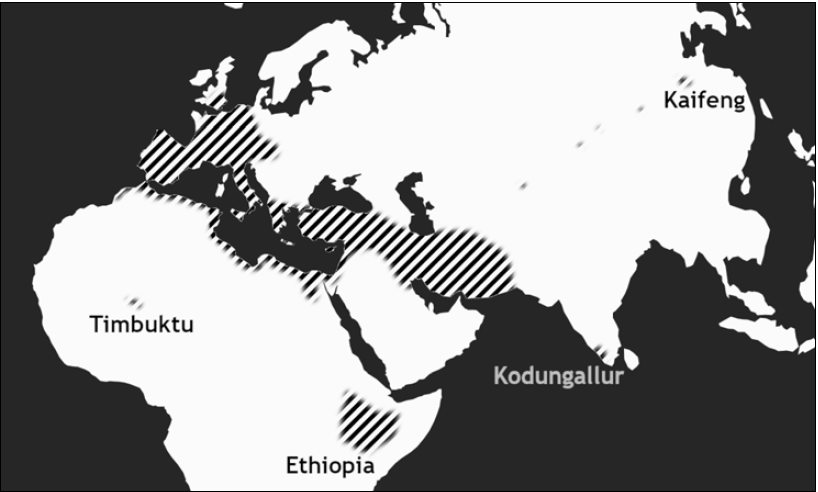
The two major Jewish ethnic subdivisions in Mythic Europe are the Ashkenazi and Sephardic Jews. The Mizrahi Jews are spread throughout the Islamic world. There is some cultural crossover and contact between the three groups, particularly in regions bordering the respective civilizations such as Provence and Egypt. We get a sidebar of other Jewish communities throughout Afro-Eurasia: the Radhanites are Jews who were instrumental in maintaining the trade networks of the Silk Road, with their populations found across Central Asia and notably in the Chinese city of Kaifeng. There's a community of Jews in southern India, focused in the port city of Kodungallur. This city is nicknamed the second Jerusalem due to serving as a center for Jewish refugees fleeing the destruction of the Temple. Many Jewish traders in the Sahara Desert settled in the city of Timbuktu, while a pre-Diasporic community of Jews in Ethiopia is known as Beta Israel. The Ethiopian Jews are the most isolated from the wider Jewish community, with only a few of their number going as far as the city of Cairo. This gives rise to rumors of Jews living somewhere far to the south.

Jewish relations with Christianity are troubled. While Jews understand that both faiths worship the same god, many feel that Christians aren't as strictly monotheist, be it via the concept of the Trinity which many rabbis find strange, or the practice of praying to saints that is often viewed as straying dangerously close towards idolatry. Christian views towards Jews and Judaism are largely negative: many view Jews as a dangerous and alien group who are collectively blamed for the crucifixion of Jesus as well as many other misdeeds, and their refusal to convert to Christianity is viewed as blatant disrespect to their faith. At worst, this can result in acts of coordinated violence known as pogroms, resulting in vandalization of property, murder, and forced conversions of Jews. The most devastating pogroms of recent memory are known as the Rhineland Massacres, which arose in central Germany during the advent of the First Crusade near the end of the 11th Century. While there are some cases of Church and nobility figures being more lenient to Jews or even shelter them from violence, and some communities might tolerate their presence (particularly if they help fulfill a useful trade), on the whole the systems of medieval Europe were intentionally created to disenfranchise Jews.
9fc19e13ed17.PNG

Even in cases where a Christian neighbor might be more tolerant, misunderstandings can still abound: many Christians believe Judaism to be an out-of-date, unchanging religion that hasn't developed since the destruction of the Temple, and are confused that Judaism doesn't encourage the conversion of outsiders. A Christian might be offended when a Jew refuses to eat meat prepared by non-Jews and misinterpret it as ungratefulness, and even a well-meaning Christian might worry about a Jewish friend's immortal soul and seek to convert them.

Jews overall fared comparatively better in Islamic lands during the medieval era. They were still of a lower social class than Muslims due to their status as dhimmi, but said class had various legal protections including the allowance of practicing their own faith in exchange for a special tax. In the early Middle Ages, the region of Babylon was home to prestigious academies for studying the Talmud, with well-respected scholars known as the Geonim penning answers to questions from Jews across the world that helped set important halakhic precedents. In the Iberian peninsula, Jews could even attain government positions. Sadly, this relative tolerance wasn't universal: in 1066, a pogrom in Granada resulted in the massacre of 4,000 Jews, and in 1148 the Almohad government was marked with religious intolerance via a literal "convert or die" policy for non-Muslims that saw the mass flight of Jews from Spain. As of 1220 CE, Egypt is the best place for a Jew to live in the Islamic world. Here, the Sultan not only protects them, but has also allowed the community in Cairo to appoint a leader of their own known as the nagid.

A much shorter entry concerns Jewish-pagan relations, the latter being a catch-all term in Ars Magica for non-Abrahamic faiths. Judaism has strong prohibitions against idolatry, which covers the worship of any entity besides God. These restrictions extend beyond just worship, and produce restrictions on actions where Jews might indirectly benefit from idolaters.

While many Christian and Muslim traditions come off as strange to Jews, they still fundamentally recognize them as not being "pagans." This term was traditionally applied to the polytheistic faiths of Egypt, Rome, and various other civilizations. As of 1220 CE, the only European kingdoms that have significant pagan populations are in the Baltic regions, and even far-flung Scandinavia has been more or less Christianized. Thus, the average European Jew will never knowingly meet a pagan in their lifetime. The major exception, of course, is the Order of Hermes, who despite most of its members being Christian, have many magical practices with pagan origins as well as some covenants being a shelter for pagans long after Europe's Christianization. This has caused some Jews aware of the broader magical community to hold a dim view of the Order, but others understand that there are many magi who worship God and aren't idolaters.

The entry on Karaites is peculiar when it comes to interfaith relationships. Unlike the other religions detailed above, Karaites are a sect of Judaism distinguished from the commonplace Rabbinic tradition. The Karaites are a significant minority of Jews, possibly being as high as 10% of the Jewish population in 1220 CE, with most living in southeast Europe, Egypt, and the Middle East. The Karaite faith originated in the 8th century by Anan ben David, who declared that the Oral Torah was unneeded and that observation of the Written Torah was sufficient. Rabbinic Jews view Karaites as misguided Jews who need to be shown the light to avoid further popularizing heretical practices. This is usually received poorly by Karaites, which causes conflict where the two populations live close together. Most non-Jews don't know enough about the communities to tell the difference, which sometimes results in legal authorities holding one community responsible for the crimes of another and inevitably worsens tensions between the two Jewish groups.

Most of the rules and mechanical text in this chapter are confined to sidebars, with quite a bit directly lifted from other Ars Magica sourcebooks. One sidebar talks about conversion to Judaism, which overall is rare. First is that Judaism is a tribal religion that doesn't emphasize bringing outsiders into the fold, and the religious belief system doesn't reserve divine rewards for the Jewish people alone. God's expectations for non-Jews are much more lax, often referred to as the Seven Noahide Laws. The Jews are the Chosen People in the sense that God has higher expectations for them in bearing the 613 mitzvot. That being said, there is no outright ban on conversion, although the standards for entry are quite high. First off, a potential convert must convince the local Jewish community and rabbis of their sincerity, and prove themselves worthy through months and even years of practice. There's also the fact that apostasy is harshly punished in Europe and the Islamic world, to say nothing of the rights and privileges a Christian or Muslim will give up by becoming Jewish. This is reflected via the inclusion of two Flaws: Jewish Nefesh represents someone who is not Jewish, but whose guardian angels were present at Sinai. This causes the character to feel drawn towards Judaism and thus need to prove themselves to a local Jewish community. In addition to having to gain their trust, the PC can suffer punishment by the dominant society. The other flaw is called Apostate, which isn't specific to Judaism but reflects anyone who publicly converted from one religion to another, which gives a negative Reputation of 4 among members of their former faith.

We also get 3 sidebars for abilities (what would be known as skills in most other systems) important to Jews: Judaic Lore is a general encompassing of non-religious aspects of Jewish culture such as folklore, songs, and local minhagim. Rabbinical Law is the Jewish equivalent to Civil & Canon Law (the legal legacies of the Roman Empire and the Catholic Church), which can be used to create new rulings and explain the justifications behind certain halakhic rulings. Finally we have Theology: Judaism, the Jewish equivalent of Theology: Christianity. This last ability is rather self-explanatory, although the text says that it's less important for a rabbi than Theology: Christianity might be for a priest, as Judaism focuses more on practice than on belief.

We get a new in-universe book known as the Travels of Benjamin, penned by the real-world Benjamin of Tudela who traveled the Jewish world in the 12th century and recorded his findings in a personal memoir. This book is a Tractatus (books that have an in-depth overview of a particular sub-topic) that can teach the reader a variety of Area Lore abilities, along with Dominion Lore due to his frequent visitations to holy sites. Finally, we have a new Virtue called Immunity to Astrology. This is based on a saying in the Talmud that "there is no constellation for Israel," indicating that Jews can escape being affected by the supernatural practices of astrology via prayer, charity, and repentance. This isn't a Virtue that every Jew has by default, and non-Jews can also take for other reasons. Basically, this is a Minor Supernatural Virtue that makes the character immune to a variety of situational things, such as making it so that horoscope doesn't provide a penetration bonus for an astrological caster. The penalty is that someone with this Virtue cannot learn Astrological magic themselves. As most of these rules are referencing sections of non-core sourcebooks I haven't read, I can't say how useful this Virtue is overall.
64050a7a2b83.PNG

This chapter ends with the discussion of Sagas, Ars Magica's term for a campaign. It chiefly talks about how to use the contents of Mythic Judaism in one's games, mostly focusing on the presence or lack thereof of Jewish PCs. Even in campaigns where there are no Jewish members of a covenant, they may still come into contact with Jewish individuals and communities via adventure hooks and plots, and sagas set in regions home to significant Jewish populations suggest that most Hermetic mages will have had relations with and be aware of said communities. For campaigns with one or several Jewish PCs, the book talks about considering what the player is hoping to get out of it and where they're coming from. Jewish players might be striving for representation and connecting with their heritage, while non-Jews might seek to understand and immerse themselves in another culture via roleplay. The book talks about how to handle themes of antisemitism and to what extent such elements should be present in a saga. The author notes that such bigotry is not a thing of the past and still occurs today, and for this reason some subject matter should be approached with care. It also talks about how having campaigns where antisemitism isn't an element are also valid, and cites Michael Chabon's Gentleman of the Road as one such story for inspiration. That said, the book says that antisemitism as a saga element can be rich with storytelling possibilities, but players deserve to know if "their character is going to be put through the antisemitic ringer before they step into the roll."

Finally, there's the saga where all major characters on the player side are Jewish. This talks about how Jewish wizards and their allies have an increased incentive to band together. Furthermore, as many religious aspects of Judaism require a minyan (a group of at least 10 Jewish adults, traditionally men), this can cause Jewish covenant members of otherwise different social classes to meet up more frequently. The book also talks about how despite legal restrictions and common archetypes, Jewish PCs can come from a variety of roles. There is of course the rabbis and baal shem, whose faith is vital to their occupations, and various kinds of merchants, but it also isn't out of the blue for a Jewish PC to be of a martial occupation such as a former town guardsman. Jews of varying levels of religious observance can feasibly group together if only for a sense of community and protection from the wider world. At the very least, a Jewish-majority covenant will have accepted rules for Shabbat observance in public spaces, kosher-friendly kitchens, and prayers twice a day. The book teases us with mentioning a sample covenant in the sixth chapter of this book.

Thoughts So Far: Most of what we learn about Christianity in medieval Europe, and medieval fantasy in general, is easily absorbed through cultural osmosis. Even when one is not seeking to do deep readings on Catholic doctrines or Bible study, most media gives a good overview on things like the serving of bread and wine via the Eucharist, minor gestures of faith such as rosary crosses, and how it's common to pray to saints as well as God and Jesus. So when it comes to knowledge about Judaism and other faiths, a lot of what we take for granted often has to start from square one. This relatively short chapter manages to pack a lot of important information into its contents. By focusing more or less on "the real world" instead of immediately diving into Ars Magica's more fantastical aspects, we get a clearer picture on how a medieval Jewish community is "supposed to look" by default. I also appreciate how the sourcebook highlights the religious and cultural differences in the Jewish world, illustrating that their minority status and oftentimes insular nature doesn't make them a more monolithic group. Compare this to the more numerous Christians and Muslims, whose divisions are more generally well-known. My only major criticisms for this chapter is that some subjects don't get detailed writeups until much later. For example, the mikvah and its importance is discussed more sufficiently in Chapter 5, which details cities with prominent Jewish populations, while a more detailed writeup on the Talmud is found in Chapter 4, which focuses more on sample adventures and encounters. While such information can be found in this book, it feels like it would have made more sense to instead put them in the introductory chapter.

Join us next time as we learn about various supernatural traditions in Chapter 2: Jewish Magic, from the folk practices of Segulot, the Ba'al Ov necromancers, and Kabbalic mystics!
 
Last edited:
log in or register to remove this ad

f1df4e6b869e.PNG

For those unfamiliar with the Ars Magica line, some base explanations are in order. The supernatural is divided into four broad Realms of Power: the Divine, which covers the Abrahamic God and his holy influence, from saints to angels; the Infernal, which covers Satan's minions and various forms of "black magic," such as undead and curses; Faerie, which covers otherworldly beings forming the personification of human stories; and Magic, a little-understood Realm that reflects metaphysical ideal forms of mundane things. While largely separate, there are times when the Realms can overlap, such as magical powers becoming tainted towards sinful use by hellish influence. A concept known as the Dominion occurs where a large enough number of those faithful to the Abrahamic deity gather, creating an aura that diminishes the power of non-Divine sources. As most population centers in Mythic Europe and the Islamic world worship God and are home to churches and mosques, magi tend to live away from towns and cities in order to better practice their magic.

Furthermore, the fundamentals of Magic are an ever-evolving science, where new discoveries and breakthroughs turn earlier understandings on their head. Bonisagus, the founder of the Order of Hermes, developed an encompassing body of knowledge known as Magic Theory that weaves disparate traditions into a unified discipline. Spells that make use of Magic Theory are known as Hermetic magic, and practitioners of non-Hermetic magic are informally referred to as "hedge mages." The capability to perform magic is something a person is born with, known as the Gift, but exactly what causes it is currently unknown. This means that there are many characters who, while not being magi or Magic-users proper, can still call upon supernatural feats such as shapechanging or summoning spirits. Even so, Hermetic magic has many distinct advantages over non-Hermetic powers, namely in the versatility of its Arts (a verb/Technique + noun/Form bringing about a desired result) and the Parma Magica. The latter is a ritual that magi can use to defend themselves against spells. It is knowledge of this ritual that the Order of Hermes polices closely; any mage who learns it that isn't a member of the Order will be forced to join or be hunted down and killed.

The Order of Hermes is the most prominent society of mages in Europe. They are divided into 12 Houses, representing subgroups who are united by a common tradition of teacher-apprentice dating back to the founders (True Lineages), adherence to a mystical and/or philosophical ideal (Mystery Cults), or a common ideology (Societas). While the general public of Mythic Europe are aware of the existence of mages, knowledge about the Order and the particulars of magical practices are largely unknown. It's largely the nobility, clergy, and rival magical orders who have slightly clearer knowledge about the Order itself.

With that brief overview out of the way, this chapter covers how various Jewish mystics, magi, etc have approached the various Realms of Power. We get new character options for the non-Magic Realms in particular, while for the Realm of Magic it primarily discusses commonalities in observant Jews' relationship to spellcasting and the Houses of Hermes.

Divine Magic is our first and most involved section, its 3 traditions representing various miraculous works by faithful Jews via their study and observance to Hashem. Most notably, these traditions use a number of alternative values for spell range, duration, and targeting than the core rules. Such alternatives explicitly draw upon Jewish religious and cultural practices. For example, the Duration of Shavua replaces the typical Sun (1 day) duration by making a spell last until the sun dips below the horizon on Friday evening, meaning it can last for up to 6 days if cast on Saturday night. While the Shema Range modification makes a spell affect the people and place where the magi last said the Shema prayer. As can be expected, quite a few of these modifications are superior to the standard Hermetic values, but often have more restrictions on the spell's initial use and maintenance.

Each Holy Tradition takes the form of a free Virtue indicating a unique social status, granting access to four Favored Abilities. Abilities are Ars Magica's equivalent to what would be skills in most other RPGs, meaning that they have numeric values which can be increased in number, and therefore effectiveness, with experience points. Although most of the Divine tradition's Favored Abilities are from Realms of Power, the Divine, Mythic Judaism helpfully copied the text for the relevant mechanics and put them in one of the appendices of the book. Generally speaking, holy powers follow a similar format as Hermetic Magic. Whereas Hermetic spells are split into Technique and Form to create a desired result,* Miraculous Abilities are split between Methods (what the caster does to produce the effect) and Powers (what can be done with the effect). For example, Craft Amulets and Dream Interpretation are both Methods, while Blessings and Understanding are both Powers, while for Hermetic magic, the Technique of Perdo (I destroy) and the Form of Ignem (fire/heat/light) can be used to douse flames or darken a room.

The Ba'al Shem, or Masters of the Divine Name, are wonderworkers who use the many names of Hashem and various angels to accomplish great feats, using their powers to help the needy in their local communities in a manner similar to folk magicians. Many rabbis and scholars are suspicious of them, but Ba'al Shem are broadly popular with the common people. Their tradition is usually passed from father to son, although there are a growing number of women inspired by the example set by Rashi's daughters, whose father was an influential Talmudic scholar. Their Abilities are Adjuration (Power, controlling and banishing supernatural creatures), Blessing (Power, protective magic), Craft Amulets (lets you create amulets imbued with holy powers to aid the wearer), and Invocation (Method, calling upon God's name to enact various miracles).

The Sho'ali Halomot, or Dream Questioners, is the second Holy Tradition. They are inspired by figures in the Torah who gained great insight from their dreams, and their movement was founded by Hai ben Sherira Gaon, the head of the Talmudic academy in Pumbedita, Babylon. The Dream Questioners are usually women or gay men, and are common in Ashkenazi and Mizrahi communities. They usually call upon their magic to help foster relationships and community bonds, and thus tend to take on the duties of matchmakers and midwives. Sephardic rabbis are less tolerant of the practice due to opposition against spiritual practices without a clear explanation, and some Ashkenazi rabbis claim that female Dream Questioners are monsters in disguise to try and drive them into hiding. Some rabbis, particularly in the north, are more tolerant, and have used the dream magic to aid in halakhic rulings.

Sho'ali Halomot have Blessing, Craft Amulets, Understanding (Power, what would be divination magic in D&D and other RPGs), and Dream Interpretation (perform a ritual prayer before sleeping, contemplate the dreams to grant a bonus on rolls to someone else seeking your aid) as their four Favored Abilities.

Regarding amulets, we do have a sidebar making reference to a real-world medieval love charm and game statistics for it. It was crafted by Yehudah bar Yoshiya, a gay Egyptian Jew who was in love with a local man known as Hodaya bar Shlomo. Yehudah sought to make Shlomo fall in love with him by covertly sewing the amulet into the clothes of his intended target. Given the problematic implications of love potions and similar fantasy tropes, it feels a bit…icky to make this into a game mechanic. At least clear it by your gaming group first!

The Kabbalist is our final Holy Tradition, representing students of the Kabbalah, a form of Jewish mysticism dedicated towards studying Hashem's nature in order to learn powerful magic in order to aid the Jewish community. The study of Kabbalah is a dangerous path, meaning that most research occurs alongside a student partner in a relationship known as a havruta. Their four Favored Abilities are as follows:

  • Ceremony, a Method where you gather a group of people together in order to enact miracles
  • Gematria, an alternate form of the Method of Meditation. This grants understanding of reality via knowing that Hashem used numbers to create the world, and each letter in the Hebrew alphabet has an associated number.
  • Kabbalah is an alternate form of the Method of Invocation, which involves study of the Sefer Yetzirah text which teaches that Hashem created the universe from numbers, writing, and speech. An arrangement of divine pathways known as the Sefirot connect Earth and Heaven and form a metaphorical Tree of Life.
  • Merkavah, an alternative to the Method of Purity, where you study the names of supernatural creatures to learn their True Names enact supernatural contact with them.

The Kabbalist tradition is a bit different than the others. First off, you might notice that its Favored Abilities only include Methods and not Powers. Well, they can select two Powers of their choice. Additionally, the Kabbalist is a Mythic Companion, meaning that while they are not Magi, they are considered powerful enough that they take the space of a Magi PC in a troupe for the purposes of party makeup. Furthermore, the Kabbalist Virtue has several prerequisites, unlike the others. They must take Virtues for at least one Holy Method and two Holy Powers, and need a minimum score in several knowledge-related abilities reflecting their scholarly status: Artes Liberales, Dominion Lore, Hebrew, Judaic Lore, Theology: Judaism, and Rabbinical Law.

Thoughts: The Traditions heavily borrow from mechanics in an official sourcebook, but as the apparent bulk of said mechanics are conveniently placed in this book's Appendix, this makes their use more reliable. From my rather inexperienced view, the Holy Powers and Effects appear to have the general broadness of Hermetic magic albeit recentered around Biblical miracles. As one doesn't have to necessarily be a Magi to take said Virtues, they could make for some decently powerful Companion-level PCs. Of course, I have yet to play in an actual Ars Magica saga (something I hope to change very soon) so it's hard to tell how well these Divine powers stack up in actual play. That said, I do like how each Tradition is based on and draws heavily from a real-world form of mysticism or folklore, which helps ground them in the historical fantasy of Mythic Europe. The alternative Range/Duration/Target values are ones I like a lot, and there's a sidebar later in this chapter giving advice on how Hermetic mages might incorporate it into traditional magic as scientific breakthroughs. Such research will require establishing close ties to a Jewish community, which is a good built-in adventure hook.

40d3bc623541.PNG

Infernal Magic represents forms of sorcery that even the most liberal-minded rabbinic authorities would ban. The Witch of Endor is perhaps the most famed practitioner, who aided King Saul in summoning spirits for otherworldly guidance. The Ba'al Ov is the most widespread Infernal magical tradition among Jews. They are necromancers who learn to summon ghosts and bind angels to their will in defiance of Hashem, and thus are almost always outcasts living on the margins of Jewish society. But there are Jews who tolerate them for their powers: being able to speak to one's dearly departed is a powerful draw, even if it is forbidden, and gleaning knowledge from the deceased has practical uses. Ba'al Ov typically incorporate body parts of corpses for their work, notably bones and skulls, drawing on their uncleanliness for power.

In terms of game stats, a Ba'al Ov is a free social status Virtue, and they gain access to supernatural abilities related to summoning and taking control of otherworldly spirits. The bulk of such abilities are more clearly explained in Realms of Power: the Infernal sourcebook, but generally speaking they are a preparation-heavy tradition that focuses on amassing supernatural minions to do their bidding. Summoning isn't instantaneous and requires a variable amount of time to do, with minutes at the minimum. So they typically aren't going to be calling up armies of ghosts right in the middle of combat. But for some outright new information, there's a sidebar discussing how a Ba'al Ov is capable of summoning a person's yetzer hara, which is basically the inclination to evil that exists in all of humankind. In order to do this, a Ba'al Ov must know the True Name of a person whose yetzer hara they seek to summon. In Judaism, yetzer hara are literal necessary evils, for while they represent one's worst impulses, they are necessary to motivate one towards important tasks and goals. A person who loses their yetzera hara has their Personality Traits removed and gains Listless +3 as a new Personality Trait.

Thoughts: Spirits are a pretty broad grouping of entities in Ars Magica, so a Ba'al Ov can make for a decent "black magic" character. Their main flaws are that their powers are the type that don't lend themselves well to "seat of your pants" spellcasting, and their use of the Infernal and foul reputation means that for PCs they will not be suitable for many campaigns. As its Favored Abilities aren't repeated in Mythic Judaism, you won't be able to use the Ba'al Ov by themselves unless you read Realms of Power: the Infernal, which is a point against them.

caa7cf2fbb60.PNG

Faerie Magic is drawn from mortal belief and imagination, commonly in the form of folk practices and faerie tales which are then given reality. Many rabbis disapprove of folk traditions, fearing that they veer close to idolatry, but nonethless such things remain popular among many Jews. The most iconic practice of Faerie in Jewish culture is Segulot (sin. segula). Almost every Jewish community has at least one practitioner, which is traditionally passed from mother to daughter. A segula is a specific type of magical effect that is split into two broad categories: Hazak, which grants various protective and beneficial effects, and Nashim, which is magic suited towards aiding in women's affairs. Both categories can be learned as their own Minor Supernatural Virtues, which give knowledge of an Ability of the same name that can be improved via experience points. Learning a segula is more a social activity than a scientific one, where in addition to learning via a teacher, the practitioner can also learn them via interaction with community members by observing their various superstitious practices.

Virtually all segulot are positive in nature and thus can only be performed on willing targets. The Hazak and Nashim abilities both have tables of suitable guidelines for designing one's segula, in much the same manner as Hermetic spells are designed in Ars Magica's core rules. Examples include bonuses on various Abilities such as Awareness for finding a lost or stolen item, baking a key-shaped bread which if consumed grants a +1 bonus on Craft and Profession rolls for the next year, giving money to a traveler with an instruction for them to donate it to a charitable cause and their journey is blessed with good weather, or distributing wine during Lag B'Omer where those who drink it gain bonuses on rolls to recover from disease. This last example is based on a real-world tradition performed at the grave of Shimon bar Yochai, a famous rabbi from the 2nd century.

Thoughts: Segulot appears to be the most situational and easiest-to-understand form of magic in this chapter. The Abilities are more limited in scope, although they strongly match up with the flavor of "wise women" folk magic. They are the types of everyday spells that can endear the character to the community. For these reasons I like it a lot, even if it may not be as attractive an option for many players as others in this chapter.

Hermetic Magic is different from the other entries in this chapter in that it doesn't provide any new traditions, spells, or supernatural Abilities, instead focusing on Jews who have been apprenticed by magi of the Order of Hermes. Furthermore, it discusses how they reconcile their religious and cultural traditions with said Order as a whole.

The Order of Hermes has its roots in Greco-Roman paganism. While the majority of its members are Christian, the founder Bonisagus used research material recovered from the Cult of Mercury to pave the way for his universal theory of magic. Over time other founders and magi added their own collective contributions, a lot of which derived from non-Abrahamic sources. Thus, many Jews aware of the Order of Hermes believe that these wizards are drawing from idolatry, even indirectly. As Judaism also prohibits Jews from benefiting from others performing idolatry in addition to not doing it themselves, this is a common concern. Such concerns might be mollified upon learning that the organization doesn't mandate any particular religious beliefs for its members, and most are Christian and not pagan. That being said, most Jews who are fine with magic will be uncomfortable around actual pagan magi, and take pains to avoid joining covenants with such practitioners. Obviously, certain spells and rituals that call upon entities who claim godhood are viewed as highly dangerous.

That being said, there are more nuanced views. Bonisagus and other magi stripped the Hermetic Arts of pagan trappings to various degrees, and the founder even drew from Jewish magical practices for his unified theory. Thus, many Jews debate to what extent Hermetic magic can be safely used. The book talks about how debate is a major component of Judaism, referring to how the Talmud recorded minority and dissenting opinions of rabbinic disputes in addition to the consensus rulings, and how such rulings can reverse over time. And that's saying nothing of different Jewish groups can come to different conclusions. The book mentions that Jews can vary wildly in their observance of their own religion, such as a Jewish magi having no qualms against working magic but still chooses to keep Shabbat.

Additionally, the rarity of the Gift and magi in general means that it's common for apprentices to be taught by mentors from different cultural and socioeconomic backgrounds. Sometimes magi resort to kidnapping children, and even those who are voluntarily given up for adoption by their parents often lose touch with their family due to the Order's intensive 15 years of apprenticeship. The fact that even adult magi don't gain true emancipation until completing a trial known as the Wizard's Gauntlet means that many Jewish magi taken on as apprentices will grow up separated from their culture well into adulthood. They may either return to their roots after their Gauntlet, or move away from their heritage entirely.

For Jews who achieve independence post-apprenticeship, those who opt to no longer practice Hermetic magic will doubtless be interviewed by Quaesitors (think magical police) to avoid being hunted due to their knowledge of the Parma Magica. Naturally, societal anti-Semitism will create suspicions of Jewish ex-magi teaching the ritual to other Jews, thus coming up with a justification for their execution. Although such a scenario has yet to happen and is currently a theoretical fear. Most Jewish magi, however, try to find ways to continue using their magic and living as authentically Jewish, using examples of great sages using magic in Jewish history to justify its use. In fact, the book has a sidebar referring to Rabbi Eliezer in the Talmud, Sanhedrin 68b, using magic. It gives an in-universe tract by what appears to be a rabbi or Jewish magus coming up with a justification for learning sorcery, namely to learn it in order to better understand it and thus make halakhic rulings regarding it. In fact, it's quite common for Kabbalists to say that sages in the Torah and Talmud are using a unique form of holy magic, although the Talmudic texts implies that they're actually learning secular magic to make aforementioned rulings. That being said, the 613 mitzot are just as binding on magi as mundanes, so using magic to labor on the Shabbat is still not allowed. For example, using teleportation to travel between towns is no different than using a horse to do the same thing.

When it comes to observant Jews and the 12 Houses of Hermes, the book explains commonalities why they would find each House appealing and what difficulties they might have as members. For example, House Merinita's close relationship with faeries can be troublesome, given that Judaism doesn't have a concept of Fae and many of these powerful beings are prone to pretending to be gods. But Judaism's affinity for the natural world can be a good fit with the House's use of nature magic. House Mercere is the most strictly aristocratic in its membership via restricting membership to a literal as well as metaphorical bloodline of masters and apprentices. But it's possible for a Jewish mother and Redcap father to produce a child who would be both halachically Jewish and qualify for House membership. Most other Houses present positives and negatives in a similar manner. For example, many members of House Guernicus are devout Christians, but their focus on legalism mixes well with Judaism. As for House, Verditius, their use of magic tools bears resemblance to practices that the Talmud deems dangerous, but they give relative freedom to their members to do their own thing. Adding onto House Verditius, jewel cutting and goldsmithing are common occupations for medieval Jews, meaning that Gifted Jewish children of such artisans are often taken by Verditius magi.

If anything, Crimson is indirectly listed by the book as the least suitable House for an observant Jew. This is due to the founder Empedocles' teachings about time being a cyclical prison, which the book says clashes highly with Judaism. Ex Miscellanea is overall the most Jew-friendly House on account that it's designed explicitly to be a big tent with an easy barrier for entry, to say nothing of the fact that one of its prominent factions is a group of Karaite Jews, plus one new faction in this very book! But of course, there are magi in this big tent whose traditions draw from idolatrous practices, which can lead to tension.

Thoughts: Given that most PCs in Ars Magica are going to belong to or be heavily involved with the Order of Hermes by default, this is the most useful section of Chapter 2. I like how it discusses common points of contention as well as justification for Jewish attitudes towards magic use. While I liked the overview of each House's suitability for observant Jews, I don't necessarily agree with all of the arrived-at conclusions. I do understand that the author wanted to err on the side of player freedom in weighing reasons why a Jewish magi might be able to opt in, while also weighing reasons why they'd have difficulty. But some of them feel like they'd be harder than others. For instance, Flambeau's heavy association with the Crusades has the book pointing out that many Jews are obviously afraid of them. The book's counterbalances outline how many Flambeau are more interested in fighting supernatural evil instead, and that a Flambeau Jew could use their skills to become a great hero in defending Jewish communities. So when the book says that House Criamon is pretty much unsuitable for an observant Jew at all, it does make me wonder why the concept of time being a cyclical prison would present more difficulties than, say, the House full of literal Crusaders.

3118346f9828.PNG

Holy Magic is the final entry in this chapter. Unlike Divine Magic, it is still technically Hermetic magic, but reshaped to more thoroughly purge pagan influences from it and replace them with Kabbalist practices. Holy mages aren't strictly Kabbalists in that their powers are still firmly within the Realm of Magic. In terms of rules, Jewish Holy Magic is similar to but different from the default form Holy Magic in the Realms of Power: the Divine sourcebook. It is a Major Supernatural Virtue that makes it so that the magi's powers can work within the Dominion, and it is up to the GM whether it can be purchased at character creation or gained later in play. Jewish Holy Mages effectively relearn all of their spells. They cannot pick and choose some spells to be Hermetic and others to not be, and suffer penalties when learning and teaching magic from traditional Hermetic sources. They also cannot use Hermetic words and gestures, which applies a penalty to spellcasting rolls unless they have an appropriate Virtue such as Subtle Magic, but cannot cast spells silently as recitations from the Book of Psalms (tehillim) are vital. One way around this is that while part of a minyan, the mage can make a roll to see if they can avoid said penalties for the rest of the day. They can draw upon the gestures used by Holy Methods as an alternative to avoid the gesture penalties.

Finally, holy mages have moral limitations to their spells. If they break a mitzvot while using holy magic, they will become unable to use spells for a number of days determined by a die roll, and can lose spell use if they commit more serious transgressions (with magic or mundanely) such as murder, idolatry, or breaking Shabbat. The book notes that the Divine doesn't expect mortals to be perfect and that a single transgression will not permanently make them lose magic, but repeated failings should accrue more significant penalties. A holy mage can regain the use of their magic by repenting on Yom Kippur via a die roll and assistance with a rabbi.

Our chapter ends with a new tradition part of House Ex Miscellanea: the Many-Branched Tree, which incorporates Jewish Holy Magic among its practitioners. The Tradition was founded by Baruch ben Shlomo, a former magi of House Jerbiton who was mentored by a non-Jewish magi. He went over to House ex Miscellanea after returning to Judaism later in his adult life. After connecting with a rabbi mystic who helped him find ways to live faithfully with his magical talents, he eventually formed this tradition, its name inspired by the Tree of Life from the Kabbalah. The practice of Jewish Holy Magic is still very new, and only a handful of magi know of it at best, so the Many Branched Tree is very small at around half a dozen members. Currently, it helps locate Jewish magi mentored by non-Jews in helping return to their roots, as well as finding and teaching Gifted Jewish children. We get rules for it as a House Tradition, as well as what it takes for characters later gaining the Tradition's Virtues and Flaws during actual play. The Tradition is open to any magi who are practicing Jews, but the more significant benefits require successively higher values in relevant Abilities such as Hebrew and Rabbinical Law. The book also provides a new Major Flaw called Shabbat Minyan, where the magi cannot cast spells or use magic items if they don't participate in a minyan during their most recent Shabbat. The book notes that this means that Jewish Holy Magicians keep close to Jewish communities, as their magic is dependent upon community ties and observances.

Thoughts: Jewish Holy Magic builds upon the existing rules for general Holy Magic in Realms of Power: the Divine, so you'll need that sourcebook to make full use of it. I really like their flavor, and the practice makes a lot of sense for someone trying to find new ways to live righteously as a mage despite the common prohibitions of their faith.

Thoughts So Far: I outlined my individual thoughts for the various entries above, but overall I like the magical traditions in this chapter. It would've been easy to consign them all to a single realm such as Magic or Divine, or just come up with entirely fictitious and general traditions. But the book went for a more holistic view for each of the four Realms of Power, and I like how the book makes reference to real-world historical figures as well as excerpts and references to the Talmud on how this shapes Jewish attitudes towards magic. The author clearly did their homework, and the material here makes for a good springboard for understanding how an observant Jewish magi would approach the supernatural in comparison to say, a devout Christian.

Join us next time as we get a sampling of Jewish Characters in Chapter 3, from anti-establishment rabbis to transgender Kabbalists!
 
Last edited:
659ca3b57727.PNG

This chapter provides a half-dozen characters who have built-in motivations for interacting with and joining a covenant of Hermetic magi. They are even built to serve the role of PCs, should that be desired, with an even number divided between grogs (red shirts/background characters), companions (important characters who aren’t magi), and magi (one of them is a Mythic Companion rather than a magi proper, though). Several of these characters have backstories relating to particular regions in Europe, especially evidenced by the languages in which they are fluent. For example, Shmuel ben Jehiel is fluent in Yiddish and has Lore abilities pertaining to Western and Central Europe, while Leah bat Yehudah is fluent in Ladino and is partially proficient in Spanish. The book highlights Customization Notes for every character to change such details for sagas set elsewhere, among other things.

I did notice some errors in these stat blocks. For example, Hannah bat Yitzchaki has the Educated (Hebrew) Virtue listed twice, even though you can only take a Virtue once unless it explicitly calls it out. Josef ben Yitzhak is called “Josef ben Yitzhaki” in his stat block. While this is a one letter difference that can be easily overlooked, Yitzhaki is the surname for Hannah which can provide some confusion given that these characters aren’t related. Additionally, with age comes experience in Ars Magica, meaning that the cap on a maximum Ability value is dependent on a (human) character’s age. In the case of Josef ben Yitzhak, his Single Weapon Ability is 6, but being 23 years old it should be capped at 5. I have noticed this Ability error in official sourcebooks as well, so I’m unsure if this is just a commonly-repeated error or I’m missing some loophole in the rules.

Shmuel ben Jehiel is our first Grog-level character. He is a middle-aged rabbi who is a great scholar, but rather unpopular due to his desire to create new halakhah in ways he feels would be beneficial to the Jewish community. In particular, he wishes to expand the allowances for the tal u-matar, or prayer for rain, to occur during months more suitable to the northern climate. Given that weather is of central importance to agricultural economies, the occurrence and frequency of rain can be a literal matter of life or death.

While this is a reasonable position, and the book even has sidebars talking about real-debates among medieval Jews for this very subject, Shmuel has terrible social skills. He doesn’t care for dissenting views, and he was swiftly exiled from his own community. He eventually found his way to a Hermetic covenant containing Jewish members. In terms of skills, Rabbi Shmuel is first and foremost a scholar, well-versed in the Jewish faith and culture along with a variety of other academic abilities. He can serve as a scribe, knowing Latin as well as Hebrew. But as can be expected, Shmuel’s social Abilities are minimal and he shouldn’t be the party face. It will thus be up to the rest of the party to convince the local Jewish community to change their prayer for rain when a devastating drought comes along. If the party uses magic to solve the drought, Shmuel will be angry and devastated at losing the opportunity to get people to change their ways, and might even denounce them publicly as wizards.

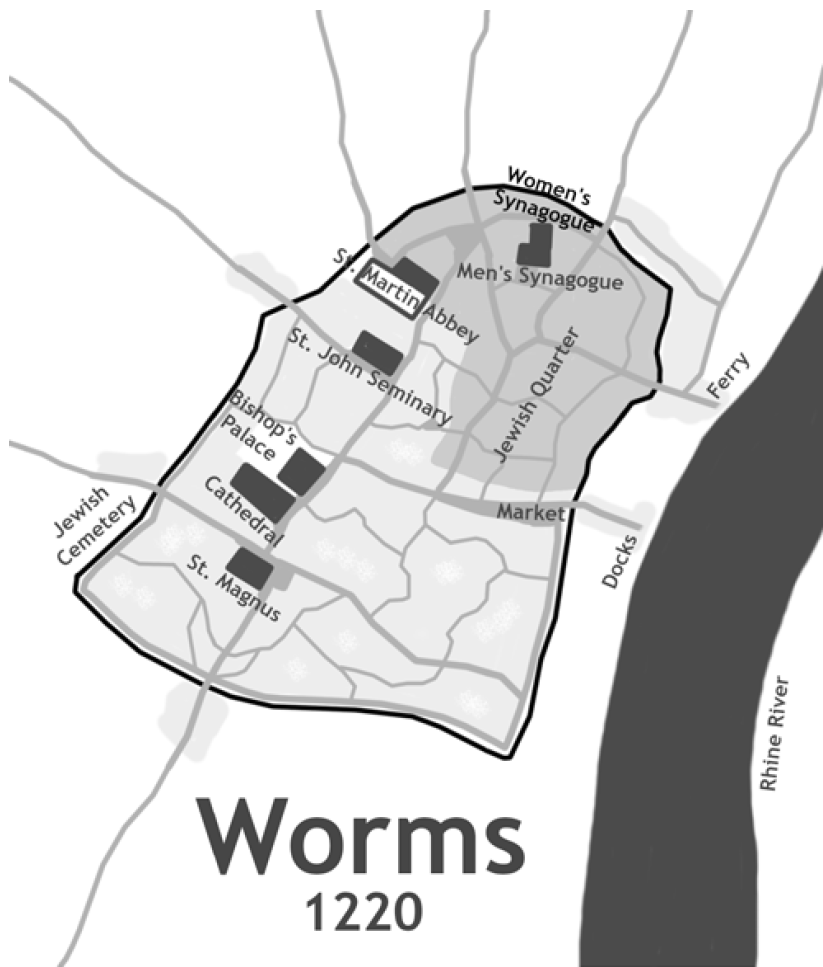
Josef ben Yitzhak hails from the city of Worms in the Holy Roman Empire. He was infatuated with the life of a city guardsman and the martial arts, with such flights of fancy making him a poor student at beit midrash (building for Torah study). His father resigned to the fact that Josef was a lost cause and let him join the guard, where he performed admirably during a siege when the forces of a nearby lord declared war on the city’s bishop. When peacetime came, Josef set out for more adventuresome pastures, eventually making his way to a Hermetic covenant. Josef is a grog of the classic “wizard’s bodyguard” variety: vastly favoring physical Abilities, although he does have some middling ranks in a few social Abilities such as Carouse and Folk Ken. While he is rather dim and reckless, Josef is a faithful Jew, which can be a story seed when it conflicts with his job, such as not eating pork rations or failing to report for duty on Shabbat. The book says this can either be played for humor or serve as a more serious observation on the difficulties of Jews integrating into a Christian society.

e21aca8126b0.PNG

Hannah bat Yitzchaki is our first Companion character, who was blessed with a happy marriage and three children. Part of the lineage of Rashi, her grandmother taught her both how to create protective amulets and Torah scrolls. Her days of domestic bliss came to an end when a pogrom attack happened early in the morning. Hannah was split from her family during the violence, and managed to escape with but a single Torah scroll saved from the fires. Although she never learned what happened to her husband and children, it is commonly believed that they perished.

Hannah is an agunah, a woman who is still legally considered married in the event of a husband who went missing or refuses to grant a divorce. While she wishes to remarry, halakhah forbids this until her husband is officially declared dead by a beit din, or Jewish court consisting of three observant men who are usually rabbis. Unless this happens, Hannah cannot remarry or fully reintegrate into Jewish society. Thus Hannah left her community and joined a wizard’s covenant, where her skills in amulet making, scribing, and social acumen make her a valued asset. As can be expected, Hannah’s subplot revolves around finding closure to her family. The book notes that there is precedent in the Talmud for declaring someone dead when evidence points to this as the likeliest conclusion: “If a person fell into a pit filled with snakes and scorpions, one may [declare him dead], since it is certain that they killed him.” But the book notes that men of foul intent could sabotage this process by spreading rumors and lies as to the husband’s possible survival in order to delay the ruling. This was typically done in the real world in order to financially exploit or blackmail an agunah, and while obviously viewed as deplorable, powerful men can get away with it.

In terms of stats, Hannah is pretty much a noncombatant focused on knowledge and social Abilities, with her standout capabilities being able to craft supernatural amulets of minor supernatural abilities. We get a sidebar for three such amulets, such as painting a wooden token in blue paint to grant the owner a bonus on rolls to Soak damage, or firing a clay tablet containing a medicinal herb in order to help someone recover faster from wounds for a week. I did notice a contradiction in Hannah’s entry. Her husband is initially referred to by the name of Judah, but is later referred to as Jacob.

Dinah bat Eliezer is our second Companion, a widow who inherited her father’s mercantile business, using the profits to reliably secure goods valuable to the Jewish community such as kosher wine and Shabbat candles. While she had her fair pick of suitors, Dinah found herself happier as an unmarried woman. While this, along with being afflicted by the Evil Eye, would normally cause social ostracism, she had a reputation as a good soul who always sought to do what’s right which kept her in the community’s good graces.

But not everyone is so accepting. In particular, the Countess of Champagne was one of Dinah’s debtors, and like so many cases of medieval antisemitism, the noble decided to get out of paying what she owed by threatening violence upon the Jewish community. Dinah knew that these weren’t empty threats, so she left her hometown to take refuge in a Hermetic covenant. She has good business and management skills and can serve the role of a covenant’s chamberlain or steward, but her social skills and contacts make her more valuable in the wider world. Dinah isn’t as observant as other Jews, mostly keeping kosher and resting on the Shabbat. She also has the Second Sight virtue, making her aware of various unseen supernatural phenomena.

We also get a sidebar expanding on the concepts of Yezter Hatov and Yetzer Hara, which I briefly touched upon in the prior post. These concepts represent the moral dualities present in all people. The Yetzer Hara is the inclination to evil deeds, while the Yetzer Hatov represents the desire towards doing good. Only humans have both, for angels have no evil desires and animals have evil inclinations but no intelligence to stop themselves. What differentiates the yetzer hara from the Christian concept of sin is that Judaism recognizes it as a necessary part of the human experience. A sage in the Talmud said that were it not for evil inclinations, a man would never build a house, marry, have children, or engage in commerce. We get new rules in the form of Personality Flaws for Jewish characters: a Powerful Yetzer Hatov causes a character to have a strong desire to perform mitzvot even in situations where it would be impractical or dangerous, and thus need to roll against their personality trait to act otherwise. But in exchange, the character has a +3 bonus on rolls to avoid transgressing against Jewish Law. A Powerful Yetzer Hara, on the hand, starts the character off with a level 2 Reputation among other Jews for being lax in religious observance

c539e271acb0.PNG

Menachem ben Qalonymus is a Mythic Companion and all but outright stated to be a transgender woman, although the text uses masculine pronouns. If I had to guess, this might be due to her still being in the closet. That being said, I will refer to Menachem with feminine pronouns on account that this is the established convention in transgender spaces.

Menachem was born into an esteemed Qualonymous family of the Provencal region of France. Despite being given a stellar education, her heart wasn’t in the expected path of becoming a rabbi, being more interested in mysticism.

Menachem suffers gender dysphoria, for a traditional Jewish morning prayer is “Blessed are you, O Lord, who has not made me a woman.” Menachem does not view this as a blessing, and wishes that Hashem made her a woman, much like he did when he changed the gender of Dinah in Leah’s womb. Menachem views the lives of Jewish women as having advantages others take for granted. Such as being subject to less of the 613 mitzvot, their strong sense of social cohesion as bakers and seamstresses, and private spaces reserved for them. Thus, Menachem has taken to studying under various Kabbalist instructors across Mythic Europe, and during a fast experienced a vision of the Divine Chariot leading her to a new home that turned out to be a Hermetic covenant.

In terms of stats, Menachem is heavy on academic and supernatural Abilities, with the chosen Kabbalist Methods and Powers of Dream Interpretation, Intervention, Merkavah, and Understanding. Her social Abilities are also decent, although she is shone up in this area by Hannah and Dinah. We get a full-page sidebar of six commonly used Holy Powers, each having a title in what I presume to be Hebrew. For example, BaHalom Adabeer-bo has Menachem and an ally both sleep and dream of a current problem they have yet to overcome, and upon waking they both talk about their dreams to gain new perspectives into solving said problem. Or Ruach Kadim Azah, where Menachem dreams of hidden barriers in the world, allowing her for an hour after waking to see and cross through the boundaries of regiones while reciting psalms. Regiones are self-contained alternate realities aligned with one of the four Realms of Power. In D&D terminology, they’d be demiplanes.

The book has two sidebars talking about Judaic understanding of sex and gender. While still patriarchal, the Talmud does recognize sex categories beyond the binary, but medieval Jewish communities do not recognize any means for one to change one’s gender. The book does talk about how there is precedent throughout Jewish history of Jews struggling with being transgender, such as a poem written by Qalonymus ben Qalonymus in 1322 where the author laments “Oh, but had the artisan that made me created me instead a fair woman.”

The other sidebar provides rules mechanics for using magic to affirm one’s gender. At the most basic, a Muto Corpus spell with a base 3 effect is easy to do. But it is temporary in nature and lacks many important features, such as being unable to bear children if taking on a female body. For more holistic changes, the book presents two options: the first is a new Hermetic magic item called Tiresias’ Necklace, along with the mechanics for crafting it. The second option is using the Divine Method and Power of Merkavah and Intervention. The Hermetic item cannot grant the ability to have children, and causes 1 point of Warping* a year which is a universal limitation of the Realm of Magic. The Divine way has no side effects and the change is fully effective in all respects.

*Warping is a catch-all term for side effects that spring up from continual exposure to a supernatural effect, such as living long-term in a strong aura or being constantly subjected to a magical effect over a long period of time. Some warping effects can be positive, although most are negative, and Hermetic magi in particular become more prone to suffering Wizard’s Twilight, where they end up temporarily removed from reality and spend a subjective amount of time… elsewhere, whose visions can differ depending from magi to magi. Final Twilight is akin to death, where a magi ends up leaving the world for good and spends a subjective eternity in their personalized Twilight.

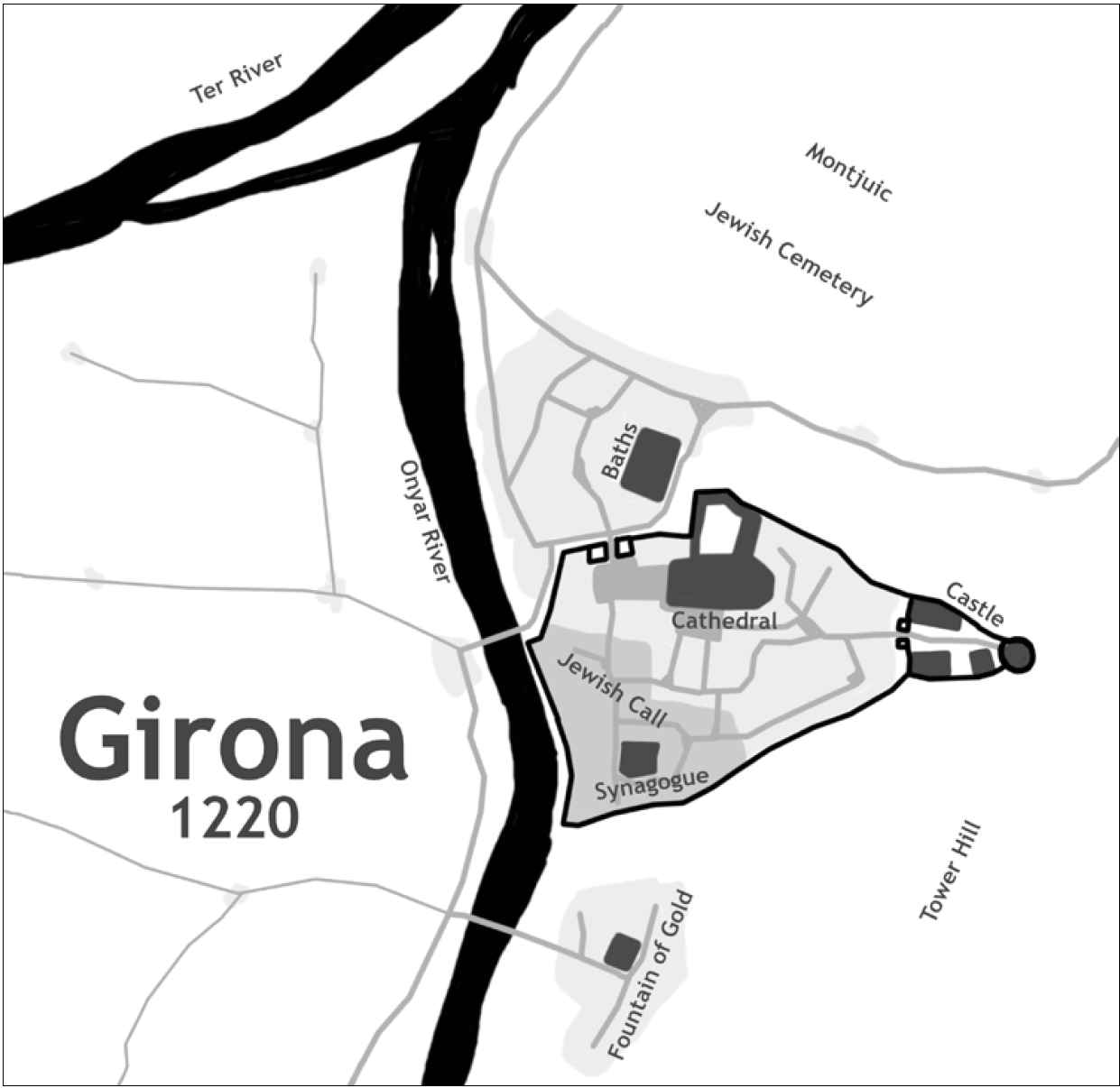
Leah bat Yehudah is our final character, a maga (feminine term for a magus) of House Tytalus. She was born the daughter of an impoverished craftsman in a large family in the city of Girona. Her Gift made her a social outcast even among her own family. While her father could see past this and knew her to be an intelligent young woman, he regretfully told Leah that there was no room for a woman at a beit midrash, giving her a siddur as consolation. She treasured it dearly, finding the words within beautiful.

It wasn’t long before a Hermetic magi discovered Leah, and took her on as an apprentice. While she was eager to train under someone willing to give her an education, her master had little respect for Jewish practices such as resting on the Shabbat, which only compounded her conflicted feelings due to not being formally educated in Judaism proper. By the time Leah passed her Wizard’s Gauntlet and became fully independent, she took the new name of Kourasméni. Feeling adrift from her Jewish heritage, she decided to reconnect with it.

We have two stat blocks for Leah. The first is her having just passed the Wizard’s Gauntlet, being at the power level of a starting magus PC. The second stat block ages her up by 60 years, where she is a powerful mage. The latter version further expands on her backstory, including a bloody conflict with a fellow mage she has studied alongside who viewed her as competition in preserving their master’s legacy. Kourasméni also ended up menaced by a cult worshiping a powerful spirit known as Orcus. This self-proclaimed Greek god of the underworld and broken oaths took advantage of the many broken oaths Kourasméni accumulated over the years, gaining power over the mage. She was able to gain protection from this entity by returning to her hometown of Girona, finding a sympathetic rabbi during Yom Kippur to make restitution for her past sins. This awakened in Kourasméni a desire to reconnect with her heritage, and she then took on her birthname of Leah again.

In terms of stats, Leah heavily focuses on the Forms of Imaginem and Mentem, which specialize respectively in perception/illusion and affairs of the mind, while her Techniques are overall evenly divided save in Regio (“I Control”), in which she has a score of 0. Leah’s mundane Abilities are a mixture of academic ones with some social and physical. Her second statblock is a much more improved version, where she gets decent increases in many of her Abilities and every Form, as well as a much higher Regio Technique. She still specializes in Imaginem and Mentem. We get 5 new spells that Leah invented, such as Sudden Tznius (transform worn garments into a modest outfit for a pious Jewish woman), Swap the Inscribed Memory of Bonisagus (swap the target’s understanding of two Latin words corresponding to the Forms or Techniques, inhibiting their ability to work magic of said categories), and Aura of the Curious Student (target of the spell is strongly inclined to view the caster as a good student worthy of careful instruction). Each entry expands on Leah’s backstory as to why she invented the spell. For example, Sudden Tznius was learned upon discovering that the clothing she typically wears is a poor fit when visiting a city’s Jewish Quarter.

Leah’s story seed involves the aged-up version of her visiting the PC’s Tribunal,* where she is seeking to track down members of Mystery Cults and drive them out of the region. As to why, part of this is predictably her prior negative experience with the Cult of Orcus, and partly in viewing many Mystery Cult’s idolatry-friendly practices as a step or two removed from Infernalism. Leah figures that the PCs could be allies in helping orient her towards the culture and customs of their land, but will be cagey about her true intentions.

*A legally-defined geopolitical territory by the Order of Hermes. Due to not being officially recognized by church and state, a Tribunal doesn’t necessarily map to the boundaries of mundane kingdoms.

Thoughts So Far: The six sample characters are all quite interesting and well-fleshed out, with good adventure hooks to get them enmeshed with a PC’s covenant. The sidebars containing new rules and elaborations on Jewish culture and religion dovetail nicely with said character’s backstories.

There is a bit of weightedness towards the feminine end, with the 2 male characters both being Grogs and thus less powerful. Additionally, only Josef has actual training in heavier weapons, with the other characters being good with unarmed brawling or a dagger at best. Leah’s 60+ year stat block has quite a bit of combat-worthy spells, although her starting-level version doesn’t have anything directly harmful. I do find it interesting that Leah in particular can be an antagonist based on the party’s relationship with Mystery Cults; the 5 other Jewish characters are mostly beneficial in nature to a PC covenant.

Join us next time as we explore a variety of adventures and encounters for sagas in Chapter 4: Jewish Stories!
 
Last edited:

f443c101c443.PNG

This chapter provides sample encounters and short adventures that involve interactions with the Jewish communities of Mythic Europe and the Islamic world. Most of them are location-neutral, and have ways for non-Jewish PCs to get involved. I would like to note that several adventures involve giving out rewards in the form of a resource known as vis. In short, vis is a catch-all term for naturally-occurring magic contained within a physical substance. The type of vis is usually formed in line with surrounding people, places, and events. For instance, the slopes of Mount Vesuvius might have vis in the Form of Ignem contained within stellar pieces of igneous rock, while a fairy glade bedecked with illusions might have such glamers containing wisps bearing the Form of Igaminem. As it is not very hard to learn magic that can create and modify precious metals, vis is the primary currency and resource of the magical community. It is used to make magic items, empower one's personal spellcasting, and be studied via observation to increase one's knowledge of magic. A single unit of vis is referred to as a pawn, 10 a rook, and 100 a queen. These terms came about due to the popularity of Tremere magi fashioning vis into magic chess pieces.

Scandalous Wedding takes place in Egypt, where cross dressing is a common tradition for Mizrahi wedding celebrations. The women dress up as non-Jewish Arab men in turbans and swords, dancing and singing around the synagogue, while the groom dons a flowing dress and is prettified with makeup, eyeliner, and blush. Local Sephardi Jews hate this tradition, as it violates their understanding of Torah prohibitions against cross dressing. As for how PCs can get involved, the celebration generates Muto Vis on the holiday of Tu B'av, where it gathers in the bride's turban which she then soaks in water that the groom uses to wash off his makeup. A magically-sensitive member of the PC's coven might notice this while traveling. On top of plotting how to collect the vis without upsetting the wedding, an influential Sephardic rabbi is gathering support to put an end to the practice.

Thoughts: This probably won't amount to more than a one-shot, and is harder to use than others on account that it's located in a particular region with a specific cultural tradition. That being said, it can make for a fun and more lighthearted scenario with rather low stakes, but still a clear incentive for PCs to uphold the tradition (even if partly for selfish purposes).

Blessed is Mordecai and Cursed is Haman is another holiday-centric encounter that takes place on the holiday of Purim. Said holiday is rather unique in that it focuses less on prayer and private reflection but more on public celebrations, as well as it being derived from the only book of the Hebrew Bible to not mention Hashem. In communities lacking rabbis and/or are strong with folk traditions, the influence of faeries can grow stronger. One such folk tradition involves getting drunk enough that one cannot tell the difference between the phrase "blessed is Mordecai" and "Cursed is Haman." The community partakes in an informal contest where the last person standing who can still hold a glass without passing out is the winner, and its wine contains a concentrated amount of Herbam Vis. PCs eager on collecting this vis will either need to have a Jewish covenfolk participate or otherwise succeed at a very high Charm roll to be allowed to partake. After which, they must ensure that they win the contest to avoid the magic wine from being drunk or spilled.

Thoughts: I like this one as well: drinking contests are a popular staple for medieval fantasy RPGs, and this scenario provides the winner with a nice reward that is mechanically relevant and also ties in well with the themes and atmosphere.

Geniza Desecration is a more open-ended scenario focusing on the handling of parchment containing the names of Hashem. As such text takes on a holy status due to this, a respectful disposal requires burial in a Jewish ceremony. Until that occurs, this parchment is held in a special storage building known as a geniza, which are often located in a synagogue or beit midrash. The ceremony is complicated enough that texts are usually stored over time, sometimes for a year or more. Unfortunately, this makes genizas a prime target for demonic sabotage. While the Devil's minions are incapable of entering holy buildings, they have ways of tricking mortals into obtaining the parchments for them. The demons then desecrate these texts by covering them in excrement, blood, and other unclean substances.

The sample scenario involves a demon disguised as a magus hiring the PC covenant to collect cast off Jewish texts to refine into vis, claiming that in being "thrown away" the local Jewish community won't miss them. He uses a Redcap (a non-magical courier in the Order of Hermes) as a go-between in delivering the texts and vis. The vis given to the PCs is tainted with infernal residue, which on its own is dangerous. As the demon uses powers to modify the Redcap's memory on a regular basis, this ploy won't last for long until the Redcap or another involved party notices gaps in the memory and process of events. There's also the fact that once the Jewish community notices someone has been stealing the geniza texts, they will start hunting for the thief and other involved parties.

Thoughts: I never knew about genizas before I read this book, so I do enjoy this common theme of "edutainment worldbuilding" of this book and is also reflective of the greater Ars Magica line. The scenario of demonic sabotage also feels natural, since it plays into the classic concept of the forces of Hell using trickery and temptation of power to steer mortals down the path of damnation.

2cf3ca7c5fbd.PNG

Blood Libel Mazziken is another scenario involving infernal influence. The text first describes the origin and concept of the blood libel, which is perhaps the most enduring antisemitic conspiracy theory. In medieval times it often took the form of accusations that the local Jewish community kidnapped and murdered Christians, usually when children who go missing or are killed with no certain culprit, as part of their religious rites. The violence from a blood libel is most common around Easter, a time when resentment against the Jewish population commonly flares up. Sometimes accused Jews will be gathered into a kangaroo court and tortured into confession, other times they'd be taken as hostages and ransomed back to the community in order to not be executed, and other times an angry mob gathers to commit widespread arson and murder against their Jewish neighbors.

Mazziken are invisible demons whose main goal is to spread various forms of harm. As demons are creatures of sin with no virtuous qualities, they are lazy and prone to instant gratification, meaning that it takes the assistance and temptation of mortals to enact longer-term evils.

In 12th century Norwich, England, a group of said demons killed a young boy and crucified him in a mockery of Jesus' execution as a means of mocking the Christians during the upcoming holiday of Easter. While they didn't plan to start the ensuing pogrom when the Christians then blamed the Jewish community for the death, the mazziken and other demons noticed how easy it was to spread paranoia and bigotry and began murdering Christian children elsewhere in Britain to repeat similar pogroms. The spread of blood libel quickly required no infernal assistance when it occurred in France and elsewhere in Europe, taking on a life of its own.

The book notes in a sidebar that blood libel is a sensitive issue in that it has been used to harm Jewish people for generations and well into modern times. Thus the GM should check with the group first before using it. Furthermore, the book notes that the GM shouldn't use it in such a way to make medieval Christians escape responsibility: while demonic activity was used for its origin, they don't force or mind control mortals to kill Jews. Thus, the latter bears guilt for their crimes.

For a sample in-game scenario, a Jewish mother approaches the PC covenant the day before Good Friday, pleading for them to intervene in the upcoming trial where her son and a dozen other Jews are accused of murdering a child. The scenario poses open-ended questions for the PCs and their likely responses, such as their willingness to pay a ransom for the lives and freedom of the accused Jews.

Thoughts: I'm reminded of the World of Darkness and other works of fiction that place the blame of real-world tragedies on supernatural and monstrous influence. Such media has the risk of removing both the responsibility and agency of evils done by regular humans. In the world of Ars Magica, demons are a real threat, and they do use their powers to manipulate humans into sinful behavior. The author of this book seems aware of the unfortunate implications. They are treading a fine line where they acknowledge that a setting with strong demonic activity will have such entities take advantage of antisemitic violence and persecution, but also tries for a way that demonstrates that humans actually need little aid from demons to do evil on their own. How well this can be demonstrated in actual gameplay may be harder to do, depending on the GM's storytelling capabilities and ability to reveal said information in a way that feels natural and not forced.

While I don't think the scenario is bad in and of itself, it does feel like it requires much more thoughtful handling than the others, which limits its use.

Captured by the Bird Headed Jews takes place in southern Germany, where a young Jewish girl by the name of Chaya ben Avram fled her village after a Christian mob attacked it during Passover. Taking refuge in the nearby woods, a group of faeries took her under their wing and learned from her various aspects of Jewish culture. They grew particularly infatuated with the Passover celebration and Exodus from Egypt, their essential natures reshaping to reflect it. Every Passover, they abduct travelers into their faerie regio to recreate the story. The PCs might be among the unlucky abducted, or they search for the regio of their own accord due to other hooks.

This mini-adventure is a rather linear series of events, where each "level" of the regio takes on a different part of the Exodus story, with the faeries appearing as Jewish and Egyptian humans with bird heads. For example, the first level has the PCs encounter whip-wielding slavers ordering them to build pyramids, which the PCs could either do via rolls with the penalties imposing exhaustion levels, or (more likely) fight them off. Or the third level, where the PCs must rush across the parted Red Sea as charioteers chase after them. The fourth level is where Chaya is stuck, the location appearing as Mount Sinai complete with a burning bush. The faerie leader is pretending to be Hashem, and will task the PCs with wandering the desert for 40 years. Chaya is clearly unhappy about this, having seen other abducted victims end up virtually imprisoned, but doesn't realize that this false Hashem is a faerie. The PCs can undertake a variety of Abilities and methods to show Chaya that this is not in fact the Abrahamic God, convince said false God to let them go or provide suggestions on how to improve the story, or even fight him in straightforward combat. PCs who do get stuck wandering will indeed be imprisoned for 40 years before they can leave or someone else frees them. The Regio will be undone if the faerie leader is defeated or persuaded, expelling the party, Chaya, and two dozen other prisoners, along with five pawns each of Muto and Rego vis.

The book notes that this adventure was inspired by a Haggadah, or illustrated book, discovered in the Upper Rhine in 1300 that portrays a family of bird-headed Jews celebrating Passover. The author theorizes that the portrayal of bird heads is likely due to the reluctance of illustrating the human form.

Thoughts: While there are alternate methods of resolution, this adventure feels a bit too railroady and has some very drastic consequences for failure. In regards to being trapped for 40 years, this can be very deleterious to gameplay, for time is a precious commodity in Ars Magica. The progression of character development centers around seasonal activities, from researching and writing books to improve personal skills and magical powers, lab work for supernatural projects and building wondrous items, the training of apprentices, and brewing potions to elongate one's lifespan among other things. True immortality has yet to be attained by magic, so mages have the weight of years as an ever-growing threat, where the mechanics for Decrepitude that come with aging wear down their bodies. I wouldn't run this scenario as is, as I feel that gaming groups who end up stuck in the desert would feel quite bummed out that they lost so much precious time for their characters. There's also the fact that the second floor that has the 10 plagues has a literal save or die, where first born PCs who are not in a house marked with blood (an easier roll using Theology can tell a PC the risks) need to roll against a high Stamina result to avoid instant death. While devoutly religious Christian and Jewish players* will certainly be familiar with this, I can see many secular gamers being less aware of the story's particulars.

*I don't know if the Exodus is a big thing in Islam or not.

The Talmud isn't really an adventure so much as an overview on this collection of writings. This entry provides expanded game mechanics for them as books to study from, and common elements for collection and discussion of the works in 1220. This sourcebook notes that the Talmud is divided into two major parts: the Mishnah, a compilation of the Oral Torah, and the Gemara, which further builds upon the Mishnah via related rabbinic writings that cover other subjects as well as the Hebrew Bible. More modern editions of the Talmud with additional rabbinic commentaries have yet to be written, as the printing press in the 15th century ushered in an era of standardization and ease of writing.

The Talmud is a very comprehensive series, covering all manner of subjects, from criminal justice to history to customs, and is a foundational bedrock for Jewish law. One who wishes to study from it must be able to read and write both Hebrew and Aramaic, and for game purposes the Talmud is treated as a series of various Summae (books that can be studied repeatedly) and Tractati (books that can be studied from once), focusing on improving the Abilities of Theology: Judaism and Rabbinical Law. Due to its size, up to six people can study from it at once. The Talmud is a very expensive and heavy collection, costing up to 6 Mythic Pounds, possibly more for copies containing additional rabbinic commentary. Mythic Pounds is Ars Magica's catch-all term for vague monetary units: 1 Mythic Pound is equivalent to a pound of silver, or annual income of the average peasant.

Furthermore, there exist Jewish institutions dedicated to the Talmud's continual study known as Tosafot. They are particularly prominent in northern France and Germany; the scholars share research notes via correspondence letters. PCs who wish to aid in their work must be Jewish and have minimum ratings in various academic Abilities, where they can accrue experience points for advancing relevant Abilities for every two seasons (6 months) per year they study.

Thoughts: Game stats for the Talmud already exist in Realms of Power: the Divine, but this book adds some more relevant mechanical detail and explanation of its contents, along with providing a monetary cost for these prized tomes. Once again, I like the incorporation of real-world history via the Tosafist scholars, along with rules for PCs who study under or with them.

8e3d5632a63e.PNG

Bread for the Faerie Fish is a tradition performed during Rosh Hashanah, where bread is thrown into the water for fish to eat. The bread represents the sins of the thrower, which are discarded and symbolically devoured by the fish. This is inspired by a passage from the Book of Micah: "You will cast (tashlikh) all their sins into the depths of the sea." The tradition takes on slightly different forms around Europe: for example, German Ashkenazi bring the bread to a river or lake where it's thrown in, while Sephardi Spaniards take kabbalistic inspiration where they cover their clothing in breadcrumbs which they then shake off while standing by the water.

As this tradition is rooted in folklore rather than halakhah, some rabbis disapprove of it, and it doesn't actually absolve the bread-tosser of their sins. As such, faeries are fond of the tradition, where they mystically gain vitality from the consumed bread. The faerie fish end up gaining an arcane connection to the person who threw the bread until the next Rosh Hashanah. To summarize, a mage who has an Arcane Connection to a person or object can use magic to target said entity, even if they cannot be sensed by the mage at the time. This is due to the Arcane Connection being considered part of the target in a metaphysical manner.

The linked adventure hook involves a kabbalist hiring the PCs to find and locate a particular faerie fish with an Arcane Connection to a Jewish maga. Said maga is regarded by the kabbalist as going down a dark path, and wants to better magically perceive their sins so as to help the mage.

Thoughts: Whereas a Scandalous Wedding has a local cultural custom that PCs have incentives to preserve, this one is the opposite, for it opens up Jewish communities to supernatural exploitation via the inadvertent creation of Arcane Connections. While the kabbalist in the adventure hook has more benign motivations, I feel that the more likely scenario would be an enemy of a Jewish PC or NPC magi using the tradition as an opportunity to spy on or manipulate the character.

Miraculous Kol Nidre is less of a scenario and more a discussion of game mechanics for attaining repentance on Yom Kippur. Divine auras in Jewish communities are strongest on this holiday, and Kol Nidre is an opening ceremony that is done to annul vows. In Jewish custom many forms of speech can be considered vows, so it is easy to accidentally create one. Kol Nidre takes on different forms and practices in Jewish communities, with the issue of the day being the specific timing of annulment: "from last Yom Kippur until this one" is the traditional interpretation, while "from this Yom Kippur until the next" is an innovation by the Tosafists and cancels vows to be sworn in the future instead.

In game terms, using Holy Magic to perform Adjuration in order to dispel various supernatural bindings gains die roll bonuses during Kol Nidre. The roll result can be further enhanced by the participation of a Jewish congregation where each individual rolls a Judaic Lore check. The collective result provides various outcomes, such as canceling any bargains made with non-Divine supernatural entities, or even other detrimental ongoing effects at the highest result. A regular failure has no effect, while a botch (critical failure) on the result causes the would-be atoner to end up with their choice of either the Powerful Yetzer Hara/Yetzer Hatov flaw for the next year.

Thoughts: I like how this section explicitly ties the Yom Kippur holiday as a means for characters to attain supernatural atonement/annulment. Having a die roll from every congregant member feels a tad excessive, as it ends up closer to busywork. A flat bonus based on the congregation size would be much simpler.

586cc6c867a0.PNG

Closing of the Gates is another event on Yom Kippur, taking place during the final hour of prayer. During this time, a congregation does a standing prayer in a synagogue in front of an open ark, the closet that holds the community's Torah copies. This is a symbolic closing of the gates of heaven until the next year, indicating that it's a Jewish person's last chance to place themselves before the divine throne for mercy. The service ends when each congregant produces a shofar trumpet, blowing one note on it for as long as their breath can hold out. When the last breath is exhaled, the ark is closed.

In Mythic Europe, this isn't just symbolic. The ark really is a supernatural gateway to a divine regio, and the shofarim are indeed keeping the gateway open. A character who has the capability of perceiving unseen regio entrances has a chance at entering, although this is a very risky endeavor. The regio contains a throne that is too bright for human perception, and at its foot is the Book of Life that contains each person's fate. A group of seraphim angels guards the regio and will attack any intruders. Not only do the angels have very high scores in combat and supernatural damage, the high Aura of the regio imposes hefty penalties to all rolls to characters who fail rolls to resist its disorienting nature. When the ark doors close, all intruders in the regio are forcefully expelled into the synagogue they were originally at, suffering temporary deafness and Warping.

So, why would someone dare to enter the realm of the Throne of Repentance? Well, reading from the Book of Life can grant someone the ability to know whether or not they will die within the next year, granting them the benefit of the Death Prophecy major virtue that makes them know whether or not they will die the next year. If not, then they gain the Death Prophey Major Virtue, that grants immunity to death until the next Rosh Hashana. Secondly, the regio is mystically connected to every synagogue on Earth, making it a possible means of instantaneous long-distance travel. The book does note that magi already have (rare and powerful) alternatives when it comes to teleportation, so this use is something that would be done more for bragging rights. Thirdly, at the GM's discretion, a person who ventures into the regio can gain insight into the nature of the divine for magical breakthroughs.

Thoughts: The throne regio scenario feels more of an acquired taste, as I imagine that most players would not want to earn the wrath of angels for a vaguely-defined reward. The Death Prophecy Virtue is quite powerful, but is not bulletproof, as the Virtue notes that the prophecy can still come about in unexpected ways.

Cave of Honi the Circle Maker is our final adventure, taking place in the community of Galilee, which in 1220 is under the control of the Emir of Damascus. The tale of Honi originates in the Talmud, where the protagonist is a traveling scholar who encountered a peasant planting a carob tree. As this plant takes 70 years to grow, Honi didn't understand what the planter had to gain from it. The planter answered that this was being done not for himself, but for his descendants. Honi took a nap nearby, and awoke to the sight of a fully-grown carob. Indeed, 70 years passed, leaving him mysteriously unaged. Honi was overcome with despair, as his family and everyone he knew had long since passed on, and the beit midrash at his hometown had new faces teaching lessons in his name. But none believed him to be the actual Honi. In despair, he prayed to God for mercy, and died on the spot.

However, in Mythic Europe, there is more to this story. Hermetic magi familiar with Honi's tale speculate that he fell victim to a regio where time passes differently. This regio does indeed exist as a cave near a carob tree close to Honi's grave. The regio can be entered on the anniversary of the scholar's death by those who are lost during the Shabbat, and due to its location traveling near the shrine violates the Shabbat and thus causes the traveler to end up lost in the regio on a failed Survival roll. The regio can be entered intentionally by someone bearing spells and/or Abilities capable of locating an unseen regio.

The regio appears in the countryside of Galilee during the Second Temple era, roughly two centuries before its destruction. There are many Jewish villages here, and a noticeable beit midrash in a town on the horizon. The seemingly mortal inhabitants aren't actually people, but manifestations of those who lived here long ago. The beit midrash has a shade of the famous scholar Simeon ben Shetach, and those who study under him can grant experience points to learn and enhance the mundane Ability of Rabbinic Law and the supernatural Abilities of Kabbalah, Gematria, and Merkavah. This is divided into 40 lessons, and thus 40 trips in and out of the regio.

However, the regio bears an innate danger: whoever falls asleep here will remain so for 70 years, after which they are expelled and reawakened as the rest of the world has passed them by. A sleeping victim can be carried out of the regio by an awake person also inside. The distance of the beit midrash means that traveling to it and out of the regio requires a moderately easy Stamina roll. Normal failure means that the character can't reach the beit midrash but can turn back before falling asleep, but a botch forces them to sleep as they're unable to reach the exit in time

Thoughts: Like the Bird-Headed Jews adventure, this scenario has a pretty punishing failure state, although in this case it is possible for awakened PCs to bail their party members out. Like the Kol Nidre congregation rules, the 40 lessons feels like way too much die rolling and busywork, and could be better combined into rolls representing weeks of study instead.

Thoughts So Far: Another strong chapter in this book, I like most of the adventures provided here. If I had to pick favorites, I'd go with Blessed is Mordecai and Cursed is Haman, although Geniza Desecration is a close follow-up.

Join us next time as we visit 6 medieval cities with prominent Jewish populations in Chapter 5: Jewish Locations!
 

0cc0313ef2c4.PNG

This chapter focuses on six cities and their Jewish communities: five in continental Europe, and one in the Levant. But before that, we have some discussion and entries touching upon some commonalities.

In the early 1200s, the book talks about how the explicitly segregated neighborhoods known as ghettoes have yet to exist. During this era many Jews live outside cities, can engage in professions such as farming and craftwork, and can have peaceful relations with non-Jewish neighbors, although they are still not truly free in Christian society and suffer under an imposition of restrictions. There are markings of worse things to come, such as when in 1215 the Lateran Council of the Roman Catholic Church passed a series of laws restricting the rights and freedoms of many Jews. The previous Pope's recent death has made the spread and enforcement of such laws slow, although they are most assuredly gathering steam.

Another large paradigm shift in Jewish culture are the teachings of Moses ben Maimon, more commonly known as Maimonides and also known as the Rambam. In the modern day he is considered to be one of the most influential scholars of Judaism, although in the Middle Ages he was a controversial figure among Jewish communities. His major contributions included the Guide for the Perplexed, a fusion of Aristotelian thought with the Torah that sought to find scientific explanations for many unexplainable events in the latter text; the Mishneh Torah, which compiled various portions of the Talmud into guides more easily understandable by the Jewish layman; outlined the Thirteen Principles of Faith, which he asserted were the most important core values of Judaism; and many other works, including some non-religious texts concerning medicine. Although Maimonides wrote much of his work in the preceding century and died in 1204, in 1220 his books are quickly spreading throughout Europe.

There were multiple reasons why Maimonides met with pushback among his fellow Jews, such as his fusion of Greek philosophers with the Jewish faith, or his criticism of the the common practice of bate midras* charging a fee for its students rather than attaining income by taking on other jobs. In one notable case in 1235, the controversy spilled over into the greater Christian world, where Dominican priests in Montpelier participated in a book-burning of Maimonides' works outside the local University. This action brought fear to many Jews, and caused many former critics of the man to soften their stances.

*Plural of beit midrash according to Wikipedia.

There are several places of vital importance to Jewish communities of any size. The mikvah, or ritual bath, is used primarily by women to remove their status as niddah after menstruating, but the bath can also be used by men to cleanse themselves of various kinds of spiritual contamination. A mikvah is so important to Jewish civilization that its priority is above that of building a synagogue when new settlements are moved into or founded. Next is the synagogue, also known as a shul, which is the traditional place of worship for Jews and is where a minyan most commonly congregates. Synagogues are usually owned by the community as a whole and not the rabbi, although rabbis have important roles and duties for its maintenance. Synagogues also segregate the congregants by gender. This can take different forms in various communities, such as putting the women behind a partition, in a different room, or even excluding them entirely. Ashkenazi communities who opt for the final choice sometimes build separate synagogues for women. The third building of importance is the beit midrash, a center of learning for rabbinic studies. A beit midrash at its simplest can be the house of a senior rabbi, but oftentimes this is dedicated to a new building when the patience of the rabbi's wife runs out. Students are arranged in pairs at benches and tables to encourage group study, with the tables pointing to the room's front where the senior rabbi teaches. As mentioned above in the Maimodean controversy, a beit midrash charges its students for the privilege of learning, and the funds are used to support the teachers and institution.

Jews living in cities typically congregate together in a section known as a Jewish Quarter, and the above three buildings are usually located in the center of the Quarter or an otherwise easy to reach place. The boundaries of said Quarter differ from kingdom to kingdom, city to city. In some cities it may see strong overlap with Christian neighborhoods, leading to less isolation. While others are more enforced, where entire streets and rows of buildings are exclusively occupied by Jews or Christians, and Jews venturing outside the Quarter are obligated to wear distinctive clothing marking their status. Some rabbis don't view this stricter segregation as a bad thing, for to them it discourages Jews from interaction with (and thus possible influence from) the wider Christian world.

9f7d3680927f.PNG


Troyes is a city in northern France and a hub for the Tosafist movement. The Jewish Quarter is in the city's east, and notably the palace of the city's Bishop lies within its boundaries. The reason for this is that the Bishop is well aware of the history of violent pogroms, and takes pains to avoid having the streets run red with blood. In living memory, Jews have sheltered in his palace for safety. While the city is relatively peaceful in 1220, the Fourth Lateran Council has reinforced the pre-existing laws for Jews to wear a particular kind of pointed hat, partially motivated by fears of sexual relations between Christians and Jews.

The Quarter has no walls and there are some non-Jews living here, although most Gentiles view it as undesirable and such people are those who are providing some sort of local service to Jewish people. Additionally, most Jews in the surrounding area don't live in the Quarter but in outlying farming communities. They travel to Troyes to sell local produce, use the mikvah, and consult with the rabbis.

Troyes' beit midrash is a high quality institution that teaches both children and adults. Several years ago a dispute between families nearly saw a portion of Jews banned from worshiping at the local synagogue by that building's owner, a merchant by the name of Abraham ben David. The rabbis pushed back, stating that the synagogue must be open to everyone or no one, and while this dispute has been settled there is still bad blood between certain families in the community. The mikvah is well-maintained, although much like the feuding families of the synagogue, its balanit (a supervisor of the mikvah) has banned her ex-husband's new wife from using it.

Thoughts: Troyes feels rather lacking in adventure hooks and material in comparison to the other cities, with the major issues being family divisions and access to important buildings, and the fearful hope among the city's Jews that things stay peaceful. I understand its entry due to its importance of the Tosafists and Maimonides, but it could've used some more "oomph" in the creation of homebrew content.

68e94df91611.PNG


Worms is a city situated within the Holy Roman Empire, and has gained increased importance among Ashkenazi Jews. The city has produced many rabbis of great repute, and hosted several gatherings of such people whose judgments have carried weight to outlying population centers. Worms' Jewish population was nearly slaughtered during the Rhineland Massacres, although in the late 1100s its population rebuilt itself with the establishment of a new synagogue and mikvah. A Jewish cemetery on the edge of town sees regular processions, and a Christian family organized by the local Bishop's councillor protects them from antisemitic interference via an accompanied escort. Long-established laws allow the Jewish community to rule and police themselves to a greater extent than in many other areas. The wealthier Jews make a living as river merchants and moneylenders, with the poorer ones working as laborers and artisans. The current leading rabbi is Eleazar ben Judah ben Kalonymous, who in addition to a broad gift of academic knowledge has contacts with the Circle of the Unique Cherub and has written many books for them which can be found in their secret libraries. We have a sidebar containing stats for 9 books authored by Eleazar, which focus on important supernatural Abilities pertinent to the Divine traditions detailed in Chapter 2 of this book.

The Circle of the Unique Cherub is a group of Kabbalists based around Provence and the Rhine, and while they know of the Order of Hermes, neither side has yet approached the other regarding membership or working together. Another group of mages in the Jewish Quarter are the Ba'al Ov necromancers, who have protection from some of the Quarter's merchants. Eleazar knows of their existence but not the extent of their forces or location, and would like to try and bring them into the light if possible. This open hand has been rejected, and now there is a "low grade magical war" growing in Worms' Jewish Quarter. Adding onto the themes of hidden magic, we get a sidebar for a secretive regio that PCs could stumble upon, which was accidentally discovered when a Jewish woman fell into a secret passage in the synagogue that saved her life from an oncoming chariot. The regio can open up for any Jew who is in deadly peril in Worms in addition to those with the appropriate supernatural senses. Its interior appears as a scenic one-room home with delicious food and a burning fireplace.

Thoughts: Worms is a much more "high fantasy" city in comparison to Troyes, with a heavy focus on secretive magical societies. It shouldn't take much to get PCs involved in the conflict between Eleazar and the Circle of the Unique Cherub vs the Ba'al Ov.

ac4c3bb74433.PNG


Girona is located on the Iberian Peninsula, and is the cultural center for the Sephardic Jewish community. The city is instrumental in the spread of Maimonides' works through the rest of Europe, and is also home to many Kabbalists. The city's Jewish Quarter is known as the Call, and while Jews have lived outside it increasing tension with Christians has seen more families move into the Quarter over the last 50 years. The Church is more hostile to the Jewish community in Iberia, and many Jews escape violence by paying taxes to the King of Aragon and acting as his royal commissioners in exchange for his protection. The Jews peculiarly don't have a mikvah, instead using public baths which have separate days for use by Christians and Jews. Girona is home to two members of the Circle of the Unique Cherub: a prominent Kabbalist and Rabbi known as Isaac Saggi Nehor, and Azriel ibn Menahem. They have conflicting ideas on how to use the divine powers of the Kabbalah. Isaac believes that it should be only taught to a select few, while Azriel wants to popularize its spread among Jews in general to give them greater power in protecting themselves from hostile Christians. Azriel's ideology is less popular, and some Circle members are discussing "bringing him to heel" for fear of him exposing their secrets. We get 3 more unique books and their stats for books published by the Circle.

Girona's other notable resident is Moses ben Nachman, who is actually a real-world historical figure that will become a famed Jewish leader in the 13th Century. He has yet to achieve this in 1220, but the book outlines key portions of his life and even a full stat block for the man in two sidebars, the latter building him as a very intelligent and socially-proficient mundane character.

Thoughts: There is less in the way of adventure hooks for this city, instead focusing on being a headquarters of sorts for the Kabbalist movement and a writeup on notable characters.

1126c74eba3a.PNG


Montpellier is a city in Provence which is highly valued for its new University by both Christian and Jewish scholars. The University focuses on medicine, and while Jews are banned from being either teachers and students, they are still allowed to be present on campus as physicians due to a law in 1180 allowing them to practice the trade. There's an informal dialogue between the two religions on campus regarding the exchange of knowledge, and many Jews from across the Mediterranean have settled here to make a living as doctors. While there is a Jewish Quarter, there are no laws forcing Jews to live there, so around half of them live elsewhere in the city, with physicians congregating around the university and merchants setting up shops in the eastern markets.

The city's rabbis are worried about the inter-religious fraternization, particularly over fears that the teachings of Greek philosophy is an insidious contagion to Jewish thought. Maimonides' works, which deal with both and are actually banned in Montpellier, have only encouraged curious minds to see what the fuss is all about. As noted above, the anti-Maimonides furor will reach a fever pitch 15 years later via the infamous book-burnings. And like most of the other cities in this chapter, the Circle of the Unique Cherub has two members among the city's rabbis, who host secret meetings with other Kabbalists in the beit midrash.

Thoughts: While Montpellier is an overall better city for Jews to live than the preceding entries, there is still tension over fears of their culture and faith being "contaminated" from outside thought, with Maimonides' work acting as a particular flashpoint in bridging the gap between Judaism and Greek philosophy. It is thus most suitable for Ars Magica groups that enjoy debates and have ties to mundane academia.

058a6b9a161a.PNG


Rome has a very small and very old Jewish community, who numbered only around 200 in the year of 1220. Most live on Tiber Island, located in the river of the same name running through the city. Due to Rome's function as the geographic and spiritual center of Christian Europe, Roman Jews maintain a vibrant trade network with Jewish communities across Western Europe, with the Qalonymus family being particularly prominent and who have members as far afield as France and Germany. Roman Jews are unique in Europe in that they are neither Sephardic, Ashkenazi, or Mizrahi, incorporating their own particular traditions such as the use of musical instruments during prayer. Due to being physically close to the Pope, Rome's Jews have frequently been at the forefront of alternative waves of antisemitism and acceptance in the Roman Catholic Church. In better times, the Pope would call for a representative among the Jews to act as an intendant in the papal residence. But in worse times, Popes would strip them of various rights and privileges that could see Jews quickly met with closed doors in the city. The former Pope Innocent III was the latter example, responsible for seeing Rome's Jews fired from many positions and forcing them to wear distinctive clothing. The current Pope, Honorious, has softened some of these stances, restoring former offices and even exempting them from taxes.

The Ba'al Ov have a presence in Rome, centered in the Pierleoni family, who converted to Christianity to escape oppression and saw their patriarch baptized by the Pope in the eleventh century. However, the Pierleonis are hated by their Jewish neighbors, as it is an open secret that they are necromancers. It is a custom on Tisha B'Av and Hanukkah to light candles that can ward against the necromantic magic. We also get a sidebar detailing a potential source of Vis in Rome's underground catacombs. Many Jews interred their dead here, which the Pierleonis used to harvest Infernally tainted Vis via stealing bones. Not only is this diminishing the area's Divine aura and causing an Infernal one to grow, demons are springing up in the catacombs and menacing mortals above. PCs who seek to exploit the Vis source for themselves risk earning the wrath of both the Pierleonis and Rome's Jews, and Christian authorities who learn of the demons' presence in the Jewish cemeteries may use it as justification for a pogrom.

Thoughts: Befitting its prominence in Western and Christian culture, Rome is chock full of grist for the adventuring mill. While it may be a cliche, the catacombs filled with demons can make for a classic dungeon crawl, while the juxtaposition of an oppressive Pope with a more lenient one demonstrates the fragile and mercurial state that Jews have found themselves throughout history. And while it's brief, I do like how this chapter points out Roman Jews' unique cultural status, which has given me a good amount of amateur research to pursue online.

4ee36be58eea.PNG


Akko is our final city, located in the Levant and currently under occupation by the Crusading orders of the Hospitaliers, Templates, and Teutonic Knights. The city is majority Muslim, and besides the Knights there are influential Italian merchants who have formed their own quarters in the city. Akko also serves as the capital for the Kingdom of Jerusalem, and the city has a long history of trading hands between civilizations over the past millennia. Jews have lived here for thousands of years, are majority Mizrahi, and whose Quarter is relatively close to the port. Akko's Jews are mostly left alone by the occupying force, and they have had an easier time than their counterparts elsewhere where the Crusades have flared up. The exception to this is Montmusart, the newest neighborhood populated by monks and priests part of the occupying Crusaders. Here, Jews are treated as trespassers, with the lucky ones being escorted out and the unlucky ones roughed up as they're removed.

The splitting up of Akko between various cultures and occupying forces has disrupted everyday life for its Jews, leaving them without access to a beit midrash, with the Quarter's three elder ruling rabbis hosting lessons in their homes. The mikvah was ruined during the war 30 years ago, and only recently has enough money been raised to fund the construction of a new one. That being said, the Crusaders have bought some opportunity: visiting Christian pilgrims often stop at Akko as a waypoint towards holy sites elsewhere in the Levant. Rabbi Yaphet makes a living organizing lodging and hospitality for visitors bound for the Tomb of the Patriarchs and eventually Jerusalem.

Speaking of Jerusalem, we get a sidebar for the holiest city in Judaism. As of 1220, the city is mostly empty of Jews, as during 1099 the invading Crusaders slaughtered almost the entire Jewish community and the survivors fled elsewhere. But in 1267, Moses ben Nachman will travel to Jerusalem near the end of his life, and build a synagogue there which will help revitalize the community.

The other sidebar for Akko details the Tower of Flies, which is a cursed locale that has long been avoided by locals and the Crusaders have learned to avoid it in turn. The Tower is filled with flies and corpses that never fully decay due to housing an Infernal regio. Anybody who has touched a corpse in the last week will be transported into the regio, which appears as a graveyard full of the dead, and those who manage to escape are often afflicted with a magical kind of leprosy. The city's Jews are aware of the Tower being a center for leprosy, and immersion into the mikvah can cure it.

Thoughts: With the unease generated by the presence of an occupying power, Akko makes for a strong hook for adventures involving the Crusades and for PCs venturing from Europe into the Middle East. The Tower of Flies makes for a more supernatural problem ideal for magi involvement, while the city's relative nearness to Jerusalem will be of interest to characters with ties to the Realm of the Divine.

Thoughts So Far: These six cities give a good outlook on major medieval Jewish population centers. While they vary in gamable material, they all are rather detailed on what life is like for the Jews living there. The entries for the cities are technically incomplete in the sense that they mostly focus on the Jews and Jewish Quarters than the cities as a whole. But that is to be expected, and I imagine that several of these cities are more broadly covered in official Ars Magica books.

Of the entries, I'm the most fond of Worms, Rome, and Akko. I'd most likely use Worms on account that the Holy Roman Empire/Rhine Tribunal has the strongest regional sourcebook in the current edition of Ars Magica, but I can see using any of these cities for campaigns set elsewhere.

I also liked the discussion on common buildings in Jewish communities and the brief overview on Maimonides. As for the Circle of the Unique Cherub, I feel that they could have used some more fleshing out of explicit goals, major projects, and the like. We do get a lot of detail on Kabbalism as a game mechanic and some adventure hooks for individual members, but I would've liked to see more overarching stuff like we get with Ars Magica's established hedge mage traditions.

Join us next time as we visit Mayim Hayyim, a sample covenant of newly-Gauntleted Jewish magi!
 
Last edited:

c291c7577ad5.PNG

One thing I'd like to address before continuing, in clarifying two of the adventures in Chapter 4. The Bird-Headed Jews adventure has characters who are trapped in the desert regio make Aging rolls with a -2 penalty, due to poor living conditions in the desert. The Cave of Honi the Circle Maker has no such apparent aging effects listed. Therefore, while the latter adventure causes a larger timeskip, the former one can see characters that aren't rescued by others (perhaps another group of PCs from the party covenant) gain quite a bit of Decrepitude. So the former adventure is potentially more dangerous to be caught in, but has a wider window for characters to be saved by the rest of the party.

Now, onto the final chapter! Which is meant to be Chapter 6, in spite of the above image's misprint.

Mayim Hayyim, or Living Waters in Hebrew, is a relatively new (Spring) covenant founded by a trio of Jewish magi who decided to live together to better survive in a hostile Christian world. The covenant is located in a regio whose entrance can be accessed via the mikvah's waters. The non-magi covenfolk live in nearby homes in the Jewish Quarter. This covenant isn't explicitly located in any particular city or Tribunal, so as to be easily transferable to the GM's home campaign.

Mayim Hayyim was founded in 1215, whose mikvah portal is a natural spring that is outside the jurisdiction of the rabbis. It is generally the mikvah used by those who are on the out and out with the broader Jewish community. The regio itself is an expansive ocean with an archipelago of small sandy islands, upon which one of them has several buildings made of natural stone and magic. The covenant is poor on resources: they use a waterproof magic oilcloth to carry supplies into and out of the regio, but this is an inefficient method. They also have yet to place an Aegis of the Hearth* around the covenant, hoping that the regio's location suffices for defense in the meantime.

*A defensive spell that covers a static area and lasts for a year. It is one of the oldest Hermetic spells, and is considered an indispensable asset for covenants in general.

We have writeups for the 3 magi and 3 Companions, although the numbers of the rest of the covenfolk are left to the GM's discretion.

Yehudah ben Abraham of Tytalus is our first magi, who sees himself as a protector of the covenant's other members. His harsh apprenticeship in House Tytalus built up his self-confidence in believing that he could overcome various insurmountable obstacles in the mundane world. Some of his lofty goals include building Mayim Hayyim to rival the legendary covenant of Durenmar, establishing equal rights for Jews, and finding a way where he can openly love other omen. Although Yehudah is a practicing Jew, he finds it difficult to maintain his magical research with attending services, and the city's rabbis have started avoiding him due to asking them strange questions like "if you could travel as fast as the sun, would you ever need to celebrate Shabbat?"

In terms of stats, Yehudah specializes in the magical Arts of Rego, Corpus, and Mentem, and much of his spells involve alterations to the mind and body. His mundane Abilities are a bit of jack-of-all-trades, with the majority of them being ranks 1 to 2 besides the required minimums for being a magi.

Reyna bat Ezra of Bjornaer grew up in a Jewish community located close to the covenant's city. Her friends and family developed many folk practices, which Reyna was not always invited to due to the social ostracism that comes with the Gift. Her magi teacher initiated her into the House's membership before the Order of Hermes proper, which granted Reyna more freedom to return home and maintain connection with her family, particularly her aunt who was one of the few people unaffected by her Gift. Reyna does not follow House Bjornaer's animist beliefs, viewing them as idolatry, reinterpreting the Heartbeast* and related rites to be gifts from Hashem. Despite this, she still respects and is friends with many of her housemates.

*A Heartbeast is a particular animal form that an initiated magus can shapeshift into. This is considered more authentic than typical shapechanging abilities, for a Bjornaer is fully treated as an animal for magical purposes while in Heartbeast form.

In terms of stats, Reyna specializes in Intellego, Aquam, and Auram magic, so she is good at spells that gather information along with elemental water and wind magic. Her Heartbeast is an Owl, and her mundane Abilities focus on outdoor survival.

Zipporah bat Mordecai of ex Miscellanea saw her birth parents slain by an invading crusader, who was a magi of House Flambeau who then kidnapped and forcibly baptized her before taking her as an apprentice. She resented those 15 years, leaving her pater* as soon as she passed her Gauntlet, but was unable to track down her hometown. During her journeys, she made contact with the Many Branched Tree and became a Holy Mage of House Ex Miscellanea, and found that she can use her powers for good by protecting other persecuted Jews.

*the magical teacher who takes on an apprentice.

In terms of stats, Zipporah specializes in Creo, Corpus, and Ignem magic, and much like the stereotypical Flambeau she is adept with offensive fire spells. Her Abilities are a wide spread of mostly academic subjects.

3b954b89c8aa.PNG

The next 3 NPCs are all Companions, not Hermetic magi but two of which are nonetheless supernatural.

Ruth bat Efrayim is the balanit of the covenant's mikvah. She primarily serves Jews from outlying villages and those who are on shaky ground with the mainstream community, and has become adept at being a confidential keeper of secrets. Ruth has long known about the regio, and has been taught the practices of segulot. In terms of stats, Ruth is adept at a variety of social Abilities and knows six segulot, five of which are new ones detailed in this chapter. For example, Checking Mezuzot strengthens the protective qualities of the aforementioned door fixture, preventing any pregnant women living inside from miscarrying.

Adam is a golem who was created to defend Jews from the pogroms that sprung up during the First Crusade. He appears as a young human man with the Hebrew letters aleph, mem, and tav spelling the word "truth" on his forehead, which is partially concealed by his bangs. Although over a century old, he has spent most of his existence in slumber, having been commanded by the community to awaken until the time is right. Adam woke up recently due to having sensed an unknown threat, which he initially thought were the 3 magi coming to form Mayim Hayyim. But this misunderstanding was dispelled, and he came to accept them as part of the people he's pledged to protect.

Like the traditional golem, Adam accompanies the mages on trips that bear some risk and administers the covenant's security. In terms of stats, he is predictably physically proficient, and due to his supernatural nature he has a Divine Might score and knows a Divine power called Opening the Door for Elijah. This ability lets him perceive anyone who wants to hurt Jews or has hurt Jews in the past as having their fingernails and eyes stained red with blood.

Abram ben Abraham v'Sarah was originally born with the name Ibrahim and raised in a Muslim family of traveling merchants in North Africa. They eventually settled in the city of Seville in the Almohad Caliphate. His family was open-minded when it came to associating with non-believers due to their occupation, but Seville was a much less tolerant place. Ibrahim's father was executed for associating with Jews, and his mother died of disease. Ibrahim was saved from a life on the streets when he was taken in by Yitzhak, one of his father's Jewish friends. Ibrahim was treated like one of their own children, and as he grew up he wanted to fully commit to Judaism. Yitzhak was at first reluctant, saying that he would have a much harder life as a Jew than a Muslim, but Ibrahim was committed, and chose the new name Abram ben Abraham v'Sarah, a common custom among converts to take the first Jews as their symbolic parents. He left Seville for reasons of safety (apostasy is punished with death) and eventually came to the Mayim Hayyim covenant.

In terms of stats, Abram is fully mundane, with no supernatural powers. His Abilities are geared heavily towards social attributes, with a smattering of academic and physical ones.

Just about every character entry has a new set of associated Rules. The magi have a variety of new spells they invented, such as Reyna's Subtle Sight of Poison and Purity (can see all the properties of any liquid or liquid mixture), or Yehudah's Sympathy for the Chosen of Israel (the target is strongly inclined to treat well anyone they believe to be Jewish). In a twist of irony, the latter spell is modified to cause the target to grow horns, based on a mistranslation in the Vulgate Bible that gave rise to a common antisemitic superstition in Europe that Jews grow horns.

But the most involved new rule concerns Golems as Companion PCs! There are already rules for golems in Ars Magica, specifically Realms of Power: the Divine sourcebook. But only as NPCs, and information for creating them is repeated in the Appendix of this book. For Golem PCs, there's a new Major Social Status/Supernatural Virtue of the same name. Golems must also take several other mandatory Virtues and Flaws, such as Unaging and Outsider (Jewish). While animated from clay, golems are fully organic beings upon gaining sapience, and besides the Hebrew word for "truth" on their foreheads and unaging nature, they can otherwise pass as normal humans.

Golems automatically begin play knowing a few Abilities, notably (Area) Lore, Hebrew, and Brawl at high values of 5, with Charm at a decent 3 and Awareness and Concentration at 1. This is actually very few Abilities in terms of starting stats for the average PC. Furthermore, golems are unable to accrue experience points through the conventional methods of study, practice, and exposure. Instead, they must be taught by members of the Jewish community in desired Abilities, and due to their known role as defender most local Jews are willing to take the time out to teach them. It is up to GM discretion for access to teachers that are of higher than usual quality, or who teach Abilities not covered by General and Academic categories, the latter of which cover skills related to Jewish culture such as Rabbinic Law. Golems also must obey the commands of members of their community and thus start play with specific Personality Traits in line with this. Commanding the golem too much risks them gaining temporary madness and lashing out against their protected community. This isn't instantaneous, with the last part happening due to a botched roll. Usually the progress is more gradual, where regular failures cause the golem to become less trusting and more vengeful over time. Orders that transgress the mitzvot or leave their community voluntarily make this process even faster. The book notes that due to being tied to their protected community, golem PCs may not be suitable for all campaigns.

Golems have a Divine Might of 15, and can take a new Minor Virtue to increase it by 10 points to a score of 25. There are two more minor Virtues, Lesser and Greater Divine Power, that give them 25 or 50 levels respectively to spend on creating a particular supernatural power from existing Holy Methods and Powers. I presume that Greater Divine Power's status as a Minor Virtue is a misprint, as it is clearly superior to Lesser Divine Power in that both cost the same amount as Minor Virtues. Alternatively, if it's intentional, I imagine that its design is to not be onerous in cost. Golems already have several other Virtues prepurchased, and as Virtues can normally be only taken once, it can be relatively cheap to buy both, but with the condition that one Power is weaker than the other.

A PC able to start out with a Might score is actually pretty good, particularly for a Companion. As to why, it grants the creature Magic Resistance equal to their Might Score plus the appropriate strength of a location's Aura. So a golem PC can get a Magic Resistance of 25 with the mere cost of a Minor Virtue. Magic Resistance is a stellar means of defense that is hard to get for most beings in the Ars Magica setting. Offhand, I recall that a PC can get MR by being a Hermetic Magus with the Parma Magica, have possession of a sacred Relic, the True Faith virtue, or be a high-ranking member in the Roman Catholic Church or a King or equivalent nobility who received said priest's blessings during coronation. Powerful Relic and True Faith are themselves Major Virtues, and the prior options tend to give lower values than 25. For comparison, True Faith gives you a score in that same Ability of 1, which has Magic Resistance of 10; Parma Magica is an Ability that adds its value times 5 to one's Magic Resistance and you can't start with higher than 1 as a freshly-Gauntleted Magi); and for ranks in the RCC an Archbishop has Magic Resistance 10, a Cardinal 20, and the Pope has 25.

While there are surely other ways to get Magic Resistance, Golem PCs look nearly unmatched when it comes to tanking enemy spells.

2408d7dce2a7.PNG
fbefa1e8be8f.PNG

The rest of the chapter goes into detail about the Covenant proper. We first learn about its Organization, where Mayim Hayyim is governed by majority vote of 3 magi who regularly meet at Ruth's home during Shabbat, and are supplemented by a Charter that spells out regulations and service to the covenant. But due to its small number and newness, Mayim Hayyim is more practically governed by a variety of minhag that developed in balancing one's life as a magus (or supporting said magi) while continuing to be a practicing Jew. The covenant doesn't have enough men to form a minyan, so Ruth hosts them in her house which is attended by neighbors as well as covenfolk. We also get two maps for Mayim Hayyim, consisting of the mikvah entrance in the mundane world and the island in the Regio, along with descriptive text for Ruth's family house and the Laboratories of the 3 Magi. The regio's waters are unnaturally still, and omnipresent mist prevents one from seeing farther than 100 paces. Day and night occur naturally here, but there is no rain or bright sun so the weather is overall pleasant. The region is mostly unexplored, and while Reyna believes that the regio has further levels, she isn't willing to travel out of sight of the main island due to fear of getting lost. It's up to the GM what lies beyond.

We get a neat sidebar talking about the practice of shinuyim, or means of circumventing Shabbat restrictions to maintain productivity for long-term labor. This is especially important given that in the default rules for Ars Magica, a magus who neglects Lab Work for more than 10 days a Season (3 months) suffers increasing daily penalties to the final result. As the Shabbat occurs 13 times a Season, this can be quite punishing for a halakhically Jewish magus. The book doesn't get into the weeds of the various types of shinuyim, both due to the wide scope of Hermetic work projects and how what constitutes a legitimate shinuyim varies widely between Jewish communities. Instead, these new rules assume that a Jewish magus can use shinuyim to effectively neglect Lab Work for 5 days a season and thus suffer no penalty, provided they don't take any further time off. In exchange, they cannot work overtime in their Labs when doing so.

9d3adc0cd43c.PNG

External Relations covers where the covenant presently sits in the world at the moment, and possible future developments. This takes the form of various adventure seeds, such as the covenant's desire to help the local Jewish community, which may run afoul of the Code of Hermes' clause against interference in mundane affairs. Or aan assembly of rabbis gathering in the region to discuss the halakhah of magic encourages the covenant and friendly PCs to get involved in and argue on Mayim Hayyim's behalf. The book also talks about the potential resistance the covenant can face when seeking to gain recognition by the Tribunal. This resistance can take the form of religious opposition, such as pagan and irreligious magi who think that an explicitly Abrahamic covenant clashes with the Order's relatively secular ideals,* or the classic antisemitism in believing that the Jewish magi are secretly plotting to attack the town's Christians. This latter case will be spearheaded by Zipporah's former Crusader teacher. For more friendly relations, the Many Branched Tree will support the covenant due to Zipporah's pre-existing relation with the organization. As for the Circle of the Unique Cherub, it is likely that any local Kabbalists are aware of the covenant, but as none of Mayim Hayyim's magi practice that tradition, they will certainly have different attitudes towards magic. This can shape their potential relations for the better or worse.

*The book notes that there's some subtle antisemitism here, as even if the magi in question might object to an all-Christian covenant or one closely connected with the Church, Jews have less societal power and thus are an easier target to argue against.

This chapter wraps up with Resources owned by the covenant, which include a few magic items and Vis sources, but their library is their strongest asset. Their books are primarily texts pertaining to the Jewish faith, history, and culture, and their magical texts strongly correspond to the Techniques and Forms of the 3 Magi. Due to this, there's a heavy focus on the elemental Arts. The Covenant in Play talks about how to incorporate Mayim Hayyim into one's own campaigns, with PCs possibly joining it or players taking on existing magi and Companions as their own PCs. The book notes that adding PCs to the covenant as is would be less ideal, as a large number can make them too powerful for the themes of being new and struggling to find their place in the mundane and magic worlds. Additionally, non-Jewish magi shouldn't be created as part of the covenant due to similar core themes. As an NPC covenant, they could serve various subplots, such as being approached before the next Tribunal gathering to vote for or against its official recognition, or non-Jewish PCs approaching the covenant in order to better connect with and understand the Jewish community. And of course, the covenant might ask them for help when they face hostilities from enemies in the above adventure hooks.

Thoughts: Mayim Hayyim is an interesting covenant, and the sidebars for new rules are very useful. Each magi and Companion has a detailed backstory, and taken together provide a variety of means to insert them into adventures. The hidden portal to an otherworldly island chain is cool, and I like how their name is derived from an existing Biblical term that fits in nicely with their themes. While Mayim Hayyim is built in line with the rules from the Covenants sourcebook, I do wish that the author provided the Build Point breakdowns for the various assets. Another thing I like is how this chapter showcases differing degrees of antisemitism for magi against the covenant's official recognition. The "covenants should be secular" argument serving as the more covert kind, while Zipporah's Crusader pater serves as the more overt "the Jews are plotting to kill Christians" kind.

The sidebar discussing the use of shinuyim while performing Lab Work is my favorite entry, as the default work schedule in Ars Magica is quite deleterious for magi who are devout Jews or otherwise take one day a week to abstain from work. I like the idea of golem PCs conceptually, although I am concerned about their overall balance. On the one hand, the golem's restricted learning process appears rather deleterious to me long-term, and their ease at getting a higher Might score and thus Magic Resistance feels very strong for a Companion of the non-Mythic variety. On the other hand, from what I've briefly read, Ars Magica is surprisingly lenient when it comes to the creation of offbeat and unhuman PC types in several sourcebooks, from talking animals to faeries to even giants! For all I know, the golem might fit right in, but it's the kind of thing I'd have to either see in actual play or get input from a more experienced player of the system.

6255f897ad39.PNG


543b4e3fb300.PNG

The final part of Mythic Judaism is divided into two Appendices. I already went over the Divine Magic in broad strokes in Chapter 2, and as most of it is copied from a different sourcebook which I haven't read in full, I will skip Appendix 1.

Appendix 2 is named after rulings for halachic queries. In this case, it's an in-universe text by Rabbi Eitan ben Aaron, who posits an answer to the question "Must a Jew abstain from Hermetic magic?" Rabbi Aaron has familiarity with the Order of Hermes, but is still relatively inexperienced in the intricacies of Hermetic magic and thus said errors also contribute to his answer.

While most rabbis who are aware of the Order of Hermes are prone to tell Jews to avoid them and their magic in general, Aaron has a more open-minded view. He provides details on how, in his opinion, a Jew can still practice Hermetic magic without violating the mitzvot. Beyond just talking about spell use, the rabbi covers related topics, such as the more explicit kinds of magical practices forbidden in the Torah (notably the summoning and communication with spirits of the dead); allowing Jews to work alongside non-Jewish mages who worship God but encourages them to avoid magi who worship idolatrous entities; not using magic to work labor on the Shabbat but permitting a Jew to hire a non-Jew mage to use magic as a shabbos goy; and reciting supernatural examples from Talmudic literature and relating them to relevant rulings. For example:

The Gemara relates that "A man named Yannai arrived at a certain inn. He said to the innkeepers: Give me water to drink. They brought him flour mixed with water. He saw that the lips of the innkeeper woman were moving, and he cast a bit of the drink to the ground, and it turned into scorpions, and he understood that the innkeepers performed sorcery on the drink."

Yannai used the magic of Understanding, which is always permitted because it can be used to save a life

Rabbi Aaron's final Ruling is that Hermetic magic in and of itself isn't forbidden. And magi who aren't Jews can perform their magic as long as they do not violate the seven Noahide Laws; much like conventional Judaism, Jewish magi have more laborious restrictions on magic use than their non-Jewish counterparts. While Hermetic mages in general aren't idolators, Aaron says that Jews should be cautious if they don't know a mage's religious beliefs in question. Furthermore, Aaron builds a Torah "fence" around interaction with members of House Verditius, due to his belief that they are likely to be working with demons. Jews are allowed to practice Hermetic wizardry, provided that they stay in line with the mitzvot. The only Art that Aaron outright forbids is Perdo ("I destroy"), and the use of Creo for temporary creations, with the other Techniques and Forms subject to different levels of permissiveness. For magic that controls and changes things, Aaron advises the magus to consult with their local halachic authority before casting these spells.

Thoughts: I am not that well-read when it comes to Judaism, and even less when it comes to the Talmud and Rabbinic law. So while I cannot say to what extent Rabbi Aaron's ruling is halachically strong, to me his rationale is both informative and persuasive in talking about what he knows Hermetic magic to be, and how he relates said magic to earlier precedents in Jewish law and history.

Thoughts So Far: New NPC covenants are something of which Ars Magica players frequently demand, but according to Atlas Games sourcebooks that focus on this subject don't sell well. As magi are both low in number and quite reclusive, what covenants a GM inserts into their campaign strongly informs the political layout of the setting's magical community as the PCs perceive it. Mythic Judaism's author put a lot of work into making this otherwise small and meager covenant feel just as detailed and fleshed out as some of the others I've seen in Ars Magica's official line. The Appendices are also a welcome touch, both for repeating key information from other sourcebooks in the case of Divine Magic, and also coming up with a convincingly permissive explanation of magic use is allowed within the bounds of Judaism.

Final Thoughts: The Creative Commons status of Ars Magica is still very much new, so there isn't much content for it at this point. Particularly when you compare it to more popular and established OGL/open source RPGs such as D&D, Pathfinder, and World of Darkness. But Mythic Judaism is not only one of the first such 3rd party products to come out for the line, its length and quality is such that it can stand aside the official Ars Magica sourcebooks. Like those ones, it draws upon real-world research and folklore to turn into quality gaming material. I definitely plan on using the book should I ever get around to GMing an Ars Magica campaign, and it has been useful in brainstorming ideas for a Jewish magi PC idea of mine should I ever join as a player.

I don't know if Chris Hall, the author, has plans for any future supplements, but he's made a very strong first impression. If he ever writes another book I will be sure to read it!
 
Last edited:

Remove ads

Top