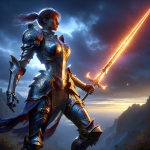
ME:
AI art has a problem with Tangency, how can I solve this with you in my prompts.
Fantasy Artisan (FA):
To address the issue of tangency in AI-generated art, it's essential to be specific in your prompts about the placement and interaction of objects in the scene. Tangency in art refers to the problem where two or more elements touch in a way that flattens the sense of depth or creates an awkward visual intersection. This can make the composition less dynamic or visually confusing. Here are some strategies to mitigate tangency in your prompts:
- Specify Clear Overlaps: Indicate which elements should clearly overlap others. For example, instead of saying "a bird flying near a tree," specify "a bird flying in front of a tree, with its wing extending beyond the tree's outline."
- Avoid Ambiguous Intersections: Be precise about where objects are positioned relative to each other. For instance, instead of "a cat sitting near a flower pot," you could say "a cat sitting behind a flower pot, with the pot partially obscuring the view of the cat."
- Describe Depth and Distance: Include details about the spatial relationship between objects. For example, "a row of trees, each progressively smaller and further away, creating a sense of depth."
- Use Angles and Perspectives: Specify angles that avoid tangency. For example, instead of "a person holding a staff," try "a person holding a staff at a 45-degree angle, ensuring it doesn't align with the arm or leg lines."
- Mention Lighting and Shadows: Use lighting and shadows to separate elements. For example, "a lamp casting a shadow on the wall, with the shadow clearly separated from the lamp's base."
- Emphasize Foreground and Background: Clearly define what is in the foreground and what is in the background. For example, "a boat in the foreground with clear water around it, and mountains far in the background."
- Create Dynamic Compositions: Suggest dynamic compositions that naturally avoid tangency. For example, "birds flying in a scattered formation, each at a different distance and angle to avoid overlapping."
By integrating these strategies into your prompts, you can help guide the AI to generate images with more depth and clarity, reducing issues with tangency.
ME:
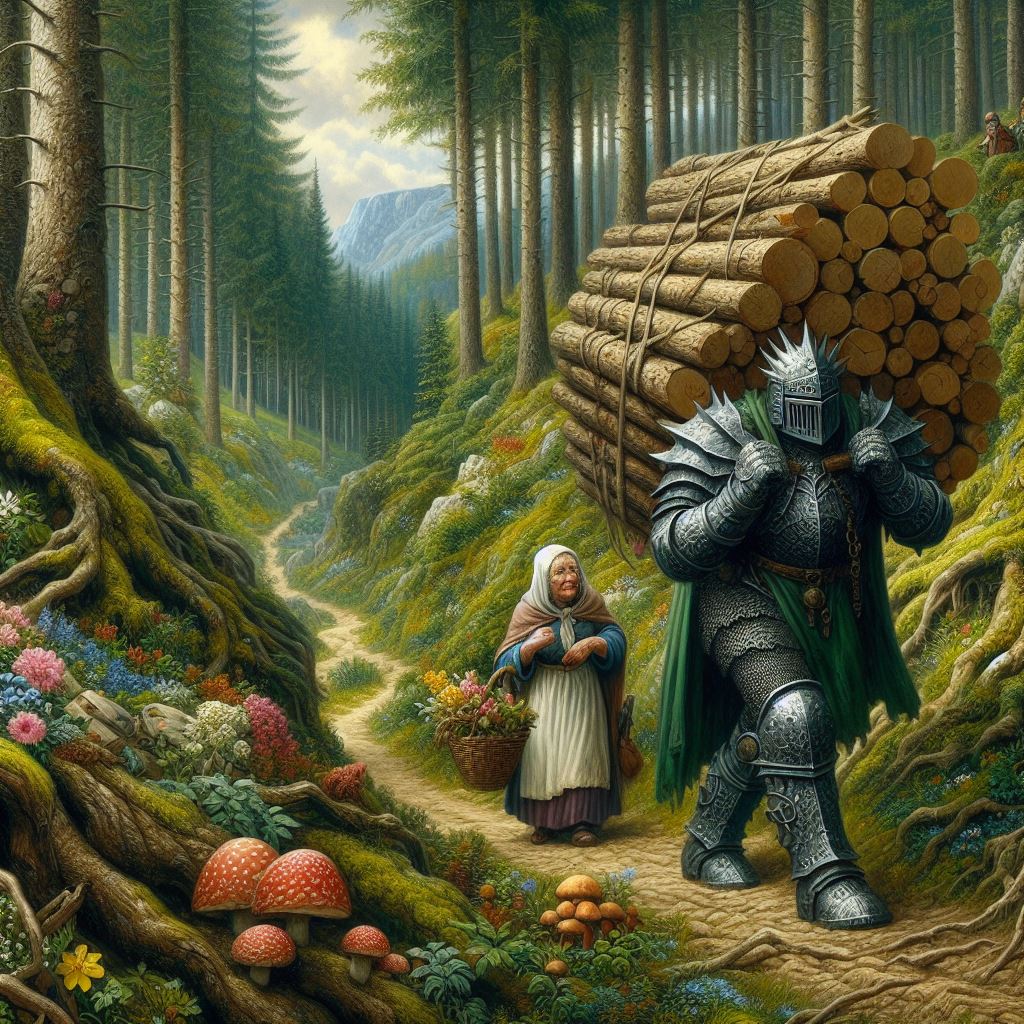
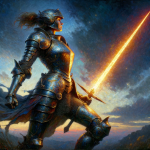
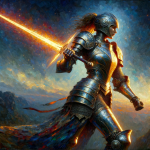
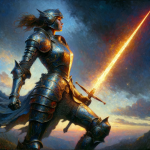
When you, the AI, place and object, example: a sword, behind a subject, the two elements of the object shown do not visually correspond. How would I specify that they should?
FA:
To ensure that elements like a sword positioned behind a subject visually correspond and align correctly in AI-generated art, you can employ specific descriptive techniques in your prompts. These techniques help in guiding the AI to understand the spatial and perspective relationships between different elements, such as parts of an object that are partially obscured. Here are some tips:
- Specify the Continuity of the Object: Clearly describe how the object should look as it extends from the visible part to the obscured part. For instance, "a long sword held by the subject, with the visible part of the blade extending straight behind the subject's head, suggesting the continuation of the same straight line."
- Describe Relative Positioning: Indicate the position of the object relative to the subject. For example, "a sword slung across the subject's back, with the hilt visible over the right shoulder and the tip emerging from behind the left hip, maintaining a diagonal alignment."
- Use Perspective and Angle Descriptions: Provide details on the angle at which the object is held or positioned. For example, "the subject holding a sword angled upwards at 45 degrees, with the lower half visible in front and the upper half extending behind, parallel to the subject's spine."
- Detail Proportions and Size: Describe the size of the visible part of the object and how it should proportionally correspond to the obscured part. For example, "a large broadsword with two-thirds of its length visible in front of the subject and the remaining third extending behind, proportionally consistent."
- Mention Symmetry or Asymmetry: If the object has symmetrical features, mention how they should align. For example, "a double-edged sword, with both edges visible in front and continuing in alignment behind the subject."
- Highlight Shadow and Light Effects: Describe how shadows or light reflect off the object to give clues about its shape and position. For example, "the sunlight glinting off the visible part of the blade and casting a corresponding shadow that suggests the continuation of the blade behind."
- Use Analogies or Comparisons: Compare the positioning to a familiar object or scenario. For example, "like a flagpole carried on the shoulder, with the sword's handle and part of the blade visible in front and the rest extending back."
By incorporating these detailed descriptions into your prompts, you help the AI better understand the spatial relationships and ensure more accurate and realistic positioning of objects in the generated artwork.