Society based on Statistical Probability?

As I recall, in those novels there was a theory of prediction based on maths. Society wasn’t based on maths. I’m not clear what a ‘society based on maths’ means.
The theory was used to change the course of history though. I was going with the somewhat and purposely (I assume) open ended definition of a 'society based on math' in the OP.
 

log in or register to remove this ad

Also
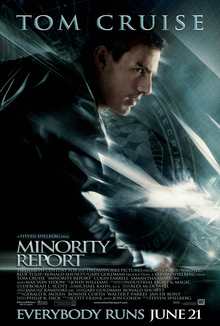
Minority Report
Huh. Minority Report has nothing to do with math. Mutant psychics can see the future and predict crimes.

You might want to look at utilitarian philosophy. That’s cold hard math. Things like causing immesurable suffering to one person in exchange for a slight increase in the quality of everyone else’s life. If that doesn’t sell you it fits the Nuremberg Trials definition of evil, that is a complete lack of empathy for other people.


You might want to look at utilitarian philosophy. That’s cold hard math. Things like causing immesurable suffering to one person in exchange for a slight increase in the quality of everyone else’s life. If that doesn’t sell you it fits the Nuremberg Trials definition of evil, that is a complete lack of empathy for other people.
This thread got me thinking about utilitarian philosophy as well. It's an interesting thought exercise though. How does society deal with it when the improbable happen? Unlikely doesn't mean impossible after all.
 

Minority Report
Wasn't that the opposite of math and just three oracles sitting in bathtubs of magic milk? Felt like a modern version of the oracle of delphi sniffing weed and not ratio.

I also don't understand the question. A society based on math in general or statistical probability like in the title? Whats the difference? The examples read like math is not math but just a stand in for magic? (which feels like the writers just project their misunderstanding and bad school experiences). If math is just math than I don't see how a society would operate different than our real ones.

Utiltarian philosophy is NOT cold hard math btw. it deals with complete unmeasurable dimensions like suffering, quality of life and happiness. Its not based on equations and proofs, its based on rationalization of immorable deeds. You act like you have a good reason for the naughty word you do.
 

Is it more like the Vulcans in Star Trek with them all being 'logical'? Maybe more like the robots in that Will Smith movie where they saved him instead of his child or his wife in the car crash since he showed higher chance of survival?

Is cold logic like this good? Like how justice is supposed to be blind, but there is all these tricks to play on the sympathy of the jury.
 

Realizing I didn't quite remember Minority Report...

so here's a five room Math Dungeon.

The Math Dungeon​

“The Place Where Errors Accumulate”

This dungeon is not guarded by monsters.
It is guarded by correctness.

Core Premise​

Long ago, this facility was built to contain, resolve, or stabilize an unsolved problem.
  • Not a riddle.
  • Not a puzzle with a single answer.
  • A living contradiction that must be managed.
The dungeon exists because the math cannot be solved outright—only contained.

If neglected:
  • reality locally degrades
  • probability stops behaving
  • geometry becomes “suggestive”

The dungeon is not hostile.
It is intolerant.

Dungeon Rules (Tell the Players These)​

  1. The dungeon responds to consistency, not cleverness.
  2. Changing assumptions changes the dungeon.
  3. Brute force works—but creates debt.
  4. The dungeon remembers mistakes.
Keep these vague. Let them learn the hard way.

The Five-Room Structure (Math Edition)​

Room 1: The Threshold of Assumptions

A wide chamber with engraved statements on the walls.

Each wall bears a foundational axiom:
  • “Cause precedes effect.”
  • “Equal inputs produce equal outputs.”
  • “Distance is measurable.”
  • “Identity is stable.”

    Mechanic
  • The party must choose which assumptions they accept.
  • Doors unlock based on which axioms remain unbroken.
  • Breaking an axiom later causes earlier rooms to retroactively misbehave.
Failure Example
  • If “distance is measurable” is rejected:
    • corridors stretch
    • ranged attacks drift
    • maps become unreliable
This room teaches: math begins with belief.

Room 2: The Chamber of Ratios

A massive hall of balanced platforms, flowing liquids, and hanging weights.

Everything is about proportion:
  • damage scales strangely
  • healing works only if “balanced”
  • carrying too much or too little triggers effects
Mechanic
  • Actions are judged relatively:
    • Overkill creates backlash
    • Minimal effort causes inefficiency penalties
  • Perfect balance yields bonuses.
Failure Example
  • Kill a small threat with excessive force?
    • The dungeon “corrects” by spawning debt elsewhere.
This room teaches: efficiency is morality.

Room 3: The Iteration Engine

A looping space. Hallways repeat with subtle changes.

This is where recursive logic lives.

Mechanic
  • The party must repeat an action sequence—but improve it.
  • Exact repetition causes:
    • exhaustion
    • déjà vu effects
    • time bleed
  • Incremental improvement stabilizes the loop.
Failure Example
  • Repeat a failed tactic too many times?
    • The dungeon assumes it is intentional and locks it in.
This room teaches: learning is mandatory.

Room 4: The Proof Arena

A silent amphitheater. No enemies at first.

An abstract challenge manifests:
  • an enemy immune to “unproven” damage types
  • a mechanism that only works if justified
  • a gate that demands explanation, not force
Mechanic
Players must:
  • articulate why something should work
  • align actions with declared intent
  • back tactics with internal logic
This can be roleplay-based, mechanical, or both.

Failure Example
  • Contradicting your own logic mid-fight?
    • The dungeon marks the action invalid.
This room teaches: assertion without proof is noise.

Room 5: The Containment Solution

The heart of the dungeon.
Here lies the unsolved thing:
  • a paradox engine
  • a number that cannot exist
  • a creature defined by inconsistent rules
It is not meant to be destroyed.

Options
The party can:
  1. Stabilize it (reset the dungeon, preserve reality)
  2. Redefine it (change assumptions permanently)
  3. Exploit it (gain power, introduce instability)
  4. Walk away (leave the system to degrade)
Consequences
  • The world outside changes based on the choice.
  • The dungeon may reappear elsewhere.
This room teaches: some problems are only survivable.

Dungeon Aesthetic​

  • Chalk lines worn smooth by centuries of erasure
  • Numbers scratched out and rewritten obsessively
  • Architecture that looks wrong only when you stare
  • Quiet ticking that stops when you stop thinking
No overt “math symbols everywhere.”
Let it feel institutional, not arcane.

***************************
enjoy. :)
 

Utiltarian philosophy is NOT cold hard math btw. it deals with complete unmeasurable dimensions like suffering, quality of life and happiness. Its not based on equations and proofs, its based on rationalization of immorable deeds. You act like you have a good reason for the naughty word you do.
You're right, it's not cold, hard math, but it does have a similar problem to a statistical based society in that there's no way to predict all the outcomes of every decision. There are always unknown variables we simply can't calculate. Even if we could calculate them, we don't really know for certainty the long term ramifications of our decisions. In the early 20th century, automobiles were a Godsend because it meant our cities weren't drowning in horse manure. Most people weren't aware of the environmental cost of automobiles in the long run.
 

for example

Logopolis – The Calculated City

Logopolis was a civilization founded on the belief that mathematics was not merely a tool for understanding the universe, but the mechanism by which it remained intact. Its inhabitants were not rulers, priests, or warriors, but maintainers—mathematicians who devoted their lives to performing continuous calculations that stabilized reality itself. Through spoken equations and ritualized computation, they prevented entropy, spatial collapse, and cosmic decay, treating errors not as academic failures but as existential threats. Daily life revolved around precision, repetition, and restraint; emotion was considered a source of dangerous variability, and silence was valued as a working condition. Outsiders saw Logopolis as austere and joyless, but to its people, beauty lay in balance, and survival was proof enough of success. When the calculations faltered, the universe did not argue—it simply began to fail.
Is it more like the Vulcans in Star Trek with them all being 'logical'?
This seems like a kind of psionic* Tippyverse. Instead of walking out the door every morning and plowing a field, farmer Joe instead goes to his chalk board and works equations from the 'Food Acquisition' series of formulas. This puts food in everyone's larders (or cuts the middleman and makes people not need to eat). It's... certainly an interesting society to throw into a setting.
*or whatever. The math somehow making social survival happen without intermediary like physics, engineering, and eventually just plain old working to maintain life is a form of magic.

It also sounds maybe what D&D Vulcans would have their clerics do -- it always does seem weird how they have no gods and venerate logic, but have all sorts of temples and monasteries and sacred relics and practices and such.

The thing I'd like to point out is that, aside from having been pre-conditioned with things like Vulcans, there's no particular reason for such a society to be more 'austere and joyless,' or other things we tend to assign to such societies (reserved, quiet, having an over-fondness for beige robes). A math-based society could be overrun with jocularity, humor, sharp colors, atonal music, and unconventional art (so long as it is produced during designated off-hours).
This thread got me thinking about utilitarian philosophy as well. It's an interesting thought exercise though. How does society deal with it when the improbable happen? Unlikely doesn't mean impossible after all.
There aren't 'rules' on this per se, but in general moral philosophies judge the ethics of an action based on the reasonably expected outcome(s). Driving home drunk doesn't retroactively become acceptable because you made it home alright, etc. Mind you, being prepared for the eventual dice falling against you will tend to be part of the framing. Again, within 'reasonably expected' -- cracking someone's chest is reasonable if you are a trained surgeon, and you should be prepared for things you aren't trained for by having a cardiac specialist on call, but you don't need to be prepared for a meteor to fall through the top of the operating theater and kill your patient.
I don’t understand the question. What does a society based on maths mean?
It depends on the level we are looking for.
If a society is based on maths in the same way that, say, the classical/ancient Phoenicians were based on sailing or Dynastic eras China was a society based on bureaucracy (which is to say, in very broad strokes), perhaps that means it has an otherwise unexpected prominence, and everyone at least worries how well they do the thing and tries hard to get their kids to take their studies in the thing seriously (there are career opportunities in math, and those who are bad at math my get passed over for promotion in other fields, etc.).

If it is more along the lines of Plato's description of Atlantis, than maybe it is a society that thrives because of their adherence to math. This is much more at a 'living in a proper way provides good fortune' level than Shade's of Eternity's City of Logopolis example. People still till fields to produce food and build canals to irrigate them, etc. It's just that the society as a whole prospers and sees good fortune because they keep their noses clean and their math accurate.

If it is indeed a society where doing math replaces other tasks directly (as exemplified above), it's going to come off one of two ways. The first is that it will seem like Twilight Zone episode, where people are going about their lives doing very unnatural seeming activities and treating them as normal and you are just waiting for someone to say, 'wait a minute, something here seems off.' The other is that it will just seem like an alternate activity, and you have people going to work and working at desks instead of other vocations and it all feels kind of like IRL where most of us work at desks and maybe only through news feeds do you realize that there are still people who farm or maintain the roads and so on.

 

Feels like Mechanus. Not sure if that was the intention.

The nice thing about maths is that it happens without needing to be thought about. The underlying maths exists whether we concentrate on it or not.

I play a bit of poker and one absolutely viable way to play is to know the various odds of useful cards coming up based on what has been seen so far. A mathematical individual might approach life in the same way. They can take risks but they are calculated risks.

Maybe in some cases this would lead the most adept practitioners to make uncanny leaps of deduction. Maybe with the less blessed it would lead to decision paralysis and indecision.
 

Remove ads

Top