d20 Apocalypse

Crothian

First Post
Item Code 880460000
Release Date June 2005
Format Trade Paperback
Page Count 96
ISBN 0-7869-3273-2
Price $19.95 ; C$28.95

New rules designed for running a d20 Modern campaign in a postapocalyptic setting.

This new rules supplement provides everything players and Gamemasters need to participate in adventures in a post-apocalyptic setting, including rules and designs for apocalyptic events, such as nuclear war, environmental disaster, alien invasion, or Armageddon. The book provides new rules for barter, scavenging, equipment, mutations and robots. Three ready-to-play campaign models are included.
 

log in or register to remove this ad

d20 Apocalypse is the newest 'toolkit' supplement for d20 Modern by Wizards of the Coast. The Post-Apocalypse rules come in a 96 page softcover manual, typical of most new WotC supplements for the d20 Modern line. Written by Eric Cagle, Darrin Drader, Charles Ryan, and Owen K.C. Stephens, d20 Apocalypse is backed by a few big names in RPG Publishing.

On first look, 96 pages seems fairly small compared to the D&D support typical of WotC, but don't be discouraged by page count. d20 Apocalypse contains GM information on how the apocalypse came to your campaign, additional rules (including tables on how much damage nuclear blasts have done to buildings, radioactivity, scavenging, bartering, vehicle modification, and mutations), as well as 3 campaign settings. Unlike d20 Past, each setting does not include an adventure, but each include a map of 1 area to explore with your post apocalyptic hero.

Chapter 1 includes all the campaign guide information for GMs and Players planning a post apocalyptic campaign. It includes information on how the apocalypse came to pass (including options for nuclear devastation, alien invasion, rise of the machines, asteroid landings, etc), information on creating post apocalyptic societies, and the role of heroes in a post apocalyptic world.

Chapter 2 is the rules heavy chapter of d20 Apocalypse focusing on new rules added to game including rules for bartering goods and services, scavenging, vehicle modification, mutations, and new menaces for players to battle.

Chapter 3 is the characters chapter of d20 Apocalypse which presents and overview of occupations in post apocalyptic society, as well as new uses for skills. Included in this chapter are a few setting generic advanced classes: Salvager and Road Warrior.

Chapter 4 begins the campaign settings with Earth Inherited, a world where angels and demons battle for earth and humankind is caught in the middle. This is my favorite part of the book, as it goes in a different direction than most post apocalyptic settings go. Instead of some natural disaster destroying the Earth, Revelations comes to pass with the heroes caught in the middle.

Chapter 5 describes the Atomic Sunrise campaign setting which is the typical post-nuclear world, complete with mutations and Mad Max style road warriors. While certainly not original, the setting information is an interesting read, and introduces a new advanced class: the Lawbringer, which is a post apocalyptic vigilante who is judge, jury, and executioner in the Atomic Sunrise world.

Chapter 6 is the Plague World setting which details the alien invasion type of apocalypse. It includes another new advanced class: the Evolutionary, which is based upon taking many mutations over it's levels. This is my least favorite part of the book, only because aliens are not something I had ever envisioned in a post apocalyptic campaign.

What I liked:
Earth Inherited is a good setting for those interested in a religious apocalypse. For those who will not enjoy that type of setting, very little can be gleaned from it for other apocalyptic games.

Vehicle Modification rules are a welcome addition to the game. I'm not sure how many superchargers you may run into during a game, but if you find one it's good to know you can use it for something.

Exploring ruined buildings. Rules for determining how much damage buildings have taken and what kind of shape they are in at the time of exploration (as well as some random hazards such as floors giving way and ceilings collapsing) are much different than the typical damage to objects rules from the d20 rules.

With the exception of mutations, d20 Apocalypse is fairly FX lite. Although Earth Inherited is presented with some FX, it seems really easy to remove it from the game.

What I didn't like:
The 2 other campaign settings were definately not unique. If you are looking for an Atomic Sunrise setting, it has been done before in Darwin's World. Even the Plague World setting could easily have been done with other existing materials.

The softcover format is one that I don't prefer. The copy of my book was fairly beat up on the shelf, and has the same damage d20 past did coming off the shelf: the spine corners are starting to fray. I do hope they last longer than my 2e softcover books, which tended to fall apart after about a year of good use.

Conclusion:
This book got 4 stars because of some of the new rules aded to the game. Without those additions to the game, this would have only been a 3 star book. If you want the crunch, this book does fairly well. If you're looking for campaign settings, definately try to read some of it in the store before you purchase it.
 

d20 Apocalypse Review

After hearing some good things about d20 Apocalypse here on Enworld and being a sucker for disaster movies, I decided to pick up this newest book in the d20 Modern line. As the title implies, it gives rules and advice for running a d20 Modern (or Future) game set after the end of civilization. And it does this very well. d20 Apocalypse was a very fun and fast read. All the content is solid and there's no filler. The book maintains an good balance between strong mechanics and imaginative settings. It's very much a DM's book, though it does contain a few tidbits for players. I wouldn't say d20 Apocalypse is an essential resource for DMs wanting to run a post-apocalypse game, but it is incredibly helpful and an excellent time saver.

The book itself weighs in at 96 pages of full-color goodness. The artwork is of high quality overall, and it usually showcases heroes in action. It's great for getting your imagination going and visualizing the many ways a ruined world may look. The gritty page boarders and font go a long way towards making the book look great. $19.95 is a very fair price, especially given the quality of its contents.

Introduction (Pages 4-5)
d20 Apocalypse gets started with a forward written by one of the authors who discusses the appeal of post-apocalypse games. This section introduces a few ideas core to the genre, and also goes over d20 Future's progress levels and their relation to the ways in which the world can end.

Chapter 1 – Postapocalypse Campaigns (pages 6 – 15)
How do you want to destroy the world? This chapter offers a lot of suggestions and explores what the aftermath of each method might be like. The apocalypse could take the form of an asteroid, a nuclear war, a robotic rebellion, or even judgment day. Many of these reminded me of a movie on the subject. In fact, I think a Recommended Viewing appendix would make a nice addition to the book.

The next section lists many of the forms a post-apocalypse society might take. Do people build their society upon law and order, or do they thrive in the lawlessness and anarchy? It also mentions many possible conflicts that could arise within and between societies. The advise in this section of the book isn't too in-depth, but it does provide a good resource for DMs building their campaign worlds.

Chapter One also covers eras, which are the time periods after the apocalypse in which a campaign can take place. Though its mainly to get you thinking, it also applies to some of the tables dealing with scavenging and the structural integrity of buildings. The next section, Heroes of the Campaign, examines the role of the PCs in the world. Are they native survivors, or is this their first encounter with the world?

The next section, entitled Devastation, discusses the varying degrees a damage an area could have sustained. There's a table detailing the damage done by various types of nuclear weapons; while I can't seem much game application, I enjoyed reading it nonetheless. There's also a section on radiation and radioactive fallout. The authors wisely recommend that you use radiation sparingly, mainly to define the landscape and add tension to exploring certain areas. d20 Apocalypse borrows the base radiation rules from d20 Future, which is practical but not too interesting.

Overall this chapter provides a good overview of what the world might be like after the apocalypse and provides the DM was many ideas of how to shape his or her campaign setting.

Chapter 2—Rules Modules (pages 16 – 55)
This meaty chapter provides many different rules that you can add to your own post-apocalypse game. As the title states, they are all modular so you can pick and choose which ones to use. These rules all make sense, and strike the right balance between abstraction and realism.

The chapter starts with some rules for damaged buildings. There's a tables for randomly determining how damaged any given building is. While exploring these buildings, characters must make Survival checks based on its condition or suffer some damage. This can take the form of falling debris or go all the way to the building's collapse.

The next chunk of rules details Scavenging. Why would characters go exploring unsafe structures unless there was some reward? To scavenge, characters make a search check against a DC based on how old the building is and if it's been ransacked before. What they find depends on the degree of success and the type of building. Characters can only find supplies, such as parts, ammo, or random gear, while scavenging; stuff like firearms and armor are wisely kept off the table, leaving their placement to the DM.

These beginning sections are of great utility to a DM. The tables, along with some custom random encounter charts, could be great for quickly detailing any buildings the PCs may explore and what dangers and plunder await inside. I think this is a great time-saver and a better alternative to purely winging exploration.

Postapocalyptic Gear is a large section that details a number of new rules regarding equipment. This first is the Trade Unit, or TU, which describes the relative value of gear now that currency has no meaning. A large table lists the TU value of equipment in the d20 Modern game. There are some simple rules for bartering; basically, its a Diplomacy check to persuade the NPC to offer you a fair deal. Bartering is an uphill battle, though, since NPCs won't do better than to offer you an equal trade unless you have something they really want. I suppose this makes sense, given how paranoid people would be after the collapse of civilization.

The section continues with some “new” equipment. By “new” I mean too mundane to be worth describing in typical d20 Modern games. There's descriptions and TU values for, among other things, food, gas, medicine, and parts. Parts are interesting; they represent either mechanical or electronic pieces of equipment characters have salvaged. Parts are used to build or repair things, but you need to make a special Parts check (based on how many a character has accumulated) to see if he has the right pieces (much like a Wealth check). The system is simple and abstract while being a good representation of all the useful junk a character may be toting around. This section also has some improvised weapons and armor listed as well.

Vehicles also get their fair share of support, with tables listing the gas mileage of different vehicles, rules for repairing and modifying them, and some additional movement and combat rules. There's also a section on Long-Distance Travel, which is largely self-explanatory. There's even stuff for mounted combat, in case you want a mode of transportation that is not prone to exploding. To keep travel dangerous a few environmental hazards are provided.

The next section is on Mutations . . . and yes, Chapter 2 is pretty big. Like radiation, the mutation rules are borrowed from d20 Future and expanded upon. We get some advice on how to incorporate them into a post-apocalypse campaign, as well as some new mutations and drawbacks. While the rules in this section are practical, they can't compare to the freaky and wild Creep rules in Redline.

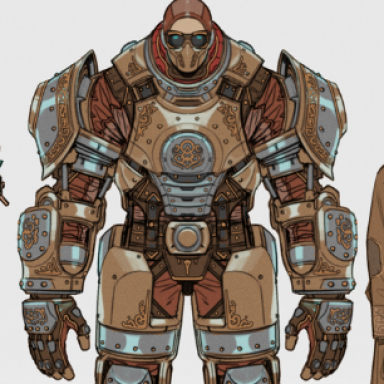
Chapter 2 ends with some new monsters for your post-apocalypse game. We get a template for the Apocalypse Demon—a buff outsider that epitomizes war and is proficient in every type of weapon. Next are a pair of robots: the first is called the Tin Can, and it's a weak CR 1 bot that usually attacks in swarms; the second is an armored crablike monstrosity known as the Meatgrinder (it's illustration is pretty cool). The next horrifying postapocalypse monster puts all the others to shame . . . the donkey! This fearsome CR 1/6 creature can carry up to 150 pounds! (Someone definitely forgot to factor in the sturdy quadraped bonus there.) Following the donkey are, appropriately, the Horsemen of the Apocalypse. They come in four varieties, although these ones are mortal and non-unique (but still very powerful). Next is the Mutant template, the Rad-Roach (my personal favorite of the bunch), and the Thinking Swarm. Last is the Viral Deathspawn template, which represents the zombified victims of some sort of super-disease. There's even a few example super-viruses given at the end.

Overall, the monsters are pretty cool. The only real criticism of this section is that you probably couldn't justify using more than a few of these in any given campaign. Also, there's no radioactive slime monster. The bestiary whet my appetite for more post-apocalypse creatures. Fortunately, there's a section that recommends monsters to use from other sources. And Wizards of the Coast, if you're reading this, I'd love to see a full d20 Apocalypse monster book.

Chapter 3 – Character Options (pages 56 – 63)
This brief chapter gives us some new crunch for the PCs to use. First there's an overview of how to adopt many of the d20 Modern occupations to a d20 Apocalypse game. Some skills get changed a bit, such as Diplomacy being used for bartering and Craft skills now use the parts system. Next are the obligatory new feats and advanced classes. The feat section is small; the new ones mainly deal with mutations or scavenging. The two advanced classes in this section (there's more later in the book) are decent. There's the Road Warrior, which gets some situational bonuses to Drive checks and learns some vehicle combat tricks. We also get the Salvager, who is good at building and finding stuff. As a whole, this chapter does its job good enough, but isn't as interesting as the other parts of the book.

Chapter 4 – Earth Inherited (pages 64 – 75)
Remember when I said this book has a good balance of fluff and crunch? Well, here's where the fluff comes in. The last three chapters of the books each detail a post-apocalypse campaign setting. This one, called Earth Inherited, takes place sometime in the future right after the Rapture. All who are virtuous and pious are granted a blissful afterlife; those who have lead a life of vice and selfishness are dragged off to eternal torment. Meanwhile, the forces of Heaven and Hell have unleashed their forces to do battle on Earth amidst the human survivors. Millions died as war swept the planet, but strangely enough the angels and demons are unable to return to their otherworldly realm. Stranded in the mortal world, many continue the war but some begin doubting what they've been fighting for. Humankind, though, isn't down for the count just yet; they still have advanced technology that is quite effective against the invaders. The survivors must fight to live in a lawless world imperiled by demons, marauders, and bitter secular humanists.

In addition to the setting overview we get some interesting organizations. There's the Avengers of Humanity, who want to rebuild civilization and extract revenge upon both angel and demon alike. The Heavenfire Coalition is a group of fallen demons and angles who want to call a truce to their pointless war. The Order of the Damned are a group of human who have allied themselves with the demons to live a depraved life of pleasure, while the Order of the Machine wants to build a civilization guided by technology and logic, rather than antiquated ideas such as good or evil. There's also some stats for angels and demons, and a mapped-out location—a grounded barge converted to a crude fortress.

Earth Inherited is a very cool setting. I like the kitchen-sink approach, with its inclusion of angles, demons, cybernetics, mechs, and magic. I also like the fact that its not a setting of moral absolutes: some demons want an end to the conflict, many angels are overzealous and uncompromising, and the organizations tend to pursue their own goals which are not so clearly good or evil.

Chapter 5 – Atomic Sunrise (pages 76 – 85)
The next campaign setting is another winner; this one is called Atomic Sunrise and it's the quintessential post-apocalypse setting. Not too far in the future nuclear war has decimated to earth. The vast majority of the population is killed in the attacks or their immediate aftermath, but the (un)lucky few far away from missile strikes or in the safety of a bomb shelter managed to survive. Its a few generations after the world changed, and society is beginning to pull itself together in this new desert land of hardship and anarchy.

After setting description, this campaign provides many organizations to spice things up (more than I will describe). The CIA has become the Establishment, which plays other groups against each other until the time is right to reinstate the US government. The Nautilus Club, though, are a group of scientists that predicted the nuclear war and built undersea bases where they could continue their research. One group, the Government of New Texas, wants their title state to grow in both size and power. There are other groups of mutants (where there's nukes, there's mutants) and of bandits which make good foes for the PCs. A sample location is provided; in this case a college football stadium turned arena where people pay to watch gladiators and mutants fight to the death. Is that cool or what? We also get the Lawbringer, a 5-level prestige class that seeks to bring frontier justice to the wastelands.

Atomic Sunrise is a very fun setting. Among the organizations are a web of alliances and enemies that keep things interesting. The relations between the many groups, their goals to reshape the United States, and still-active governmental organizations give this setting an interesting political element. And don't forget about the mutants!

Chapter 6 – Plague World (pages 86 – 96)
The final chapter details a campaign called Plague World. Sometime in the near-future, a super-intelligent alien race know as the spanthi discover Earth, a planet that would be an excellent substitute for their destroyed homeworld. With ease the alien invaders neutralize our planets defenses and begin releasing deadly viruses to wipe out humanity (and even clean up the environment). Mankind is crushed and civilization is destroyed. Furthermore, the viruses have caused many people to mutate out of control. Content that they have won the war, the spanthi biotech ships land on Earth to begin colonization. However, they soon learn that their viruses have mutated into something new, and that they and their biotechnology are no longer immune. With their numbers dwindling, the spanthi begin to genetically alter themselves to grow into powerful but mindless warriors that are immune to the deadly viruses.

Some groups, seeing the war as unwinnable, decide to put specialized teams into suspended animation until there is no longer any signs of the alien fleet. These highly-trained and well-armed Rip Van teams are given the mission of rebuilding civilization in the war's aftermath. Hundreds of years after the invasion, these teams begin to awaken. They find that the world has descended into barbarism and that dangerous mutated spanthi roam the countryside. However, the world is strangely pristine—many of the spanthi's weapons were actually designed to improve the environment, and most of the world's cities have long since crumbled.

In addition to the long backstory, this chapter offers a few organizations, stats for both varieties of the spanthi, a map of a typical Rip Van bunker, and a prestige class know as the Evolutionary. This is an interesting class for mutants who wish to control the future of their own mutation.

While Plague World is an interesting setting, I think that too much space was devoted to its cool premise and not enough to the current conflicts that the Rip Van teams (by that I mean, the PCs) might face. This setting could serve as an unusual starting point for a post-apocalypse game, but the DM will have more blanks to fill in than with the other settings.

d20 Apocalypse is a great supplement for anyone who wants to run a game after the collapse of civilization. Its also the ideal companion to Fantasy Flight Games' Redline. D20 Apocalypse's modular design and solid rules gives this book a lot of utility, and the excellent campaign settings show you what you can do with it. Be warned, though: after reading it you may want to run your own post-apocalypse game. The only thing holding d20 Apocalypse back is its small size; after reading it, I couldn't help but want more. Guess I'll cross my fingers for a web enhancement.

Overall, I'm giving d20 Apocalypse a 4 out of 5. Its definitely a high 4, more like a 4.5—great, but not quite superb.

-Casey Smith

 

d20 APOCALYPSE
By Eric Cagle, Darrin Drader, Charles Ryan, and Owen K.C. Stephens
Wizards of the Coast product number 880460000
96 pages, $19.95

d20 Apocalypse is a 96-page softcover accessory meant to be used with not only with the d20 Modern rules but also the d20 Future supplement - it's worth noting that both books are required to use this one, and furthermore that while I was given a free review copy of d20 Apocalypse, I have neither of the books needed to actually use this book in play. (I pretty much stick to D&D/d20 fantasy.) So while I won't actually be using this book myself, I can at least pass on my thoughts about it, reviewer style.

The cover depicts a trio of postapocalyptic characters by artist Dave Johnson: a female cyber-centaur, a biker dude with a crossbow, and a female mounted on a mutated riding beast and wielding a futuristic-looking wizard's staff. (That last character reminds me more than a little of Ariel from the old Thundarr the Barbarian cartoon.) There are some interesting details in this piece; I like the fact that the cyber-centaur wields a stop sign as a shield, and the happy pig's head mounted on the front of the road warrior's motorcycle is a nice touch. The back cover features these same three characters in action shots, with the road warrior driving away from a nuclear mushroom cloud in the background, the cyber-centaur shooting her machine-gun-hand at a bunch of humanoid robots, and the female techno-wizard holding up her glowing staff while strange, humanoid figures peer at her from the ruins. The three-character approach was a good one, as d20 Apocalypse features three sample campaign worlds for the GM to use.

The interior art consists of 29 full-color illustrations by artists Kalman Andrasofsky, Grafiksismik Inc., Karl Kerschl, Ramon Perez, and Chris Trevas, as well as 3 monochrome maps by cartographer Todd Gamble. The artwork is a bit more "cartoony" than I like, but there are some nice pieces in here nonetheless. I especially like the use of "white space" in several of the pieces (particularly the zombie attack on page 6), where the outline of the piece follows the contours of objects not actually shown in the picture (in the case of the zombie attack piece, it's the outline of two zombie hands in the foreground).

d20 Apocalypse is laid out as follows:
  • Foreword: A two-page introduction discussing the characteristics of a postapocalyptic campaign, with an examination of appropriate Progress Levels
  • Chapter 1 - Postapocalypse Campaigns: Types of apocalypses (alien invasion, biological disaster, environmental cataclysm, asteroid strike, Judgment Day, nuclear armageddon, rise of the machines, rogue planet, supernatural invasion), postapocalyptic societies (depraved, devout, ethic, lawful, militant, savage, tribal, totalitarian), postapocalyptic eras (aftermath, generation 0, dark ages, new world), the heroes' relationship to the world and the apocalypse, devastation, and radiation
  • Chapter 2 - Campaign Rules: Sections on exploring unsafe structures, scavenging, postapocalypse gear, bartering, some new equipment, making and fixing items, modifying vehicles, long-distance travel, mounted combat, environmental hazards (acid rain, fallout cloud, ghost storm, "joy buzzer" lightning storms), mutations (including 16 new mutations and 2 new drawbacks beyond those found in d20 Future), and new creatures (Apocalypse Demon template, Combat Robot T-C-4 "Tin Can," Combat Robot M-G-8 "Meatgrinder," Donkey, Horseman of the Apocalypse, Mutated Creature template, Rad-Roach, Thinking Ant Swarm, Thinking Rat Swarm, and the Viral Deathspawn template), plus virulence rules (including 7 superviruses)
  • Chapter 3 - Character Options: Possible starting occupations, changes to existing skills, 9 new feats, and 2 advanced classes (Road Warrior and Salvager)
  • Chapter 4 - Earth Inherited: A sample postapocalyptic campaign involving what's left of the Earth after Judgment Day has come and gone, the sinners have been taken to Hell and the devout to Heaven, and the planet is populated by "the meek" and various warring demons and angels who are now stuck on Earth
  • Chapter 5 - Atomic Sunrise: A sample postapocalyptic campaign depicting life on Earth after nuclear armageddon (very reminiscent of Gamma World), including a new advanced class, the Lawbringer (think Mad Max or Judge Dredd)
  • Chapter 6 - Plague World: A sample postapocalyptic campaign where aliens scattered viruses and nanotechnology to destroy human life on Earth so they could colonize the planet, but the virus mutated and now affects the aliens as well (Gamma World with an ongoing mutated alien presence), with a new advanced class, the Evolutionary (super-mutant)
The introduction and first three chapters are very well thought out; I enjoyed the discussion of the merits of postapocalypse campaigns, and the rules seem to be specifically those needed to run such campaigns, whether they're new rules or tweaks to pre-existing rules. [Disclaimer: I'm not up on my d20 Modern rules, so I can't really speak with any authority about which is more prevalent, the "new" or the "tweaked."] I like the fact that they opted to give three sample postapocalyptic campaign settings instead of just going with one, although that just means that you don't get as much "meat" for each campaign setting as you would if they had just picked one. (To their credit, however, with so many possible different ways to go with an apocalypse, I don't think a single campaign would have been able to incorporate all of the material in this book. Multiple examples was definitely the way to go.) Of the three, I'm partial to the "Atomic Sunrise" campaign, but that's just because I'm an old-time Gamma World fan (a 1st edition purist, to be specific, although the 2nd edition was okay, too).

Proofreading and editing was pretty good, with only a few problems that made it through: a d% roll of "49-49" on the Miscellaneous Item table on page 22; Table 2-25: Mutations has two entries for a d% roll of "64" but none for "63"; the occasional word misuse and misspelling ("insulate" instead of "insulated," "efefcts" instead of "effects," "ben" instead of "been"); all in all, not too bad, and it was pretty easy to figure out what was meant in each case.

And then there's the creature stats. I almost didn't bother providing "unofficial errata" for this book, since as I said before I'm not up on my d20 Modern rules, but so much of the stat block is the same for d20 Apocalypse as it is for D&D that I did my calculations as if they were D&D creatures and looked up a few things at my local gaming store when I had a question. With that said, I'm sure this list won't be up to my general standards, but I thought I'd include it nonetheless; no doubt those of you who play d20 Modern games can correct me where needed. In any case, here's what I noticed:
  • p. 46, Apocalypse Demon Minotaur: No Initiative entry is provided; should be +3 (+3 Dex). Defense should be 17, not 14 (-1 size, +3 Dex, +5 natural). Touch defense should be 12, not 9 (-1 size, +3 Dex). Missing "Track" as a feat (assuming the d20 Modern minotaur is based off the D&D minotaur).
  • pp. 46-47, Combat Robot M-G-8 "Meat Grinder": With HD 7d10+20, average hit points should be 58, not 55. I also note it has 4 feats instead of the 3 it would have using the D&D rules - is this in error?
  • p. 47, Donkey: Initiative should be +1, not +0 (+1 Dex).
  • p. 48, Horseman of the Apocalypse: With HD 10d8+50, average hit points should be 95, not 90. Base Attack Bonus should be +10 (as an outsider), not +7. Grapple should be +20, not +17 (+10 BAB, +4 size, +6 Str). Unarmed strike/integrated weapon attacks should be at +15 melee (or +15/+10 for a Full Attack), not +12 (or +12/+7 for a Full Attack) (+10 BAB, -1 size, +6 Str). Ranged attacks should be at +11 ranged, not +8 (+10 BAB, -1 size, +2 Dex).
  • p. 49, Mutated Bear: Reflex should be +6, not +4 (+5 as a 6-HD animal, +1 Dex).
  • p. 50, Rad-Roach: First of all, it's not clear whether this is intended to be the result of the "mutated creature" template or not, but either way, it's got problems. If it's a "mutated creature," then HD should be 1d10, not 1d8, and average hp should be 5, not 4. Fortitude should be +4, not +2 (the "mutated creature" template adds a +2 bonus to Fortitude saves). If the rad-roach does not have the "mutated creature" template, then Base Attack Bonus should be +0 (as a 1-HD vermin), not +1. Grapple should be -5, not -4 (+0 BAB, -4 size, -1 Str). Bite attacks should be at +4 melee, not +5 (+0 BAB, +1 size, +3 Dex with Weapon Finesse). (Also, does d20 Modern still make you specify a specific weapon for use with Weapon Finesse, or is it a blanket effect as in D&D? I notice the rad-roach has "Weapon Finesse (bite)" instead of just "Weapon Finesse.")
  • p. 51, Thinking Ant Swarm: "Large" should be "Diminutive" - with swarms, it's the size of the individual creature that counts, not the entire swarm as a whole. (It might even be "Fine," but I'm going to assume we're talking about Diminutive ants for the purpose of the stat block.) Swarm attacks shouldn't require a melee "to hit" roll modifier, they just automatically hit anyone in the same squares they occupy during their turn. Thus, "Weapon Finesse (swarm)" is a pointless feat, and "Atk +7 melee (2d6, swarm)" should read "Atk (2d6, swarm)."
  • p. 51, Thinking Rat Swarm: Likewise, "Large" should be "Tiny" when dealing with the swarm's size. The Monster Manual rat swarm has 4 HD, but this one has 6 HD - why? If HD = 6d8, then average hp should be 27, not 13 (and if HD = 4d8, average hp should be 18, not 13; the Monster Manual is wrong!) Defense should be 14, not 11 (+2 size, +2 Dex). Ditto with the touch defense. Flat-footed defense should be 12, not 9 (+2 size). If it does have 6 HD as listed, then BAB should be +4, not +3. Swarm attacks should have no attack bonus; they're automatic (thus "Weapon Finesse (swarm) is useless). With 6 HD, Fortitude should be +5, Reflex should be +7, and Will should be +3; if it really does only have 4 HD, then the listed values are okay (as is its BAB). If it has 6 HD, then I believe it should have 3 feats, not just the 2.
  • p. 52, Human Viral Deathspawn: Initiative should be +1, not -1 (+1 Dex). Defense should be 13, not 11 (+1 Dex, +2 natural), and flat-footed defense should be 12, not 11 - although the template doesn't actually specify a +2 natural armor bonus (despite "+2 natural" being listed in the "show your work" section), so perhaps those values should be "Defense 11" and "flat-footed 10," respectively. Touch defense should be 11, not 9. Reflex should be +1, not -1 (+0 as a 1-HD undead, +1 Dex). Will should be +4, not +2 (+2 as a 1-HD undead, -1 Wis).
  • p. 69, Cherub: Will should be +4, not +2 (+3 as a 2-HD outsider, +1 Wis). With 2 HD, it should have 1 feat, not 2.
  • p. 70, Dominion: With 6 HD, it should have 3 feats, not 4. Shout of righteousness Will save should be DC 16, not DC 19 (10 + 1/2 HD + Con bonus = 10 + 3 + 3).
  • pp. 70-71, Seraphim: Blast of righteousness Reflex save should be DC 20, not DC 15 (10 + 1/2 HD + Dex bonus = 10 + 8 + 2). (At least, I assume it's Dex-based, but even if it isn't, none of its ability scores has a -3 modifier, which is what would be needed to arrive at DC 15.)
  • p. 71, Naberus: Initiative should be +7, not +5 (+3 Dex, +4 Improved Initiative). Fortitude should be +3, not +5 (+2 as a 1-HD outsider, +1 Con). With 1 HD, it should have 1 feat, not 2.
  • p. 72, Marchocias: With HD 9d8+45, average hp should be 85, not 82. Flat-footed defense should be 23, not 13 (-1 size, +14 natural). In human form, flat-footed defense should be 24, not 14 (+14 natural). Under Full Attack, bite attacks should be at +8 melee, not +9/+4 (+9 BAB, -1 size, +5 Str, -5 for a secondary attack, no iterative attacks with a secondary attack form).
  • p. 73, Belphegor: Grapple attacks should be at +26, not +23 (+11 BAB, +8 size, +7 Str). Under Full Attack, bite attacks should be at +12 melee, not +17/+12/+7 (+11 BAB, -2 size, +7 Str, -5 as a secondary attack, +1 Weapon Focus, no iterative attacks for secondary attacks). With 11 HD, it should have 4 feats, not 6. Breath weapon Reflex saves should be DC 21, not DC 15 (10 + 5 + 6). Assuming the d20 Modern rules follow the D&D rules in regards to the AC ("defense") of gizzards/stomach linings - half the creature's normal natural armor bonus - the gizzard should have a defense 18, not 20.
  • p. 74, Low-Level Damned, strong ordinary 1/tough ordinary 1: With 2 HD, he should have 2 feats, not 3 (1 as a 2nd-level character, 1 as a human).
  • p. 74, Mid-Level Damned, strong ordinary 3/tough ordinary 3: Defense should be 16, not 14 (+1 Dex, +4 class, +1 leather jacket). Touch defense should be 15, not 13 (+1 Dex, +4 class). Flat-footed defense should be 15, not 13 (+4 class, +1 leather jacket).
  • p. 82, Radillos, charismatic hero 6/soldier 5/road warrior 6: HD should be 6d6+18 (as a ChaH6) + 5d10+15 (as a Sol5) + 6d8+18 (as a RdW6) - the stats given have 5d8+15 for his levels as a soldier. Defense should be 26, not 25 (+3 Dex, +8 class [not +7 as listed: +2 as a ChaH6, +3 as a Sol5, +3 as a RdW6], +5 enhanced sports pads). Touch defense should be 21, not 13. Flat-footed defense should be 23, not 22. Metal baton damage should be 1d6+1/19-20, not 1d6/19-20 (+1 Str). Full Attack with an HK G3 assault rifle should be at +14/+9 ranged, not +14/+8 (14-5=9). Reflex should be +14, not +15 (+3 as a ChaH6, +3 as a Sol5, +3 as a RdW6, +3 Dex, +2 Lightning Reflexes). Will should be +5, not +3 (+2 as a ChaH6, +1 as a Sol5, +2 as a RdW6, +0 Wis). The number of feats seems wrong; I figure 15 feats (6 as a 17th-level character, +1 as a human, +3 as a ChaH6, +3 as a Sol5 [one of which should be Weapon Specialization, which isn't one of the feats listed in his stat block], +2 as a RdW6), not 17.
  • p. 82, Ride of the Glow, fast hero 4/road warrior 5: Defense should be 24, not 23 (+3 Dex, +8 class [not +7 as listed: +5 as FastH4, +3 as RdW5], +3 sports pads). Touch defense should be 21, not 13. Flat-footed defense should be 21, not 20. Reflex should be +8, not +6 (+2 as a FastH4, +3 as a RdW5, +3 Dex). I think he should have 8 feats, not 10 - 4 as a 9th-level character, +1 as a human, +2 as a FastH4, and +1 as a RdW5.
  • p. 82, Genetic Scientist, smart hero 5/field medic 10: HD should be 5d6 + 10d8+30 - the stats give him 6d4 for his smart hero levels. (I'm really not sure where that came from.) Defense should be 22, not 23 (+2 Dex, +7 class [not +8, as listed: +2 as a SmtH5, +5 as a FMd10], +3 undercover vest). Touch defense should be 19, not 20. Flat-footed defense should be 20, not 21. It looks to me like he should have 12 feats, not 13 (6 as a 15th-level character, +1 as a human, +2 as a SmtH5, +3 as a FMd10).
  • p. 92, Spanthi Reaver: Reflex should be +10, not +8 (+7 as a 10-HD monstrous humanoid, +3 Dex). Will should be +11, not +9 (+7 as a 10-HD monstrous humanoid, +4 Wis). With 10 HD, it should have 4 feats, not 2.
  • pp. 92-93, Spanthi Trueblood: With 1 HD, it should have 1 feat, not 2.
As I said, I'm not as sure about all of these errors as I would be if they were from a D&D book, but even if a few of them are okay as published, that's still quite a lot of messed up stat blocks for a 96-page book. And the fact that I found so many errors (when I don't even have a copy of the d20 Modern rules myself) that got past developers Christopher Perkins and Charles Ryan (who presumably not only have copies of their own - or if not, have access to office copies - but whose jobs it is to ensure the accuracy of game stats) speaks volumes to me.

d20 Apocalypse does a pretty good job of presenting enough material to run a postapocalyptic game. It's definitely more on the "toolbox" side of the spectrum than on the "ready-to-use campaign" end of things. I would have liked to have seen a slightly larger book with a bit more meat in the sample campaigns; as it is, each of the three provided must do with a single map of a specific location and a broad-brush overview of the campaign's specifics. Stronger stat work and some less cartoony artwork would probably have pushed this into "4 (Good)" territory; as it is, I'm going with a strong "3 (Average)."
 

Enchanted Trinkets Complete

Recent & Upcoming Releases

Remove ads

Top