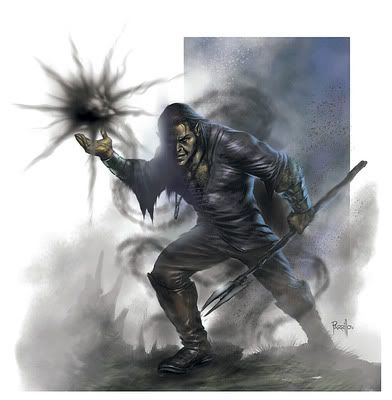
Originally posted by DuelistDelSol:
Utility Powers: Soul Kitchen
I won't be going into Skill Powers here - I'll keep mainly to the class powers. There are some that're amazing (Deliverance of Faith, level 6 Encounter from the Religion skill, is extremely good), but otherwise there are way too many to list and sort through.
Level 2 Utilities
[sblock]
At-Will
[sblock]
Shadow Blend (Essentials: HOS)
This is surprisingly much more useful than you'd imagine: if ever there's a square of dim light or darkness nearby, produced by any means, you can stand perfectly still and gain an at-will bonus to defenses that you would normally have to get by keeping mobile. This does not count as getting your Shadow Walk effect, which does matter for some feats and powers, but at level 2 it's something to keep a close eye on.[/sblock]
Encounter
[sblock]
Beguiling Tongue (PHB1)
Social utility. But goodness gracious is it marvelous: you basically gain the Shaman's
Speak with Spirits class feature on three skills that
Cha'locks will adore. However,
Con'locks will be looking elsewhere - there are better alternatives to band-aiding your skill checks.
Caiphon's Leap (AP)
Charisma
The damage reduction scales rather meekly, but the teleport is enough at its base and incredibly buffable. These kinds of utilities are very valuable to Cha'locks - worth consideration.
Devil's Trade (AP)
This really does depend on how prone you are to getting smacked with (save ends) effects. There are some better routes to follow to give you better results on your saving throws, but an auto-success with a meaningless punishment is excellent.
Ethereal Stride (PHB1)
Basically an "I NEED SHADOW WALK NOW" power, with a further boosting to your defenses. Not bad.
Fey Bargain (AP)
Not entirely sure what they thought when they designed the trade-offs for these powers. It's a bonus and a penalty that you control the timing of, and if you're not going to tank or get inflicted with debilitating effects anytime soon, enjoy the awesomeness of improved accuracy once per encounter.
Ruinous Phrase (D382)
How much HP does a one-square wooden door have?
Infernal Pact: And do you really, honestly need a 5-point boost in the threshold of destruction?
Shadow Veil (PHB1)
Hey, Rogue, mind doing this instead of having the guy with deplorable Dexterity and no ability to train in Stealth outright do it?
So much better if you're actually going to bother having a Stealth score that's not zero.
Spectral Fade (Essentials: HOS)
Very important note: invisible does not make you hidden. If you move and do not make Stealth checks, enemies still know your exact location. However, you still gain a monumental bonus to defenses against OAs and future attacks, and that's at least worth an Encounter slot.
Spider Scuttle (Essentials: HOS)
Climb speed comes up very rarely in 4e, honestly, and just for one turn is not worth it. Also: crawling? Just stand up and move, lazy bones.
Wrathful Aspect (Essentials: HOTFK)
A third of Beguiling Tongue with a minor shield. Unexceptional.[/sblock]
Daily
[sblock]
Assassin's Bane (DSCS)
A giant zone of mobility and defensive denial, preventing enemies that're within 3 squares of you from shifting, teleporting, or gaining any of the benefits of invisibility or concealment. Incredibly annoying for certain enemies, and a fantastic candidate for your level 2 utility. Yes, it's a Daily, but once per day, you will rule the ground you stand on.
Charm of Hearts (D382)
If you're not being overly daredevilish, the first benefit will matter little, but +2 power bonus to all defenses that isn't a Stance is great. However, it requires your Minor Action to sustain, and Warlocks tend to hold on to all of their actions tightly (Minor: Curse; Move: Shadow Walk; Standard: blast away).
Eyes of the Spider Queen (AP)
Buy some sunrods - they're pocket change to purchase. The side benefit is too rare to plan for.
Fevered Certainty of Caiphon (D366)
I want to see the skill check that would make a reduced Will more dangerous. If you need a humongous boost to your non-CHA skills, add this to your toolbox, but if you only think you'll need it for Bluff/Intimidate/Diplomacy,
Beguiling Tongue's right up there. And that's an Encounter power.
Fiendish Resilience (PHB1)
There are some strategies that want you to start stockpiling temp hitpoints, and this is a decent start to prepare for powers like
Doom of Delban and the like. If you anticipate siphoning your own hitpoints for personal gain, here's a place to turn.
Shade Twin (Essentials: HOS)
If it wasn't a Sustain Minor, this would be broken as all get-out. As long as you keep rolling poorly on your d20s, you can mimic the target, go up and hug him, and either enemies will consider you as not existing, or they'll inadvertedly pummel the other target - and a key difference from
Curse of the Twin Princes is that the effect is not mirrored if your own twin is attacked. The Bluff bonus is meaningless here, and not what this power is for.
Stony Roots (Essentials: HOEC)
You ignore forced movement and can make saving throws against being knocked prone. Situationally useful.[/sblock][/sblock]
Level 6 Utilities
[sblock]
Encounter
[sblock]
Astral Eyes (Essentials: HOTFK)
Six-second darkvision is rather pointless, and a minor bonus to two skills you'll be lame at is not worth shoving a utility like this in such a valuable slot.
Fate's Frayed Thread (D382)
Being able to apply a Curse to anyone that attacks you once per encounter is the kind of benefit you see from Paragon Paths, and the side benefit is excellent for punishing them for daring to strike you down. Great!
Fey Switch (Essentials: HOTFK)
Extremely simple, and Leader-like abilities are the kinds of abilities Warlocks can minor in very well. This is perfect for those types of players.
Iron Aspect of Dispater (Essentials: HOTFK)
Both effects are quite situational, especially the latter (you almost want to be pushed or slid away as a Ranged caster), but you won't regret having this in your back pocket as an Encounter power.
Life Siphon (AP)
I find it hard to call it "unkind" when there's no negative effect placed on the ally. The benefit is excellent, and it contains the Healing keyword, which could open itself up to major shenanigans.
Dark Pact: Regain hitpoints equal to 2+CHA modifier. That'll work.
Infernal Pact: Awesome as well, but look down at the Skill Powers to see what you're missing by taking this. Still, this is a THP utility, so it's worth a look.
Mirror Darkly (Essentials: HOS)
For one turn every encounter, you can gain the Psion's
Intellect Prism, but also allowing yourself a great boost to defenses and the ability to launch blasts with alarming freedom. The aftereffect is completely optional, so keep that in mind.
Racing Fire of Ulban (AP)
Move 10-14 squares. You don't shift, you don't teleport, you move. Boring and obsolete.
Shadow Ride (Essentials: HOS)
Once an encounter, you turn any enemy on the board you can approach into a taxi. Here's my question: what's the point? You only shift 2 squares, so you don't trigger Shadow Walk; you're still a legal target, as you still exist in a square (and creatures that exist in the same space are considered adjacent to each other); and at the start of your next turn, you pop out right next to the enemy, exactly where a Ranged Striker does not want to be. Use your move action to gain defensive bonuses, not to make a taxi out of enemies that tend to not want to move when they're locked into attack mode anyway. Shifting 2
is cool, but there's a Teleport 3 back at 2nd level. There are super specific uses for a power like this, and if you can find it, great, but otherwise...
Shadowslip (FRPG)
Distances based on ability modifers tend to scale incredibly well, and while this power will start out pretty good, it'll turn marvelous as the tiers fall away.
Spider Climb (PHB1)
Is this a joke?
Unspeakable Bond (D382)
Well, this sure isn't. Delegate a slightly less fragile ally as the target of damage you take, but you still adopt any effects that would have been laid upon you. What a shame... except you have a brilliant solution to this problem, from a very unexpected source:
Fortune Binding, a level 3 Con'lock encounter power. Ignoring all that, giving your ally a great boost to attack rolls is always worth a little poke in the side.
Infernal Pact: And then he gains a bonus to defenses and everyone on Team Monster is sadface.
[/sblock]
Daily
[sblock]
Chaos Armor (Essentials: HOEC)
Resist 10 to a damage type of your choice chosen amongst the Affinity options, and whenever an enemy hits you, smack another enemy close by dependant on your Constitution modifier. If your CON modifier is any great shakes, this is extremely worthwhile. This is also great for all Element'locks come Epic tier when their Pact Boon grows ever higher in power and the autodamage becomes merciless, but I'd actually wait until then to pick this up for them.
Dark One's Own Luck (PHB1)
Criticalities tend to happen once a day, so having this be a daily is perfectly fine. Being able to reroll four different kinds of rolls is gravy.
Mercurial Form (AP)
For the entire encounter, you cannot be marked, escaping grabs becomes elementary (and takes a free action instead of a move action), and you can fit into Tiny spaces and become a rather good scout. Fantastic.
Red Leeches of Nihal (D366)
More temp hitpoints, on a trigger that
will come up every day (unless your day is excruciatingly boring). Excellent, but there is a Religion-based Encounter power that does this without the requirement of a trigger.
Rending Fear of Khirad (D366)
Completely and utterly social, and thus unable to be rated. Campaigns can vary incredibly wildly from a political conquest to dungeon-crawlers, so it really depends on what your DM's going to run with, and how often you'll take enemies prisoner.
Sand Shape (DSCS)
A Sustain Minor that you'll laugh at (as you probably will not use this to just blank out on attacks while Cursing everyone... though you could technically do that. Your defenses are patched up) for a great scouting daily. Situational, but as I like to say: if you need it, you need it.
Shroud of Black Steel (PHB1)
Bonuses to two specific defenses is not worth the huge penalty to speed. If you're slowed while you're in this quasi-Stance, you're immobilized. Yaaaaay.
Spider Queen's Caress (AP)
A decent bonus to saving throws and a decent bonus to a skill you may not be proficient in could be worth it sometimes.
Dark Pact: This benefit, however, aligns
perfectly with the secondary effect of this power. You carry no penalty to Stealth checks for only moving 2 squares, and maintaining concealment after only two squares while Hidden combos so swell. Bump up to
Sky Blue if you have a Stealth score worth yelling about.
Walk Through Darkness (Essentials: HOS)
Now
that's more like it! Shifting 10 squares,
plus phasing and insubstantiality. This is what a Move Action utility should look like, folks.[/sblock][/sblock]
Level 10 Utilities
[sblock]
At-Will
[sblock]
Ethereal Sidestep (PH Heroes: Series 1)
Ah, such a meager little At-Will. However, many of you don't realize just how incredibly freaking important at-will teleportation is. Grabbed will almost disappear from your list of worries, the distance travelled can be buffed to monumental heights, and certain feats and Paragon Paths (
Evermeet Warlock, anyone?) can turn a simple little utility like this into a monster. Take it, and you will never be disappointed.[/sblock]
Encounter
[sblock]
Bridge of Shades (Essentials: HOS)
You gain a Portal Gun that works in a limited distance. However, as long as your allies are attentive and close by, you can cross any 4-square-wide area of treacherous terrain with absolutely no problem. A side benefit of being able to make melee attacks from five squares away won't go amiss for some of your allies, either.
Brimstone Caress (D382)
Now this is a little awkward: you can only target one ally with this power, and it takes damage in order to teleport. If you want to shimmy someone across a field of death, why not grab Bridge of Shades? Repositioning to this degree can be useful, but it's that punch of fire damage that isn't.
Infernal Pact: However, this is an excellent side effect: now you won't feel guilty about shunting Defenders over yonder with improved defenses to start blocking forward monster progress.
Curse of Nessus (AP)
An enemy you miss (and you will miss sometimes. It'll happen.) suddenly takes a huge dip in the ability to shake off effects. This is hilarious if your Miss effects on a daily inflict a save-ends effect, because it'll make them so much better.
Darkest Mirror (FRPG)
Allies turning invisible means you can't target them with any friendly effects, as you can no longer see them. It's useful in some situations, but invisibility isn't usefully an encounter-wide trait.
Destiny Inversion (AP)
Normally turning damage into ongoing halved damage is either pretty decent (one tick), useless (two ticks), or extremely dangerous (three or more ticks). But once again, you have a power that loves it when you have ongoing effects inflicted upon yourself:
Fortune Binding. You completely absorb someone's attack, take one tick of the damage, and then on a Hit, pass it along to someone else. This is too open to abuse.
King's Step (DSCS)
Please don't be dumb and use this in response to a melee attack, because 1) you should already have him Cursed if you're getting that close, and 2) you either won't move an inch or you'll provoke an opportunity attack from trying to go on the other side of him. Out-of-turn Cursing against Artillery and Controller types, however, is phenomenal.
Troublesome Aid of Caiphon (D366)
Wear a
Cloak of the Walking Wounded or
Amulet of Life please. And don't think of overhealing yourself: if you fall to the ground, you will die. Reducing the number of DTS you can survive from three to two is abominable, especially if you feel that the ability to gain the equivalent of two or three surges in HP is necessary.[/sblock]
Daily
[sblock]
Accursed Souls (D372)
A little more oomph to your Pact Boons, whereby them dying inflicts a bit of splash Necrotic damage. If you have a bunch of Cursed minions grouped together, you'll amass a terrifying combo where enemies will just knock themselves over like dominoes from the autodamage that you chain. Incredibly fun if you can fenagle it right.
Ambassador Imp (PHB1)
Social power, campaign-specific, and horribly situational. Unrateable.
Bond of Brotherhood (AP)
If you're jealous that your Cleric buddy tends to favor someone else as the target of your heals, go ahead and grab a little bit of that healing for yourself.
Duelist's Dance (Essentials: HOTFK)
Until the end of the encounter once per day, you can teleport two more squares than whatever distance you have Ethereal Sidestep set at outside of your turn once per round. And this is an Immediate Reaction to an attack, not to an attack that hits.
Murky Deep (Essentials: HOEC)
So you walk up to the back line, create a giant zone of slowing and light obscurity, then also gain a boost to your shift while in that zone. This could be great to create a roped-off point in the battlefield (since they'll be slowed immediately when they enter the zone or start their turn there), and since you'll be able to run out of the zone rather quickly, you can reposition yourself in time for you to take advantage of it without being in too much danger. Worth considering.
Shade Dance (Essentials: HOS)
Add insubstantiality to Shadow Walk. This is a good thing. This is a very good thing.
Shadow Armor (Essentials: HOS)
Bland bonus to a skill you're not good at, but a great power bonus to defenses (again, not a stance), which you can end when you get bored to teleport and become invisible until the end of your next turn or until the DM says if you hit with an attack roll you make that turn that
will incorporate Combat Advantage. Awesome.
Shadow Form (PHB1)
You can fly (but can't hover)! You're insubstantial (but can't take standard actions)! This is... kinda lame.
Shielding Shades (PHB1)
You plant a giant, red
X on a damage roll that you cannot foresee (as the trigger point is when you're hit, not when damage is rolled), and all effects you're inflicted with still apply. This is both stupidly lame, and (with
Fortune Binding) incredibly cool. So we'll compromise and rate it Black.
Smothering Darkness (Essentials: HOTFK)
If you're confident your allies won't need to heal or buff you for a while, who needs Shadow Walk? Everyone else literally cannot see you, even if they're hovering directly over you (-5 to attack rolls). As a side benefit, you can walk alongside your Drow brethren for an extended duration. Now this is excellent.
Spined Devil's Boon (Essentials: HOTFK)
The shield is kinda meaningless for a power that grants you a fly speed, but it does give you an encounter-long Fly speed, which is quite spiffy.
Useless for Pixies, for obvious reasons.
Transcendant Dance (AP)
A bonus to speed and saving throws (two things that scale fantastically with single-digit modifiers) equal to an
ability score modifier for the entire encounter? Ridiculous, and actually makes
Racing Fire of Ulban fantastic at Epic, as you can blast forward about 26 or so squares in one move action.
Warlock's Leap (PHB1)
Who needs a locksmith? Once per day, just walk in the door.[/sblock][/sblock]
Level 16 Utilities
[sblock]
Encounter
[sblock]
Caiphon's Disquieting Liberty (D366)
Five damage that can be reduced or absorbed is a horrendously small price to pay for freedom of movement once per encounter. Take it if you're concerned about immobilization - you'll love it.
Cloak of Shadow (PHB1)
How many more of these "You fly but will fall, are insubstantial but can't do diddly squat" powers do we really need?
Death Shroud Aspect (Essentials: HOS)
Obsolete with
Hero's Defense.
Diabolic Escape (Essentials: HOTFK)
Oh yea, being able to walk into a crowd of enemies, hit them with Vulnerability that requires no attack roll, and then being up to run far the hell away to a safe perch is just so lame, isn't it? Oh wait, no, it's not. Load up your best Fire daily and blast those suckers - this is going to hurt.
Guise of the Laughing Fool (Essentials: HOTFK)
For one glorious round after you're done with your turn, you can just walk into a field of swords and arrows and not exist. Oh yea, and you inadvertingly are immune to opportunity attacks if you
do use it to start your turn. Lovely.
Heart of the Storm (Essentials: HOEC)
An unfriendly close-range AOE push, and then an eight-square flight. Not nearly as hot on this one as the other HOEC utilities, honestly. It's got its corner cases, sure, but this application isn't very favorable to most strategies.
Hero's Defense (AP)
There are some sickening strategies you can pull with this (buff up one defense incredibly high, then jack it up by four points and tell the monster to hit that instead), and even if it fails... half damage. Fantastic.
Infuriating Elusiveness (PHB1)
Mobility ahoy, plus a way to get automatic combat advantage against everything on the board, plus a great bonus to defenses, for one turn every encounter? Sure!
Offering of Blood (Essentials: HOS)
At the cost of your Infernal Pact Boon (hint hint), reroll. (Again, if applicable.) Simple and sweet.
Painful Transference (AP)
Charisma'locks might not make a lot of friends with this power, but in a major goof, they forgot to add "or your Constitution modifier, whichever is highest" to the power. Have fun with your amazingly stupid "I'm cured!" power,
Con'locks!
Reaper's Vengeance (Essentials: HOS)
Fling yourself across the map to a ranged attacker that struck you, and douse him in darkness while then being able to blast him away next turn. Kinda bleh for Binders, but super good for you - though your allies may lament at the fact that your Shadow zones are messing up being able to target them again.[/sblock]
Daily
[sblock]
Amaan's Continuance (AP)
Unfortunately, this doesn't remove all the side effects of dying. However, the one major benefit is the ability to spend Standard Actions: not only do you have your Second Wind as a source of HP, but several HP-siphoning powers that allow you to heal up and might get you back on your feet. You're still dying, and if you're at 0 or below, you're still making saving throws (and fainting) after you finish your turn. Also, if you get knocked to zero by ongoing damage, that doesn't count. Fantastic to have for emergencies, but there are contingencies.
Eye of the Warlock (PHB1)
What's utterly baffling is what the point of the (save ends) effect is. It's not tied to your ability to shoot laser beams from your opponent's face, so it's a very cosmetic save-ends effect that just refreshes itself whenever you use this power. Pretty much broken as (terribly) worded, as every blast, close burst, and ranged attack you use no longer require you to even care about positioning for the rest of the encounter/day.
Fail Me Not (DSCS)
An unfortunately limiting zone that subjects allies to an awesome buff to attack and damage rolls, but in case they miss with an attack (against all of their targets), they become vulnerable to damage. It also costs a Minor Action to sustain, and again, you want to hold on to your minor actions tightly. You King'locks that like to use your powers in Melee range might like this alot, but everyone else steer clear.
Ruinous Resistance (FRPG)
If you're absolutely sure you can inflict the Vulnerability on an ally that won't be the target of a lot of attacks, go ahead and go for it. Otherwise, please don't do this to your own allies, especially since they're going to be vulnerable to a damage type that your enemies probably inflict (otherwise, why did you raise a shield in the first place?)
Soul of the Void (Essentials: HOS)
A really cool "get out of purgatory" card, but the benefit otherwise is a bit dank, especially when combined with a penalty that really clashes with a lot of your Paragon- and Epic-tier HP draining powers... and being able to be healed by what would probably have saved you from being knocked to zero hitpoints anyway.
Vile Resonance (D382)
That vulnerability is going to mean nothing in the face of two extra dice of Curse damage every round. And yes, those dice do turn to d8s (or d10s if you're a Paladin|Warlock) if you possess the right items and feats, as they adjust d6s.
Infernal Pact: I'm sure there are absolutely no ways to exploit a buffable slide at-will...
[COLOR=ecoration:underline; color:#ff9900]Sorcerer-King Pact:[/COLOR] There is no King'lock rider on this power, but I want to mention something very important. At this level, you start getting powers that buff ally damage dice when you command them to attack using certain Encounter powers. That buff is equal to your
Warlock's Curse dice. You should immediately know where I'm going with this.
Warp Space (AP)
Battlefield rearrangement on three targets instead of the usual two. Huh.[/sblock][/sblock]
Level 22 Utilities
[sblock]
Encounter
[sblock]
Entropic Ward (PHB1)
Sign of Ill Omen on steroids. Plus a fragment of the Star Pact boon power. Yeeouch.
Walk of the Kantakaran (AP)
Here's a thought: Don't do this first thing on your turn. Attack with a power, fling yourself forward into the front lines with
Racing Fire of Ulban, then drop this power and become a roadblock. ... but wait, then they'll just walk right past you and attack your allies (not like you could hit people with OAs, even if you wanted to). And you can still be affected by powers and features that do not require that an attack roll be declared against you. Um...[/sblock]
Daily
[sblock]
Ascension of the Elder (AP)
Rocket man, burning out his fuse up here alone...
You catapult yourself upwards 20 squares and gain a fly speed of 8 (that you can
sustain with a move action!). There are items and Epic Destinites and other hooligan things that can replicate this, but if you don't want to spend the money on
Zephyr Boots, this is a great use of your Utility slot.
Cerulean Shield (DSCS)
This is mistakingly good. You gain a humongous shield against a specific damage type that is then reflected back as minor-action sustainable autodamage to enemies around you. There is just one problem: as mentioned before, enemies tend to resist the very damage types they inflict. The shield will rock the encounter silly, but the autodamage may actually be meaningless. Oh well.
Expedient Sacrifice (FRPG)
Wow, this is a moronic benefit. A bonus to speed, but an ally is slowed until the end of the encounter? You're seriously going to drop someone's speed to 2 just so that you can be more mobile than you honestly need to be?
Master of Magic (Essentials: HOS/HOTFK)
So you can either teleport you or an ally close by
twenty squares (with the Teleportation keyword, no less), heal yourself or an ally (with the Healing keyword), or grant your Healic a supreme defensive bonus. How about yes?
Raven's Glamor (PHB1)
This is a very long-winded way to say "invisible and can teleport 5 squares as a move action until you declare an attack." Also under the DM's discretion whether monsters care about the image you leave behind. Not impressed.
Ulban's Shining Cloak (D366)
Now here's something you don't see every day: a reflect shield. Should the original attack miss
because of the effect (and it will, because a bonus to defenses equal to your Intelligence modifier will put you way past Plate armor) and not because of a roll that would have missed otherwise, it bounces right back to him, with a reroll. Could be an absolute joke, but will prevent damage, and might add a surprising source of your own damage.
Wakeman's Invocation (AP)
Does nothing at all against Bursts and Blasts, doesn't buff your defenses against melee attacks, and does nothing with Ranged attacks should they hit. What.
Wall of Inky Night (AP)
This is
sick. An extremely long, movable wall of blindness that you can shape to your whim. Shame it takes a standard action to reposition it (and yet a minor action to apply it), but this has amazing potential.
Wings of the Fiend (PHB1)
Take Ascension of the Elder. Any polymorph attack that hits you will end this effect, plummeting you to an unexpected grave.[/sblock][/sblock]
Originally posted by DuelistDelSol:
Paragon Paths: A Practical Promotion from Paimon
When your character reaches 11
th level, he or she can pick a Paragon Path to gain build-defining features and an extra set of powers. However, this is a big opportunity cost, so tread carefully and don't pick lightly.
Infernal Pact
[sblock]
Hellbringer (AP) - Constitution
[sblock]
Strategy: Fire DPR
Overall Rating: Black. There's a very specific problem it doesn't cover, and it hinders the path greatly due to how pigeonholed the strategy is.
11th Level Feature: Flames of Empowerment
When you spend an action point to make a ranged attack and it hits, deal an extra 2d6 damage to it and all adjacent enemies. Splash damage is always nice around these parts, but it's not exactly a prime reason to spend an AP.
11th Level Feature: No Pity, No Mercy
Whenever you score a critical hit against an enemy, you gain a pair of great benefits: CA and Vulnerable 5 Fire on the target. You don't have the AOE at-wills to really kick this into high gear, but there is never anything wrong with this if you have a stockpile of Fire powers.
16th Level Feature: Prince of Hell
Your arcane powers ignore Fire resistance. Which would be amazing if it wasn't replicated by heroic tier Wizard feats, or if it had a solution to immunity...
11E: Pillar of Power
Incredibly lame. It's a silly amount of damage in a 3x3 square if this is the attack you spend an AP on, but you can do the same thing (and at arguably a better degree) with
Fiery Bolt, a level 3 Encounter power.
12DU: Gates of Hell
A neat little passage-of-transit, but the punishment may actually be too low for enemies to not take advantage of the new method of travel. Don't place this behind ally front lines, or enemies (especially ones resistant to Fire) will ambush you.
20D: Unleash the Inferno
A thermonuclear bomb of friendly AOE damage: everyone in a 121-square area is going to get roasted. However, the damage is not stellar, and you only get Curse dice against one target.[/sblock]
Life-Stealer - Constitution
[sblock]
[?font-weight:bold?]Strategy:[/?font-weight:bold?] Minor DPR, various buffs
Overall Rating: Red. Underthought and yet simultaneously a bit overly complex to come to a Paragon Path that does, ultimately, nothing beneficial.
Level 11 Feature: Infernal Action
Much less noteworthy than Hellbringer; ongoing 5 fire (save ends) to targets you hit with one attack isn't the most spectacular thing on the world, especially one you want to spend an action point on. This ramps up considerably if you're a Tiefling with
Icy Clutch of Stygia, but you have a Daily that already doles out (guaranteed) ongoing fire damage.
Level 11 Feature: Collect Life Spark
Bet you didn't expect you'd have to do bookkeeping on an Infernal'lock, did you? As an addition to your Pact Boon benefits, you gain what are called Life Sparks, and the effects of which depend on what the origin was of the creature you killed. They all range from mediocre to pretty good, but it runs into the same problem as the Pact Boon itself: in small encounters, this feature is deplorable, even though you can start gaining the benefits right away. Shame they all last one turn...
Level 16 Feature: Sustain Life Spark
What kind of whacko world do you live in where, as a Constitution'lock (so I hope, since otherwise the powers are completely useless), you'll have more Life Sparks than you do healing surges? And what's the point of having a feature that saves you from spending
one healing surge
after the rest of the encounter is over, when as a Con'lock,
you're made of healing surges?
11E: Soul Scorch
A poke of fire and necrotic damage that requires you to have killed someone else this encounter to deal an additional 10 damage.
12DU: Life Spark Summons
It's backwards Domination. But it's a daily that gives you one turn of control of a creature that cannot really do much (and might even die before it gets to that point, since it only has 10 hitpoints and acts on your next turn) and can never incorporate your Curse dice. Bleh.
20D: Soultheft
So what happens if you kill a Cursed enemy with this power? Do you get two Sparks or one? What if you instead miss and deal wretchedly stupid damage with a level 20 Daily that has a range of 5?[/sblock][/sblock]
Star Pact
[sblock]
Doomsayer (PHB1) - Charisma / Constitution
[sblock]
Strategy: Defense, Fear keyword
[?font-weight:bold?]Overall Rating:[/?font-weight:bold?]
Blue. Every one of the features is fantastic, and the powers are decent to great on their own, but it's a huge dichotomy. It's not enough that they're fear powers - they barely spread your Curse and don't inflict save-ends penalties, and requires the Warlock to also rely on his own selection of powers to be Fear-based.
Level 11 Feature: Doomsayer's Action
Oh good gravy, no. Everyone cursed by you automatically takes your Curse dice in damage when you spend an action point? And this doesn't count as a use of Warlock's Curse damage dealing? Jeez!
Level 11 Feature: Doomsayer's Proclamation
Basically a -5 penalty to saving throws against any and all Fear effects that you
and your allies dole out (it doesn't say it ignores your allies' own Fear powers). If you concentrate on Fear powers, this is horrifying.
Level 16 Feature: Doomsayer's Oath
A Bruce Banner-type feature seems a bit awkward, but it's extra buffing for all of your favorite powers when you need it most, and that's incredibly cool.
11E: Fates Entwined
Unfortunately, the powers, sans the Utility, don't really mesh with the features all that well. Hit them with pithy psychic damage with a short-range hex, but then raise yourself a shield that funnels half of all damage dealt to you to the target. Incredibly dangerous in the hands of a daredevil.
12DU: Accursed Shroud
You place your Curse on anyone within 5 squares of you, and it has a permanent Sign of Ill Omen placed on it. You'll know who to place this power on, and it'll be amusing when it happens.
20D: Long Fall Into Darkness
Stunned and prone as a level 20 daily is splendid, but this would have been the perfect time to put in (save ends)... and yet that feature's still kinda swinging around in the breeze.[/sblock]
Master of the Starry Night (AP) - Charisma or Constitution
[sblock]
Strategy: Pact Boon exploitation
Overall Rating:
Blue. Makes a marvelous little utility out of your Pact Boon, and even indirectly helps the other Pacts with its amazing U12. A bit of forethought needs to go into this path before you take it -
Shared Pact and
Improved Fate of the Void would probably be most necessary here - but those are feats you'd like anyway.
Level 11 Feature: Starcrossed Action
By spending an action point, you get an extra action and autodaze an enemy you have Cursed. Selective dazing can be useful at times.
Level 11 Feature: Star-Blessed Wanderer
Assuming that you use your 12EU for the Star Pact benefit, you will essentially never lose the bonus until you actually hit. That's incredibly solid, though if you're using
Minor Gift of Foresight to, say, pass out THP to everyone or teleport everyone or even just give the Fate of the Void bonus to people (and they won't be affected by this feature if you do) via
Shared Pact, it's
less useful.
Level 16 Feature: Fate of the Body
On first glance, and even on a couple of subsequent glances, this is really cool. And it's not necessarily Purple because it's bad - there will be encounters, especially solos (with Minions), where at clutch turns you really need that large bonus against Will to keep yourself safe from sweeping AOE CC powers. But upon reflection you should probably be using your giant bonus to your d20 on attack rolls.
11E: Stellar Debris
Since the July 2012 errata, this and Shooting Star use either your Constitution or Charisma for the attack and damage roll. With that in mind, giving anyone the option to grant a blanket +2 bonus to defenses to all of your allies is quite worthwhile, especially on such a large (unfriendly) blast.
12EU: Minor Gift of Foresight
Remove whatever curses are on the board now, gain Pact Boons as if every single one of them had died. This is the sort of thing you build a character around; Vestige especially can take massive advantage of this, but Star Pact as itself can really take the love as well with
Improved Fate of the Void. And as an Encounter power, no less, making this a real true powerhouse utility.
20D: Shooting Star
You now add a mini-Curse to the target that does 2d6 Radiant damage. You'll do maddening damage against undead, and great damage to anyone else, provided you hit. And even if you miss (and considering the features in this path, you better not), you'll still deal great damage next turn.[/sblock]
Student of Caiphon (DM Annual 2009) - Constitution / Charisma
[sblock]
Strategy: Critical hits, Fear keyword, Radiant DPR
Overall Rating: Light Blue. Amazing set of features and a great D20 for anyone who wants to use fear and radiant attacks. Very close to
Gold, and indeed it would have been, had it been what it used to be, where
all radiant attacks got the expanded crit range; but hey, you can't have it all.
Level 11 Feature: Caiphon's Guidance
Fear and Radiant powers gain an unnatural crit range better than all implements and feats you'd get at Epic tier. Wooooooooow.
Level 11 Feature: Star Bright
Hellbringer, now a bit more shiny. This time, however, Radiant damage is a lot more valuable than Fire damage, and you Tieflings will love it so much.
Level 16 Feature: Caiphon's Intercession
A sort-of-but-not-really replacement for your Pact Boon: instead of gaining a huge bonus to a d20 roll, you can deal 5 damage to an ally to allow him to make an MBA, with an extra benefit of dealing ongoing Radiant damage. There is no action tied to this power, so if multiple enemies fall at once and the ally feels fit to take multiplied damage, they can become a personified blender. Quite solid.
11E: Trust in the Guide Star
Do I have to? Even disregarding concealment and invisibility is not worth doing murky damage against a target that would have no bonus or penalty to defenses if all this was disregarded. Both Cha'locks and Con'locks can happily trade this power away: the D20 requires no ability score devotion.
12EU: Steps on the Purple Stair
Invisibility and a fly speed is OK, but the fly speed ends on the
start of your next turn (so you have to land on that turn). And while your attacks on the turn you drop this will have Combat Advantage, if you aren't a
Shardmind it'll start raking you with a small dose of (save ends) Psychic damage. The amount of damage you're inflicted with isn't worth slinging
Fortune Binding around.
20DU: Caiphon's Hungry Mercy
A
massive area of power recovery once per day is grand, especially for that low a cost.
[/sblock][/sblock]
Fey Pact
[sblock]
Feytouched (PHB1) - Charisma
[sblock]
Strategy: Teleportation, quasi-Domination
Overall Rating:
Blue. It's not so much what these powers
do, but what these powers
can do, if that makes any sense, especially when you cooperate with your Defender allies. Very close to
Light Blue, honestly... just a shame the 16th level feature and the powers are a bit underwhelming.
11th Level Feature: Feytouched Action
Action Surge, the Paragon feature! Seriously, though, being able to apply this to all targets of any attack you make with this bonus, which makes AOE powers amazingly good.
11th Level Feature: Slashing Wake
Once per round, deal Intelligence-modifier friendly splash damage whenever you teleport. Say, wasn't there an incredibly handy level 10 utility power that let you teleport whenever you wanted?
16th Level Feature: Patron's Favor
The weakest part of the Path by far. The Fey Pact Boon is one of the weakest factors of the Pact, due to its uncontrollable nature, and the benefits you can get from here are no different. Even a 10-square teleport, the best part of this feature, reduces in favor when you realize that if you've buffed
Ethereal Sidestep enough to make it about 3-4 squares or so, a humongous teleport such as this might just be too much, and rarely will it do something that a 5-6 square teleport wouldn't.
11E: Will of the Feywild
Deal mediocre damage, but teleport an enemy to a convenient location (next to a Defender that has him marked?) and knock another enemy senseless. Very neat, but unfortunately a shadow of its former splendor (used to provide autodazed as well).
12DU: Twilight Teleport
Situational. If an enemy died in a dangerous zone, this becomes awesome, but otherwise, both benefits are quite muted, since Fey Pact Warlocks tend to stick in the furthest of the back lines anyway, and hell, you already
have a teleport as your Pact Boon.
20D: Whispers of the Fey
If you miss, absolutely nothing happens. On a hit, though, you can force Brutes to fall all over themselves with melee basic attacks and then daze themselves. You need to approach enemies to do this, though, and that's not something you always want to do.
[/sblock]
Long Night Scion (D374) - Charisma
[sblock]
Strategy: Cold DPR, Power Recovery
Overall Rating: Blue. Everything it does isn't brokenly amazing, but does its job well. It's at 16th level where it suddenly jumps to
Light Blue due to the fantastic upgrade the feature is over the second feature of Feytouched.
11th Level Feature: Deeper Chill
The important thing to note here is that the Cold attack you make on an AP is not tied to that extra action. Combined with the next feature below, this has the possibility of doing
very good damage. Highly favored.
11th Level Feature: Frost's Favor
Arcane Admixture (Cold), the feature. But you can put it on any power you like each day, and as a side effect, gain a nice little buffer against Cold damage. Ties so well with the other 11th level feature. Neat.
16th Level Feature: Winter Winds
Interpret this as "you gain an at-will friendly splash slow". Ignore the damage. Don't ignore the possibilities (
World Serpent's Grasp,
Vicious Advantage).
11E: Wrath of the Pale Prince
This is the kind of hex that just wants
so badly to be an AOE spell, and it would have been perfect for this strategy. Unfortunately, you can replicate this effect already with
Lasting Frost, so it's kind of obsolete.
12DU: Winter's Blood
Again, combined with your level 11 features, this is way too awesome. Once per day, you now have a 2/enc power that has the cold keyword, and what that encounter power is is your choice each day.
20D: Frozen Heart
Dazed and slowed (save ends both) with a fantastic aftereffect should they fail the save. Even the miss, which I would normally cast away as meaningless (slowed save ends), is great here, because most people who'll be taking this path are going to take advantage of the Slowed condition. Love it, even if it's against Fortitude, which is kind of weird for Fey'hexes.[/sblock]
Storm Scourge (AP) - Charisma
[sblock]
Strategy: Lightning DPR
Overall Rating: Bordering on Light Blue... if you prepare for it. The features are great and the encounter power can be waved goodbye, but you do really need to make sure you can gather yourself a bevy of Lightning powers. With Heroes of Elemental Chaos on board, however, this is much easier to accomplish.
11th Level Feature: Lightning Quick
How this feature is worded is incredibly important. When you "hit or miss" with an attack after spending an Action Point, you shift 1 square. If the composition of the battlefield is right and you grab AOEs and multi-attacking powers, you can actually make quite a long shift out of this power, getting you possibly out of harm's way. Otherwise, you just kinda derp around, shuffling yourself a couple of squares meekly. This, however, creates a very odd combo
in Epic Tier with
Long Step, as these are stepped Shifts; they don't happen all at once.
11th Level Feature: Zebechial's Blessing
You gain Resist Lightning equal to the innate resistances of several races, and if you are a member of said races, none of them are resistant to Lightning, so it's excellent.
11th Level Feature: Eldritch Storm
Let's be frank here: this path would be horrible without this very feature. It's the sole reason this Path isn't an automatic Red: because you gain an At-Will Lightning power without the need to spend a feat to do so.
16th Level Feature: Servant of the Lord of Lightning
Pretty awesome for base Fey'locks, but with the arrival of a fantastic power in
Dream of Mual-Tar just one level prior, on top of a miraculous set of features from the Elemental Pact, this feature - and thus this entire path - has earned itself full legitimacy for
Elemental'locks Twofolding into the Fey Pact at 11th level. You deal AOE splash damage with all of your Lightning hexes equal to your Intelligence modifier, and this applies to every target you hit with them; having two enemies next to each other will double up the splash if you hit both with your now quite solid 11e. Brilliant!
11E: Judgment of the Storm
Awful damage... for a while. Recognize the fact that this power is tied to two ability modifiers for the damage roll: Intelligence and Charisma. This actually makes the power scale better than usual, and once you get into 16th level it becomes unexpectedly good, especially against targets adjacent to each other.
12DU: Lightning Dance
You gain a damage shield against melee attacks, but you can only teleport to a square adjacent to that enemy... which is exactly where you don't want to be. Also, the action used for the teleport is an immediate reaction, which means it A) doesn't prevent the attack, and B) can only be used once per round. Shame.
20D: Wrath of the Clouds
Even more terrible damage, and this time the CHA+INT thing just will not allow the daily to catch up, considering how next level it'll be outclassed by
Eldritch Blast due to the Intelligence modifier on that power spreading itself out. The Effect is at least something to work with, as it's almost like a Vulnerability Intelligence-modifier All with a damage type, and the target must take damage from this at least once before starting to make saving throws.[/sblock][/sblock]
Dark Pact
[sblock]
Dark Reckoner (AP) - Charisma
[sblock]
Strategy: Concealment, Necrotic DPR
Overall Rating: Purple. Really the only thing that makes this Path recognizable is the bump to Curse damage at 16th level, but the invisibility and concealment options presented in the other features really don't get into their swerve in the powers, of which are bland.
11th Level Feature: Shadow Action
This will spare you your move action to force Shadow Walk at the turn you want to spend your Action Point, while giving your allies a nice boost to defenses. It's not anything to yell about, though. At least you'll be gaining the benefit when you most want it: when the going gets tough and people are spending their Action Points to throw desperate strategies at the wall.
11th Level Feature: Shadow and Threat
Neat little defensive boost on a critical hit, but I think the timing is off for gaining Combat Advantage, since you reveal yourself when you declare a target.
16th Level Feature: Death Curse
1d6 extra Necrotic damage with your Curses, which does allow itself to be scaled up to d8/d10. The best part of this path by far.
11E: Deadly Judgment
Large-radius friendly Necrotic splash, but the original hit is minor and there isn't any semblance of control.
12EU: Shadow Slip
A huge bonus to defenses against Cursed enemies, and this time you're able to gain Combat Advantage against everyone on the turn you use it. Not too bad.
20D: Cursing Vengeance
Mediocre damage for a level 20 daily, and
delayed ongoing damage. Incredibly lame.
[/sblock]
Darkwalker (FRPG) - Charisma
[sblock]
Strategy: Insubstantiality, general DPR
Overall Rating: Purple. You gained a few new options in the
Essentials books for getting insubstantiality to run your first feature, but it's still rare, and only the D20 gives it to you permanently. Jumps to
Black at 20th level, and
Blue if you add other ways to gain the property (Shade Dance in particular, a level 10 Daily Utility from
Heroes of Shadow, gives you insubstantiality every time you would also trigger your
Shadow Walk, and it's practically mandatory for this path).
11th Level Feature: Deadly Absence
While insubstantial, gain your INT modifier to damage rolls. The engine this entire path runs on, and can be exploited quite readily. Jumps to
Light Blue at 20th level.
11th Level Feature: Darkwalker Action
This is not the way to spend your AP: by wasting it to gain insubstantiality. You will always deal more damage by hitting with any power you use on that Standard Action.
16th Level Feature: Ghostken
Hey, now this is neat: insubstantial creatures mean nothing to you, now. The occurance won't be often, but when it does, your DPR will literally double.
11E: Ghostly Bane
Boring. A shred of damage, and insubstantial, which will help your next turn's DPR... but so would a lot of Cha'lock powers.
12EU: Fading Spiral
If you deal more than 12 damage on your Darkspiral Aura, you take a quarter of the damage instead of half (the Aura runs on an Immediate Interrupt), and you gain your INT bonus to damage rolls on your next turn. Pretty decent.
20D: Wraithform Blast
Damage is OK, the ongoing damage is at least double-typed, but the Effect line is excellent, and will ramp up your DPR tremendously for the encounter, as long as you stay out of trouble... and it'll take you a while to get knocked to bloodied, since you're taking half damage. Also, you gain phasing, which is incredibly cool as an encounter-long effect.[/sblock][/sblock]
Vestige Pact
[sblock]
Astral Ascendant (D383) - Constitution
[sblock]
Strategy: Radiant DPR, Leader tendencies
Overall Rating:
Light Blue. This Path's features are glorious, and this really serves to amplify the Leader aspect of your Pact, almost making you into a quasi-Cleric with how the features help out your allies.
11th Level Feature: Preparing Action
When you spend an AP, everyone close by gains a small amount of THP and can reposition themselves a bit. Not too bad.
11th Level Feature: Radiant Curse
Radiant damage on your Curse. You could stop there and this path would be worth it, because now all of your powers deal Radiant damage. This literally solves all of your problems with Necrotic and Fire powers, since they're commonly resisted, and while perhaps the original hit won't deal much damage, now that you have two seperate types to deal damage with (one of which is the bane of Undead), you'll almost always deal excellent damage. Wonderful. Oh, but wait: once per round (not turn), if you didn't deal Curse damage that round and an ally hits an enemy Cursed by you, you can deal your Curse damage to that enemy. Be very cautious: this PP did not get errata with the change to Warlock's Curse being 1/turn, so this path still limits you to 1/round if you allow this to apply. Still, that's a non-issue: this feature is perfect.
16th Level Feature: Celestial Resistance
You, and everyone nearby, gain Resist Necrotic - them by a decent amount, you by a lot. You can basically just forget about Undead now, because they will no longer present a challenge to you... or your allies.
11E: Overwhelming Radiance
Not too bad. The power dealing Radiant damage doesn't mean that much (you already deal Radiant damage with your Curse), and the target granting CA is already done on lots of powers, but 3d10 on an Encounter power at 11th level is not unremarkable.
12DU: Angelic Aura
You. Can.
Hover. Oh yea, and you have a great healing aura. But forget all that. At 12th level, you can finally hover with a flying power that isn't named "Ascension of the Elder". That's awesome.
20D: Vestige of the Ascendant Commander
I gotta say, I'm a big fan of the power's name: to underline the Leader bent of this power, some sort of commander or other sovereign should have been the Vestige you swear your allegiance to. The base effect, like
Sea Tyrant Oracle's Vestige below, is solid: a friendly AOE radiant that dazes (save ends) and grants healing surges to allies, even if you miss, is cool.
The pact boon, however... is a bit weird. It suddenly makes you an off-Defender, a very breakneck role-switch for you. It's not a bad bonus, no, but... +2 to AC (+4 if bloodied)? Hrrrm. However, it's the At-Will Augment that sells it: you get to inflict Vulnerability 5 All, that 5 damage being Radiant-based. Your DM might just stop sending you Undead after you crack this daily open the first time.
[/sblock]
God Fragment (AP) - Constitution
[sblock]
Strategy: General DPR, vitality
Overall Rating: Blue. The features are solid, and the Encounter power can be thrown away in place of something else. This is also where the cover art for the Guide comes from, and is one of my favorite 4e Warlock depictions.
11th Level Feature: Lifegiving Action
Spend an action point, gain a bit of revitalization, in the form of hitpoints equal to your level. Scales alright, and you'll be spending Action Points during the latter half of fights anyway, so it's not terribly situational.
11th Level Feature: Road to Reawakening
A +3 bonus to death saving throws is great as a permanent boost, and remember that you gain the ability to spend a healing surge on a 20
or higher, not just a natural 20. You
will get back on your feet, no doubt about it.
16th Level Feature: Dormant Power
When you crit with a Warlock power (... wait, does this not include
God Fragment powers? Woops. Oh well, no loss there), deal 2d10 extra damage. Basically adds the Empowered Crit property to all of your implements, and if you use one that has that property already, your critical hits are going to rock the world.
11E: Deific Decay
Single bad hit, no control, not even a hint of an effect - and RAW, you don't even get the critical hit benefit of Dormant Power come 16th level should you crit. This entire path is nearly ruined by an incredibly stupid 11E, and absolutely requires you use
Reserve Maneuver to put life back into it.
12DU: Deific Doom
The radius of the Close burst is way too short, but it'll ensure that as a Con'lock that prefers to work in the back, whatever close-combat enemies do to you won't sting nearly as badly.
20D: Vestige of Karmath
No curse damage at all, as the damage happens as an aftereffect of the domination. Oh yea, that's right... the target is dominated (save ends), a wonderful start to your day as a Vestige'lock.
As for the pact boon and at-will augment: the Pact Boon is pretty decent, with a -2 to defenses (save ends) applied to one creature Cursed by you within sight range. But in a weird twist, it's the At-Will Augment of this power that makes it remarkable, unlike with
Vestige of Kulnoghrim. You gain something that Warlocks just do not have at their disposal: an AOE at-will, in the form of splash diced Necrotic damage to each enemy within 2 squares of the target of
Eyes of the Vestige at the start of their turns. Remember that this incorporates all your modifiers.[/sblock]
Sea Tyrant Oracle (AP) - Constitution
[sblock]
Strategy: Turn Efficiency, Control
Overall Rating: Black. It's a decent path - doesn't exactly disgust or offend, but the features and powers only tenuously relate to each other, and it just feels disjointed. The good news is that the trend of awesome Paragon Path vestiges continues with a Vestige Power that transcends
Vestige of Amaan. However, if you're trained in Bluff and have a Multiclass feat, you don't really lose anything by going with
Traveler's Harlequin, which will allow you to pick that power up as part of its 20th Level Feature - or hell, any of the other three Vestiges you have access to.
11th Level Feature: Visionary Action
If you spend an action point to make an attack, you gain a stored-up Standard Action that you can use once in the Encounter, which is incredibly powerful, especially if the triggering attack is one with a great Miss effect. However, if even one attack roll connects, this feature is useless.
11th Level Feature: Future Foreseen
A bit of an insurance policy against the first failed saving throw you make in an encounter. You have to use the second result, though, which is a bit saddening.
16th Level Feature: Future Evaded
A small shift that happens only once during an encounter (and at a specific time), takes your Immediate Action, and doesn't even refresh Shadow Walk is incredibly weak. As a Con'lock, you won't fear being approached.
11E: Doomsday Portent
No damage. Zero. Nada. Dazed and weakened without damage is not a Striker power, and Vestige'locks are Control'Strikers with a hint of Leader, not Control'Leaders.
12DU: Prepared by Fate
Whoa. +20 on a crucial initiative roll could actually really help get your first 11th level feature going, and allow you to apply your favored Vestige before the fight gets underway at all. A simple benefit given legs by how you operate.
20D: Vestige of the Sea Tyrant
Unlike the other two Vestige PPs we've discussed, its attached Vestige has a very good effect it possesses even before the Pact Boon or At-Will is discussed. A blast 5 push-prone emulates and heightens the power of a couple of really nice Infernal'lock powers. The damage is regretably low, but look at what you get:
Both the Pact Boon and the At-Will Augment grant slides. It takes what was awesome about
Vestige of Amaan, and makes it complete by eliminating the directional limits (you can fling enemies around corners and obstacles, can make them zig-zag, go in circles, etc.) For that very reason, this power is the rating that it is: it gives you an unparalleled level of Control on your prized At-Will, and really delivers you the power to dominate the battlefield. It's debatable whether it's actually worth taking an otherwise unappealing path, especially since you can grab it with the
Traveler's Harlequin PP as well. Up to you.[/sblock]
Umbral Cabalist (D383) - Constitution
[sblock]
Strategy: Defense, Control
Overall Rating: Light Blue. There is only one bad thing about this path, and it's tucked way down in the Daily. Even the Encounter Power is salvaged just by being a 1/enc stun. The Vestige Pact option is also brilliant.
11th Level Feature: Restricting Action
On an AP, you restrain one enemy on the board. Restrained, not immobilized. So everyone also gains Combat Advantage against it, and it takes a -2 penalty to attack rolls. Fantastic.
11th Level Feature: Cabalist's Warding
Well, this has the potential to be incredibly broken: when you become bloodied, until you're healed above bloodied value, you pick an NAD and gain a bonus to it equal to your Constitution modifier. This could make you outright immune to some of the worst effects on the board, and is incredibly nice to have in your back pocket whenever enemies start getting the upper hand.
16th Level Feature: Demonic Resilience
And the defense just keeps on coming. The first time you take typed damage in an encounter, you gain a permanent buffer against that type of damage (until the end of the encounter, anyway). Wow.
11E: Command of the Abyss
Damage at the level of your At-Will... but you stun the target, no questions asked. Now that's nice.
12EU: Clarifying Rebuke
Outright deny Domination, or a fear or charm effect. Plus, you add another target to Curse. Man, I love this path...
20D: Vestige of Kulnoghrim
Guaranteed ongoing damage is pretty nice, but the damage leaves something to be desired.
The pact boon, however, is broken (and quite possibly misworded): You allow, by its wording, "One creature within 5 squares
or affected by your Warlock's Curse [to make] a basic attack against a target of your choice as a free action." The italics are my doing, but I'm of the opinion that they made a huge mistake there, and meant to say "of you and" instead of "or", due to how wonky the wording is. You can command your allies to make MBAs for this reason, since they're considered creatures. This power would be
Gold, if the at-will augment wasn't lame soft control...[/sblock]
[/sblock]
Sorcerer-King Pact
[sblock]
Praetor Legate (DSCS) - No Ability Score Devotion
[sblock]
(Please note that you do not actually have to be a Sorcerer-King Pactee to take this - the alternate requirement is to take the
Templar theme, but belonging to the Sorcerer-King Pact waves the theme prerequisite away, which is why it goes here.)
Strategy: Heavy emphasis on off-Leadership, minor Control
Overall Rating: Blue. This gives you a very strange role in the team as an off-Leader, even
more so than what your normal SK powers would give you. Don't immediately discount this as "bad" or "decent" even though it's not Light Blue - this really is a unique path, and one you will not regret taking, even if better alternatives might exist.
11th Level Feature: Praetor's Censure
You now extend your
Hand of Blight power to any power you use that bloodies an enemy. The timing is a bit wonky, but your allies will take that opportunity to focus-fire on a now vulnerable enemy and work him down to zero in record time. Of course, if the power that triggered this already grants your allies combat advantage... hmm.
11th Level Feature: Praetor's Action
If the encounter you spend your AP on isn't the final encounter of the day, this could be very awesome for a lucky ally, as it gives him his milestone benefit of another AP one encounter early. A niche benefit, but potentially very powerful.
16th Level Feature: Chosen of Andropinis
Bit unfortunate on the naming choice, but what can you do. Whenever an enemy starts its turn adjacent to you, you can slide him 1 square. This is kind of a strange feature (as they can just walk up and whack you again), but if the target is melee and immobilized without reach, they can't attack you - and if they're prone, they're not going to be able to charge you, which against some enemies is a huge benefit. Be smart about how you use this feature.
(Note: If you have any way of triggering any sort of punishment when you force movement - the Swordmage at-will
Booming Blade comes to mind - this ramps up considerably.)
11E: Obsidian Javelin
The focus-firing power. You deal decent damage against the target, push him a bit, and then every ally that hits it gains Resist 10 All until their turn ends. A great benefit if your allies are concentrating on one target.
12EU: Dustwalk
The secondary benefit's only useful if you need to stand still for whatever reason, but the primary benefit's pretty nice, as even though it gives you an altitude limit of 1, you can still reject difficult and dangerous terrains.
There's a slight RAW argument on this power, however: the third sentence ("You have concealment while flying or hovering.") contains no duration. One race in the game has permanent flight as part of their racial features: the Pixie. This power
might (keyword
might) give them permanent concealment for the encounter, every encounter. I'm probably finding clues and hints where there are none, but it's worth some contention.
20D: Dictator's Judgment
A long range immobilization save-ends power that contains the Healing keyword, and a humongous healing benefit to whichever ally smacks it next is awesome. This power needs impeccable timing to wring the most use out of it, but still... three surges for the cost of zero. Wowzers.[/sblock][/sblock]
Elemental Pact
[sblock]
Herald of Vezzuvu (Essentials: HOEC) - No Ability Score Devotion
[sblock]
(Note that you do not need to be an Elemental Pact Warlock to take this Paragon Path. You can also take the Earthforger, Firecrafter, or Primordial adept theme; being an Element'lock waives this requirement away, however.)
Strategy: Defense, terrain advantage
Overall Rating: Red. The situationalness of this path reaches the stratosphere if you're not dancing around calderas and volcanos, and the powers are some of the worst I've ever seen.
11th Level Feature: Volcanic Action
On an action point, add half your level in fire or thunder damage to the next attack you dole out. I believe this helps qualify for Resounding Thunder on your AOEs, though I may be wrong. Still, it's extra damage, and you can't exactly say no to that.
11th Level Feature: Volcanic Resistance
You either gain Resist 10 Fire, or Resist 5 against all Fire attacks (so dual-typed attacks still get reduced a bit), whichever allows you to take less damage. Not too bad, but occurances of you taking fire damage are going to be too few and far between. Hope you're not a
Tiefling, by the way, or this feature is nearly useless to you.
16th Level Feature: Volcanic Walk
The F16 is usually when the path comes together into one glorious little pocket of awesome. Your grand prize for this path? You get to walk on lava. Oh, and you get to ignore difficult terrain related to volcanoes. Are you kidding me, here? This is all we get? And don't think the powers will salvage this path. Oh no...
11E: Lava Bomb
It's 2012. The designers should have been well aware just how inaccurate +2/+4/+6 powers were in the face of system math. Of course, because of how this power is designed, there is no implement keyword, cutting you off from some huge support. Couple that with mediocre damage and an autodamage effect that only serves to reduce the amount of favorable targets on the board for this power... this is disastrously bad.
12DU: Vezzuvu's Balm
Alright, I can work with this. On taking fire damage (outside of your turn, so don't get any funny ideas), you don't take it. Instead, you regain hitpoints equal to the amount of damage you would have taken, bypassing resistances, and gain a neat little bonus to attack rolls. A bit iffy, since it's a Daily and a one-turn benefit, on top of the fact that you still need to take a substantial amount of a specific type of damage while injured to pull this off properly, but it's not that big a waste.
20D: Volcanic Wrath
Strange little case: the daily is actually
excellent for Tieflings, as it's guaranteed ongoing damage in a wide swath. However, for those of you who don't care about that, this is a Level 20 Daily with an attack roll of the following:
"Highest ability modifier + 5 vs. Reflex"
You read that right. It's +5. This may be the most inaccurate power in the entire game, all things considered, as proper dailies at this level are AbilityMod+9, not 5. So, with that said, when you DO hit, you deal decent AOE damage and a slight push, and then no matter what happened, you create a giant zone of difficult terrain, obscurity, and autodamage, none of which is friendly. Don't even bother with this path.
(Oh yea, and sidenote: most of the monsters you'd be fighting to validate the features and utility will be resistant or immune to your powers. Woops.)[/sblock][/sblock]
Originally posted by DuelistDelSol:
Arcane and Other Paths
Academy Master (D374) - No Ability Score Devotion
[sblock]
Strategy: At-Will DPR, Power Efficiency
Overall Rating: Black. The features are quite basic, and you should probably only take this path if you are rather devoted to your At-Wills (especially if you're a Half-Elf with Dilettante'd AOEs). Otherwise, you're mostly using the features during the cleanup phase, and it won't come through completely for you until 20th level.
11th Level Feature: Educated Action
When you spend an Action Point, the first attack roll you make that fails gains a reroll. Everyone loves an insurance policy, and this time it's not done at a point of danger, unlike
Future Foreseen. Nice.
11th Level Feature: Arcane Underpinning
+2 to Arcana (Hi, Sage of Ages-bound). You also gain a +1 bonus to attack rolls against targets you hit with at-will powers (Hi,
Echoing Dirge Human'locks) until the end of your next turn.
16th Level Feature: Fundamental Mastery
Your At-Wills start dealing more damage than they did before: 3 now, and 5 later at 25th level. Not quite as awesome for you as it is for your Wizard and Sorcerer cousins, but since a good chunk of your damage will come from Curses and your At-Wills don't deal that much less damage than your Encounters it's pretty nice anyway.
Half-Elf Warlocks that poached a Wizard or Sorcerer power, however, will fall over their feet for this, as by this point they should have taken
Versatile Master and gotten an AOE Arcane At-Will to crank people over the head with.
11E: Learned Boost
1/enc, you attack with an arcane at-will of your choice, and it deals two extra dice of damage. The Reliable keyword means this doesn't go away until you connect with a power that uses this boost, so it'll never be useless.
12EU: Refined Recall
Another insurance policy: this time, if you miss every target with an Arcane Encounter power, you don't waste it. Awesome!
20D: Master's Surge
Remember this important thing: you are a Striker first, but a Controller very closely second. While this really helps with the damage (especially when you don't actually expend the power you use with this daily), there are some super neat applications you can apply to transform turn-ending effects into (save ends) effects. Requires hen-picking powers but it can potentially replicate Dailies you'd gain later.[/sblock]
Demonskin Adept (PHB2) - Charisma
[sblock]
(This is a class Paragon Path for the Sorcerer. You must somehow be a Sorcerer to take this path.)
Strategy: Nova Potential, DPR
Overall Rating: Light Blue. With the lack of static modifiers that Sorcerers get innately, you do miss some of what made this incredibly good for them. But when all is said and done, as a Charisma-based Striker, the first 11F and E11 add up, together, to make this a whopper to pull out at the table. It requires a little bit of prep to get going, but overall, it can be very, very much worth it.
11th Level Feature: Demon Fury
Even if you don't really care all that much about the rest of the path, having everyone in your party gain a +3 bonus to attack rolls is almost nothing alike what Warlocks tend to do, and it's an amazing thing to pull out in a fight when everyone's set and ready. The bonus
against you is treacherous but you can largely avoid it with smart tactics.
11th Level Feature: Variable Resistance
Off the bat, you don't have a Soul of Sorcery. And you can't gain one unless you give up the chance to even take a PP in the first place.
16th Level Feature: Glimpse of the Abyss
While strong, this unfortunately will force you into Cloth or Rare armors (have fun convincing your DM you need those...) as a self-inflicted Blind will hurt Ranged attacks you make on the turn you land a critical hit. If you don't mind the sacrifice it is a pretty neat add-on.
11E: Demonsoul Bolts
Let's just ignore the rest of the path for a second. The fact of the matter is that in 4e, as the levels fall away and the night grows old, Striker dice starts to become less and less important in the face of ever-growing static modifiers. This, intrinsically, is why a potential triple-tap against one dude very quickly ranks it up high. And then you add in the multi-slide... the fact that you can buy (with Novice Power)
Flame Spiral to make the slides super ludicrous... and it doesn't have to stop there if you want to. No other color but Gold. How far you can take this is up to your DM, but if it works incredibly well for Sorcerers, it doesn't take much more for you.
12DU: Demonic Wrath
Pretty much no damage modifiers will apply, so it's a marginal boost at a dangerous time.
20D: Swords of the Marilith
You'd probably want to pop this once you're done Cursing, but a minor-action autodamage that buffs your allies (if you want) is not something to sneeze at by any means.
[/sblock]
Entrancing Mystic (AP) - Charisma
[sblock]
Strategy: Charm keyword, saving throw debuffs
Overall Rating: Black. It makes Charm powers great and worth focusing on, but the powers are a bit lackluster. That is, until 16th and 20th levels roll around, and suddenly this power jumps to
Light Blue due to the shockingly good 16th level feature and great 20th level daily.
11th Level Feature: Maddening Action
Well that's... lame. Ongoing 5 psychic (save ends) to one creature within a rather short range is a weird reward for spending an action point. Why couldn't have this been added to the power you'd use on the AP? That would have meshed well with this next feature...
11th Level Feature: Mystic Rapture
Enemies take a huge penalty to saving throws if they approach you while they have (save ends) Charm effects on them, and even if they don't, they still take a moderate penalty to saving throws. Sweet, but again, why wasn't the primary penalty tied somehow to the first feature of this Path?
16th Level Feature: Mystery Given Form
Gain a +1 bonus to the very powers you love (and to each power in this PP). Also, all of your Encounter Charm powers gain the Reliable keyword. Weeeeeeeee!
11E: Hekiah's Trance
The damage doesn't exist (and it usually doesn't with Fey'locks, the Pact that would normally want these powers), but a slide + slow is incredible Control, as sending melee enemies a distance equal to your primary ability modifier (not your Intelligence score) and forcing them to only be able to move 2 squares is pretty much equal to a Stun. Of course, Ranged enemies won't care, but I hope to God you didn't think to use this on an Artillery that's sharing your turf.
12DU: Shroud of Adeptus
Wait, huh? An IR daze once per
day against an enemy that misses
you that doesn't work if they're far away? For a Daily utility, way too situational and anticlimatic.
20D: Ultimatum of the Third Order
A gigantic area of (uncursable) ongoing Psychic damage. And if they don't want to take it on their turn, they're
stunned. It's hard to guess the behavior of monsters in reaction to this Daily: you present to them an aura of reduced saving throws. So if they want to get the hell out of there, they're going to be taking damage. However, if they can't move easily out of your range (Defender is hassling them, or they're immobilized in some fashion, etc), they'll start taking massive amounts of damage should the d20 not fall in their favor. So they'll want to stay and stave off the damage... which then means they're stunned. And the Catch-22 manifests itself. You need the exact correct set of circumstances to make this work, because I guarantee the DM is going to want to have them take the damage, and then cart themselves out of there first chance they get. They'll want to do this even more if you miss, because the miss effect is pitiful (dazed or 10 damage). So it's great Control for a reason you don't really think of at first.[/sblock]
Evermeet Warlock (FRPG) - Charisma
[sblock]
Strategy: Mobility denial and enabling, off-Leader
Overall Rating: Light Blue. While at first glance unremarkable, the fact that you
just got an at-will teleport makes this entire path completely broken.
11th Level Feature: Feywild Wake
So yeah, there's this pretty good Utility power called
Ethereal Sidestep. It lets you teleport 1 square at-will. This feature gives you invisibility for an entire round against everyone originally adjacent to you when you leave a square by teleporting. Put 2 and 2 together, Cha'locks.
11th Level Feature: Mercurial Action
And you can do it TWICE when you spend an Action Point! You can basically gain a monstrously stupid bonus to defenses and Combat Advantage against everybody if your teleport distance is buffed up enough and you use your new Move Action for another use of
Ethereal Sidestep. Or you could just walk, I suppose...
16th Level Feature: Mastery of Passage
OK, who thought of these features? Seriously... this
entire path is exploitable by one At-Will Utility power. In this case, you can bring someone else along for the ride, granting unsurpassed friendly mobility.
11E: Blinding Beacon
Bad damage, but a blind is never worthless. The fact that it's Ranged 20 actually puts it above a lot of your other hexes.
12DU: Feylights
Someone goofed. None of the penalties here - concealment, invisibility, and insubstantiality denial - discriminate against your enemies or allies. And you kind of have a Class Feature that works off of concealment. And it even denies you
your very own 11th level feature benefit. Decent against enemies that this applies to, but you basically just created a 7x7 square where
you aren't allowed to go. Oopsie. With that in mind, why would you even dare waste Standard actions to expand it?!
20D: Moonflower Inspiration
No damage. Instead, you get a friendly 5x5 square of various effects, all chosen by you, as long as you know what kind of defenses your opponents have (or you can just make lucky guesses). You also gain an off-kilter benefit of granting allies healing equal to your Intelligence modifier, both at the outset of the attack if they're in the radius, and then on subsequent rounds if they're standing next to enemies that haven't saved from these effects.[/sblock]
Hexer (AP) - Constitution / Charisma
[sblock]
Strategy: Curse expansion, minor Control
Overall Rating: varied. You need to belong to a Pact that cares about having a ton of enemies Cursed at once, because that's pretty much all this Paragon Path does, and you can still only apply Curse damage once per turn.
Strong for some pacts (Dark, Star, Vestige)
Pretty good for others (Fey and Infernal with
Shared Boon)
Hard to judge for Sorcerer-King Pactees. Having everyone on the board cursed right away means they'll have a reliable rate of refreshing on their Fell Mights, but there's also the problem of the Path doing nothing to curb the uselessness of having multiple enemies fall in one turn.
It's also
quite good for Element'locks, but you must have Bloodied Boon for this path to work and must stick close to everyone - otherwise it'll work too fast for you.
Weigh your options and pick this accordingly.
11th Level Feature: Damning Curse
A mass penalty to attack rolls just for spending an Action Point? Now that's a pretty darn nice prize, especially with your Path's modus operandi.
11th Level Feature: Greater Hex
Everyone within 5 squares counts as closest to you for the purpose of placing Curses. Considering what your 11E is with this feature, this may be only moderately useful, but losing any restrictions on placement is worthwhile enough. The mileage
explodes for Element'locks.
16th Level Feature: Walking Curse
Any damage you deal with your Curse to a creature also slides it 1 square. That's pretty decent Control, and makes proning hexes much more valuable.
11E: Hexblast
So yea. You gain a blast 5 auto-Curse as an Encounter power. The damage is meaningless here: what this power does for you, especially if you belong to the three "awesome" Pacts mentioned above, is too important for you to ignore. Also, by my interpretation (since the Effect line is above the Hit line) minions are Cursed before they take damage - always nice to have Pact Boon puppets.
12EU: Vengeful Hex
One person that misses you with a ranged or AOE attack (so they can be in pretty close if they prefer using blasts) can get Cursed. Your job is to mass Curse, so that only furthers the engine, but how useful this will be is up to you, since with how much freedom you now have, everyone on the board could be cursed by the time this comes into play.
20D: Hex of Abandonment
This
has to be the first attack you use in a given encounter if you want to use it, because your Cursing engine is too fast even without this daily. What this will do for you is consolidate your minor actions while you have the Big Bad Evil Head Honcho wander around the board Cursing everyone of his allies that stand next to him. You're probably going to have to prod him along, but it'll do its job if the orientation is right; and be sure to remember that the Curse happens
before the damage, so minions will grant you your Pact Boon if they die by this effect.[/sblock]
Nightmare Weaver (D373) - Charisma
[sblock](You also need Intimidate to take this path.)
Strategy: Attack roll penalties
Overall Rating: Light Blue. Doesn't really come onto its own until 16th level, at which point the strategy's circle comes complete. This Path is almost begging you to take
Psychic Lock... so please take it. You won't be sorry you did.
11th Level Feature: Nightmarish Action
This'll make the
Hexer PP jealous: introduce a slide to all the debuffing you're doing when you drop an Action Point. Excellent control
and debuffing, and all for free(ish).
11th Level Feature: Insidious Curse
As an addition to your Pact Boon, you can immediately Curse the nearest target as an IR. He's already cursed? No problem! Slide him for a decent distance and debuff him instead!
16th Level Feature: Shaking Displays
The keyword you're granted here is something you only see on Rogue and Fighter powers, and some of you may not be aware of what "Rattling" does. It's quite easy: as long as you're trained in Intimidate (and you can't take this Path otherwise), enemies you hit with a power that contains the Rattling keyword - in other words,
Painful Delusion and all of your Warlock encounter powers - take a -2 penalty to attack rolls until the end of your next turn. Remember when I said it doesn't really come onto its own until 16th level? This is what I meant - with this feature, you now possess a reliable, multi-instance method of working your debuffs, which is something this path desperately needed.
11E: Painful Delusion
Psychic keyword. Dazed (so automatic combat advantage) and Vulnerable 5 All is amazingly cool. By the way, this has an overlooked side effect: if your allies possess
Psychic Lock, the extra damage they inflict using this power's benefit allows them to debuff the target as well, even if they wouldn't originally deal psychic damage with their attack, since the bonus damage is psychic and counted as extra damage.
12EU: Dread Disappearance
Whenever the timing feels right, be considered as invisible instead of concealed to enemies Cursed by you. Dropping their attack rolls even further is something you want happening, and even if it's just towards you, once an encounter is a great usage for this little gem.
20D: Nightmare Stalker
A little complex at first glance, but it's not hard to explain: you conjure a creature next to a target's space, and that creature lasts until you fail to Sustain the power, or the target is slain. If the target (and only the target gets this penalty) stands next to the creature, he takes a -2 penalty to attack rolls. Also, when the little guy is conjured, and on subsequent rounds when the target misses with an attack (which he will, thanks to everything here), you subject him to a Charisma vs. Will attack with the Psychic word that does a polite amount of damage and dazes him. You can also give the guy Minor Actions to sustain, at which point he can move 7 squares to dog the target's footsteps. Just make sure you know the thing only works against the target and no one else, and go to town.[/sblock]
Speaker of Xaos (Essentials: HOEC) - No Ability Score Devotion
[sblock](You must be trained in Arcana to take this path. This is not a class specific path.)
Strategy: Mix of control and DPR
Overall Rating: Black. Usable by anyone, and decent for "normal" Warlocks, but for
Element'locks, this is a blend of excellent features and powers that work
exactly in your realm of abilities, even if two of them depend on very specific types of enemies. If your campaign even pretends to care about Elementals, if you're an Element'lock, or you have an easy way to make everything the element of your choice within this field, give this a chance: it's that good.
11th Level Feature: Xaos Action
When you spend an action point to make a cold, fire, lightning, or thunder attack, you can add another target within its range if it's a Melee or Ranged power. Some of your most dangerous hexes, oftentimes containing dominates or other sort of nasty effects, attack only one creature, and being able to attack two creatures at once with it opens up hilarious possibilities - especially as your necrotic/psychic/force/poison powers qualify for this with
Elemental Affinity. Oh, and you can expand bursts and blasts instead if that's the attack you use. Sweet. Not the coolest thing about this feature, however.
11th Level Feature: Xaos Lore
This is one of those features I was talking about in the summary blurb - the bonus and penalty only ever apply to Elemental creatures, so this may never come up. Still, it's there.
16th Level Feature: Power of Xaos
Welcome to the Evocation School benefit done perfectly: all of your cold, fire, thunder, lightning, and elemental-keyword powers gain the true equivalent of Brutal 1. I believe this also applies to
Warlock's Curse dice rolled as a product of those types of powers, so that's another feat saved. Love it.
11E: Elemental Durance
This and the Daily relies on you hitting an enemy with cold/fire/lightning/thunder powers, so these will never go to waste. On this one, you push an enemy one square, and you inflict some pretty good soft control, punishing it for moving on its next turn.
12EU: Repel Elements
Oh, don't get me wrong, this is a great little utility to crack open if you're surrounded by angry Genasi, but otherwise, this is almost completely useless, save for the close-range defense bonus against four types of damage. Shame you can't trade it away...
20D: Elemental Chains
So, if the effect of your original cold/fire/lightning/thunder attack wasn't nervewracking enough... why not add restrained and ongoing 15 damage to every target hit by the attack? And heck, you even get an immobilization effect to targets you missed! It's excellent control - just add water - and
wicked awesome for Elemental'locks.[/sblock]
Traveler's Harlequin (D382) - No ability score devotion
[sblock]
(This path requires that you train in Bluff (thankfully already a class skill) and have a multiclass feat, along with worshipping The Traveler, an Eberron deity (actually the hardest, since it is quite attached to Eberron lore).)
Strategy: Multiclass and Powers Exploitation
Overall Rating: Blue. Essentially, what this does for you is expand your repetroire by leaps and bounds, giving you near unbridled access to some of the best Dailies your native Paragon Paths have to offer as well as allow you to pretend to be a Bard with the startup feature. The rest of the path is kind of random, but there were reasons you came here.
11th Level Feature: Master of Many Paths
You are a Bard. A spoony bard. The fact that you gain a free feat slot to take advantage of this feature is huge, and there's a slew of other classes that would love your Charisma or Intelligence (Bard, Wizard, Swordmage, maybe even Paladin) that also have powers you'd like to have.
11th Level Feature: Traveler's Gift of Action
Oath of Enmity for one attack, with no real punishment for failing (just take an Arcana check to try to identify the creature for your negative double roll). Okay sure.
16th Level Feature: Traveler's Fickle Favor
5% of your rolls gain the Oath of Enmity effect. It's perfect if you roll a 1 on your 1d12 but otherwise that's an all too small benefit for a 16th. Still...
11E: Traveler's Mummery
Not only does it lack the Implement keyword, it also lacks the Arcane keyword and instead is Divine. It's at least accurate and makes up for the attack bonuses lost, but suffice to say you're missing out a lot by not having your implement attached to this. It's a mass AOE slide and someone in your gang can shift, but it's altogether kind of lacking, especially as it's a close burst.
12EU: Refined Recall
A polymorph power... that lets you mimic anything you want. Superb for RP, as it's an Encounter power that does not have to end before you can use it again, but it has very little combat application.
20D: Traveler's Unpredictable Power
This power... is not a power. It's a feature, that donates to you any 20th level daily you could have gotten from any Paragon Path you qualify for, including from classes you multiclassed into, OR you can henpick a 19th level daily from the regular stock of powers that Warlocks, or any of your multiclasses, are normally allowed to choose. The highlights are numerous: Vestige'locks can nick any Vestige they want from the paths they could have taken, with
Sea Tyrant Oracle's being a particular favorite, allowing you to not need Vestige of Amaan; and otherwise, your own PPs, Wizard PPs and Sorcerer PPs -
Blizzard is phenomenal to steal, if not
Swords of the Marilith - and regular powers from those classes, as well as Bard (
Satire of Prowess), Swordmage (
Ward of Scales, a rare prime Con'lock option), Psion (
Force Cube!) and Paladin (
Righteous Inferno?) can really give you a wonderful breadth of options.
[/sblock]
Racial Paragon Paths
There are a couple of Racial Paragon Paths I'd like to draw attention to:
1) Dragonborn:
Ninefold Master. Gives your Breath weapon a very important property (the ability to designate it an Arcane Power that's also considered a Warlock power), and the benefits are defensive in nature. Great for Cha'locks or high INT Con'locks.
2) Shardmind:
Gatekeeper. The powers are phenomenal, even if the 11th level features aren't. The level 12 utility is probably one of the best 12Us I've ever seen, and the two attack powers run off of Immediate Reactions and provide both great control and another chance to spice up your dmage.
3) Half-Elf:
Half-Elf Polymath. An enhancement to your ability to steal At-Wills from other classes is great, but what really sells this path for me is the free, no-questions-asked, training in two skills of your choice. The Warlock is famous for having skills they should have had training in not being available to them (Diplomacy, Endurance, Stealth), and this is a prime way to get them while also gaining great combat ability.
4) Tiefling:
Seer of Endings. Makes an alright Utility power you gain from the
Gaze of Ruin feat something to fear, and you become maniacally accurate and able to toss out Vulnerability like no tomorrow.
5) Human:
Adroit Explorer. Helps with your defenses, encounter powers, action points, and basically everything anyone loves about Strikers and would like to improve. The path requires no ability score devotion, so go wild. The Dragonborn path
Mithral Arm carries similar properties and is just as good for them (especially with having one of the earliest replacements for
Ethereal Sidestep with its 16th level feature).
Originally posted by DuelistDelSol:
Epic Destinies: God of the Mind
(Due to, ahm, slightly unfortunate circumstances, I will not be able to go over all aspects of the Warlock. This will be the part of the guide that takes the hit, as I am
not good at judging EDs, considering how many of them have come out. However, I will point you again to Malkonnen's handbook, which has updated up to the two Demigod-esque Epic Destinies introduced in HOTFK/HOTFL. Here they are, explained better than I ever could.(x))
Items and Equipment: Armed and Dangerous
Implements and Superior Implements - The Hands of the Wicked
Before we get too much into popular items themselves, I wanted to take a little bit of space to go over Superior Implements. You gain access to these via the
Superior Implement Training feat, and they give you extra properties on your favorite implements akin to weapon properties (like High Crit, Versatile, etc.)
For both the Superior Implement section and the popular options section, I'll be going over the options for six implements Warlocks may be interested in:
- Rods and Wands
- Staffs and Orbs
- Daggers
- Ki Focuses
Keywords
[sblock]
- ACCURATE: Gain a +1 bonus to implement keyword attack rolls while using this implement.
- DEADLY: Gain a +1/+2/+3 bonus to the damage rolls of implement keyword attack powers using this implement.
- DISTANT: Increase the range of implement powers by 2. This does not affect the radii of Bursts and Blasts (but does affect the distance of where you can place the origin square of a ranged Burst).
- EMPOWERED CRIT: Deal an extra 1d10/2d10/3d10 damage when you score a critical hit with an implement keyword attack.
- ENERGIZED (damage): Gain a +2/+3/+4 bonus to implement keyword damage rolls that have the (damage) keyword.
- FORCEFUL: Gain a +1 bonus to the distance you push, pull, or slide with an implement keyword attack you use with this implement.
- SHIELDING: Gain a +1 shield bonus to AC and Reflex for the round if you hit with an implement keyword attack using this implement.
- UNDENIABLE: Gain a +1 bonus to attack rolls against Will with implement attacks.
- UNERRING: Like Undeniable, but against Reflex.
- UNSTOPPABLE: Like Undeniable, but against Fortitude.
[/sblock]
Superior Implements
[sblock](A quick note: Superior Implement properties never, ever apply to attacks that do not contain the Implement keyword. Keep that in mind as you select your Superior Implement and your powers.)
Rod
[sblock]
Accurate Rod (Accurate): The prime choice as it usually is for most implements. Attack bonuses are always fantastic, especially for Strikers.
Ashen Rod (Energized Fire, Unerring): A bonus to Reflex is one of the better choices, as it buffs your RBA, plus some solid support for Fire powers, some of which do also tend to hit Reflex.
Deathbone Rod (Energized Necrotic, Undeniable): Another good match-up. Though the Necrotic powers oftentimes do attack Fortitude, Will is another common one, and especially with
Heroes of Shadow, you did gain a lot of Necrotic power options, so this has definitely been strengthened.
Defiant Rod (Energized Radiant, Shielding):
Rod Expertise already gives you a shield bonus to AC and Reflex, and Energized Radiant just isn't enough of a benefit to put it over any of the others.[/sblock]
Wand
[sblock]
Accurate Wand (Accurate): The prime choice as it usually is for most implements. Attack bonuses are always fantastic, especially for Strikers.
Cinder Wand (Empowered Crit, Energized Fire): Perhaps slightly better than the Ashen Rod, though it's moreso if you tend more towards AOE powers than single-target ones, as otherwise you won't crit often enough for the damage to rise over Accurate. Still, a popular damage type plus crits that sting is excellent.
Dragontooth Wand (Deadly, Unerring): This combination buffs Eldritch Blast in both categories (attack and damage rolls), something very unique for a Superior Implement, and doesn't prejudice in buffing your other powers' damage rolls. Worth a second look.
Rowan Wand (Distant, Energized Lightning): You have very few Lightning hexes, and your best one is a Blast, making Distant meaningless. Distant's still not bad, especially for
King'locks (and it's the only way a non-Eladrin can get the Distant property without pulling other shenanigans), but they have zero lightning hexes.[/sblock]
Staff
[sblock]
Accurate Staff (Accurate): The prime choice as it usually is for most implements. Attack bonuses are always fantastic, especially for Strikers.
Guardian Staff (Energized Force, Shielding): A bit wonky. Force isn't a very popular damage type, but it shows up now and again. Shielding will patch up your defenses somewhat, but it's still not one of your better options.
Mindwarp Staff (Distant, Energized Psychic): Oooh, now here's something. Psychic damage is extremely common amongst your powers, and Distant is splendid, especially for
King'locks, whom also love Psychic damage.
Quickbeam Staff (Energized Thunder, Forceful):
Mark of Storm + this staff = hilarity. You still have a lot of forced-movement powers, though, so don't worry if you don't use Thunder damage all that much.[/sblock]
Orb
[sblock]
Accurate Orb (Accurate): The prime choice as it usually is for most implements. Attack bonuses are always fantastic, especially for Strikers.
Crystal Orb (Energized Psychic, Undeniable): Pretty much the perfect combination for the more Controllerish of Warlocks, whom tend to use powers that fit this bill.
Greenstone Orb (Energized Acid, Unstoppable): An oddly decent choice for
Dark'locks, since they have a couple of Acid powers, and a fair few of their powers target Fortitude. Everyone else can steer clear.
Petrified Orb (Energized Force, Forceful): Again, Force damage is not very common, but Forceful combines so beautifully with the
Orb Expertise side benefit.[/sblock]
Dagger
[sblock]
Accurate Dagger (Accurate): The prime choice as it usually is for most implements. Attack bonuses are always fantastic, especially for Strikers.
Incendiary Dagger (Energized Fire, Unerring): The carbon copy of the
Ashen Rod.
Lancing Dagger (Empowered Crit, Energized Lightning): This is much more awesome than you'd think at first glance. Lightning is an extremely rare damage type, but you can force it otherwise, using a Lightning Weapon Dagger. On top of which, your critical hits hit hard, and this time you have implements available at Paragon Tier that will give you an unnatural crit range (
Jagged Weapon,
Melegaunt's Darkblade), making that property much more powerful.
Resonating Dagger (Energized Thunder, Forceful): The carbon copy of
Quickbeam Staff.[/sblock]
Ki Focus
[sblock]
Accurate Ki Focus (Accurate): The prime choice as it usually is for most implements. Attack bonuses are always fantastic, especially for Strikers.
Inexorable Ki Focus (Energized Force, Unstoppable): Two of the rarest conditions manifested in one implement. Much better for the Psionic class this was built for.
Iron Ki Focus (Deadly, Forceful): A bit of bite on all of your powers, and your forced movement also grows in power. Not bad at all.
Mighty Ki Focus (Empowered Crit, Unerring): Makes your Eldritch Blast accurate and sting, and passes along that benefit to the right powers. Awesome.
Mountain Ki Focus (Forceful, Shielding): Even though Shielding is here, take
Iron Ki Focus. The amount of times a not-always-on extra point in AC and Reflex will matter is few. To be quite honest, though, the reason you're using a Ki Focus in the first place is probably because you're wielding a weapon that takes up both hands, so maybe consider this?
Serene Ki Focus (Energized Psychic, Undeniable): Carbon copy of
Crystal Orb, though downgraded as Ki Focuses are not typically Controller implements. Still a fantastic choice.[/sblock][/sblock]
From here on out, I'll be listing items that're at least
Black in rating (and of those, ones that deserve mention), to minimize the size of this post.
Implements
[sblock]
Rods
[sblock]
Rod of Deadly Casting (2+): Cool little quasi-Brutal 1 property on a heavy crit die (d10). Could sometimes eclipse the d12 crit die that's so common at this level of enchantment.
Rod of Office (2+):
Offhand. In a pinch, excellent for King'locks to get an important rider off (especially at high levels).
Rod of Smiting (2+),
Ironscar Rod (3+): Works as a mace, which is a nice option for Eldritch Strikers who still want a Shield bonus from
Rod Expertise without using another implement.
Rod of the Fickle Servant (2+):
Much better at Epic tier with
Vestige Mastery.
Rod of Avernus (3+):
Offhand. Gives you one of the better benefits of the Hexer Paragon Path, approximately 13 levels earlier.
Rod of Corruption (3+):
Offhand. In case your Pact Boon is useless to you when you trigger it, you can instead turn the enemy who just died into a source of a Close burst 5 autocurse. Amazing at the beginning of the encounter, but it'll quickly become unnecessary as the encounter winds down.
Rod of Malign Conveyance (3+):
Offhand, requires maintenance.
Much better at Epic, and with distance improvements. You attach great control to your critical hits.
Vicious Rod (3+):
Offhand. Great crit die, and saves you a feat in increasing your Curse dice.
Bloodcurse Rod (4+):
Offhand. Saves a feat, and does not remove your Curse, unlike
Bloodied Boon.
Darkspiral Rod (4+): A very neat little boost to damage if you're in crowded encounters, and might entice you to keep your shield up for a long time.
Rod of the Dragonborn (4+): Your
Dragonbreath forces all of your powers to copy its damage type(s). With how well you can control and add damage types to
Dragonbreath, especially at Paragon, this is almost mandatory for Dragon'locks.
Rod of the Pactbinder (4+):
Offhand. Should still work even if you later retrain the power away. Excellent if that's the case.
Rod of Reaving (5+): Nowhere near as good as it used to be, but still pretty solid, especially after Paragon gets underway.
Rod of Brutality (9+):
Offhand, requires maintenance. One of the best offhand options available: gives the Brutal 1/2/3 property to your Curse dice.
Rod of Beguiling (10+): Fantastic for skill fiends (especially for Cha'locks), and the Daily power is suprisingly good.
Rod of Devilry (10+): Interesting option for Tieflings, giving them a nice source of accuracy and damage.
Torch of Misery (10+): Fire and Radiant (moreso the former) are common damage types for Warlocks, so this benefit will come up quite often. Plus, it's an Everburning Torch!
Arkhosian Scepter (12+):
Offhand, Silver Dragon Regalia set. The set benefit is something Cha'locks will love, and as mentioned, it saves you a feat in its Daily power if you don't plan on using
Dragonbreath terribly often.
Rod of Baleful Geas (12+):
Offhand. A tad bit of control and extra damage 1/day as a free action.
Rod of the Hidden Star (13+):
Offhand. The second daily on this power is sick, and at Epic it becomes ridiculous. Even more ridiculous if you took the
Master of the Starry Path Paragon Path.
Spider Rod (13+): Dark'locks will flock to this Rod, but others will probably not even bother.
Rod of Stolen Starlight (17+): As long as you're willing to spend a minor action each turn to do so, you can deal Radiant damage instead of Poison or Necrotic damage with an attack. You also gain a 1 die boost to Curse damage against Undead. Dependant on your campaign, but very strong in an an undead-heavy setting.
Rod of the Bloodthorn (22+): Overkill for Tieflings, perhaps, but still a great benefit for all.
Rod of the Star Spawn (22+): Unnatural crit range, decent crit dice, and the ability to spend a healing surge when you score a critical hit. One of the best mainhand Rods in the game.
Rod of Ulban (25+):
Offhand. All enemies under your Curse gain Vulnerable 10 Psychic. If you took the
Mindbite Scorn feat, prepare for the slaughter.[/sblock]
Wands
[sblock]
Lightning Wand (3+): Those hankering for Lightning spells will find this to their liking.
Master's Wand of Eldritch Blast (3+): Make this a
Dragontooth Wand, and you'll do some heavy damage with your Ranged Basic Attack.
Master's Wand of Eyebite (3+): A huge improvement to Eyebite, giving it a bonus that will always apply.
Master's Wand of Hellish Rebuke (3+): Adds some solid splash damage on the Rebuke punishment. However, the trigger for this wand must be from Rebuke punishing the enemy for damaging you, and for no other reason.
Master's Wand of Scorching Burst (3+): Warlocks with decent INT will love an Encounter AOE option that singes the poor, unlucky soul at the center of the burst.
Master's Wand of Eyes of the Vestige (4+): A bit more freedom in where you can place your extra Curse, and a small bump to Curse dice damage with EOTV.
Master's Wand of Spiteful Glamor (4+): Makes this power
much better as a primer, allowing you to deal an extra die of Curse damage against a target at maximum hitpoints with
Spiteful Glamor.
Master's Wand of Vicious Mockery (4+): Cha'locks might actually be interested in a 1/enc double-debuff.
Precise Wand of Shock Sphere (10+): Storm Scourge PPers will love having any extra Lightning options, even as a daily, especially one with two huge benefits on top of the power.
Wand of Thunderous Anguish (24+): Warlocks who even dare to concentrate on Thunder powers will be adding a great Leader-like benefit to their ally's attacks.
Wand of Allure (29): Conduct your orchestra from twice the distance away.[/sblock]
Staffs
[sblock](Gain proficiency in the Staff by either taking the
Arcane Implement Proficiency or
White Lotus Dueling Expertise feats, or by multiclassing into Invoker, Psion, Wizard, Sorcerer, or Druid.)
Aversion Staff (2+):
Offhand. Insanely cheap, and yet provides such a wonderous benefit.
Defensive Staff (2+):
Offhand. Another cheap item that gives a great defensive boost, this time a permanent +1 to your NADs.
Staff of Resilience (3+):
Offhand. Another source of temp hitpoints for you Infernal'locks that like to go emo with your favorite powers.
Staff of Ruin (3+): One of the most popular staffs in the game. Just attacking with it helps you deal very solid damage. The crit die is also quite remarkable.
Staff of Sleep and Charm (3+): Great now, but
at Paragon and Epic, you make some of your best powers ridiculously, stupidly accurate. The fact that this hasn't been errata'd scares me.
Staff of the War Mage (3+): For those that like to concentrate a bit on AOEs, this is splendid. Works incredibly well for all Dragonborn, whether or not their
Dragonbreath is Arcane.
Battle Staff (4+): For Eldritch Strikers. This needs a little bit of preparation before it can get going, and requires you have no offhand implement, but unnatural crit range this early with one of your best At-Wills is worth something special.
Hellfire Staff (4+): The option to make all of your Close burst, Close blast, and melee attacks (here's looking at you, King'locks) deal Fire damage is pretty nice, and the critical hit effect, while containing no bonus dice, is fantastic for power recovery, especially if you concentrate on either of those two powers.
Staff of Forceful Rebuking (4+): Make it a
Quickbeam Staff and go to town.
Staff of the Traveler (5+):
Offhand. If you don't feel you need an offhand implement otherwise, this is a wonderful replacement for
Ethereal Sidestep, though it won't get you out of grabs.
Staff of the Serpent (7+): While it provides a neat benefit to Eldritch Strikers who use a Staff to do their thwacking (as it's not item-typed damage), this also buffs the damage of Sorcerer-King powers used in Melee touch range, making
King'locks very happy. However, careful against using this against Undead, as it's +1d6 Poison damage, not "1d6 extra poison damage."
Earthroot Staff (8+): If you prize Control more than damage, this will give you a lethal critical and a nice benefit to all your powers that immobilize, petrify, slow, or restrain.
Staff of Portals (14+): Forced teleportation on a critical (with dice, no less), and the ability to instill a mass friendly teleportation effect 1/day when you use a power with the Teleportation power? Now you're thinking with portals.
Queen's Staff (15+):
Gifts for the Queen set. Only good
for those who took the Storm Scourge PP, but adding a huge bonus to attack rolls against people that you hit with Eldritch Blast (using the feature on that Path to make it a lightning power), plus a boost to Lightning and Radiant damage should you go further down this set makes it a wonderful option.
Tempest Staff (15+):
Armory of the Unvanquished set. A rather weird critical dice effect (you deal damage to everyone around you instead of the target?), but that and the second benefit make you absolutely brutal in close range should you crit.
Staff of Corrosion (18+):
Staff of the Serpent, but now with a much improved damage type.
Staff of the Far Wanderer (22+):
Offerings of Celestian set. The staff itself is rather lame, but it's the set benefit when you wear all four items that makes it incredible.
Destiny Staff (25+): Decent crit dice, and the ability to spend a healing surge when you slay an enemy can really help you get through a tough encounter.[/sblock]
Orbs
[sblock](Gain proficiency in the Orb by either taking the
Arcane Implement Proficiency or
White Lotus Dueling Expertise feats, or by multiclassing into Psion or Wizard.)
Orb of Forceful Magic (3+): Don't you love enchantments that perfectly mesh with their host's Expertise feat? And don't you also love it when a Superior Implement version of it also adds more to this? +3 to all forced movements with two feats and an enchantment is off-the-wall crazy, and
highly recommended to those who want to concentrate in that field.
Orb of Frustrated Recovery (3+):
Offhand. The main purpose of Orbs is to force saving throw failures. Here's one that'll boost the effectiveness of your ongoing damage powers.
Orb of Inevitable Continuance (3+):
Offhand. Force an effect you really love to last just one more turn.
Orb of Insurmountable Force (3+):
Offhand. A 1/enc Push equal to the enhancement bonus is a neat upgrade to your Controller abilities.
Orb of Mental Constitution (3+):
Offhand. A +5 item bonus to Endurance checks at level 3 may even convince some Cha'locks to take a look, and Con'locks, especially those trouncing around Athas, will find this very appealing.
Orb of Nimble Thoughts (3+):
Offhand. Worse than it used to be... and that's saying a lot. Now instead of an Intelligence modifier boost to your initiative, instead you gain the enhancement bonus to initiative. Still a great bonus, especially for a class that struggles to have a decent initiative modifier, and the Encounter power isn't bad at all.
Orb of Impenetrable Escape (6+):
Offhand. Force a failed save, but now against anything you wish. No critical dice, however, so keep it in your offhand.
Orb of Spacial Contortion (12+): Becomes exponentially more powerful in regards of territory covered as you add squares to the radii of your favorite Blast attacks (a Blast 5 becomes a Close burst 3, a Blast 6 becomes a Close burst 4, etc).
Orb of Sudden Insanity (12+): Once per day, an enemy hit by you with a power that deals Psychic damage whallops a nearby creature that you choose. Interesting.
Orb of Indefatigable Concentration (13+): What a mouthful. With
Heroes of Shadow, you've gained a lot more Sustain Minor zones and effects, and 1/day you can turn them into free action sustains for 3-6 turns.
Orb of Fickle Fate (14+): Go all schizophrenic with your Leader and Controller thirds of your personality.
Orb of the Usurper (23+): Great crit dice, but what if you don't want to deal damage? That's fine - once per day,
dominate the target instead.
[/sblock]
Daggers
[sblock](Gain proficiency in the Dagger by either taking the
Arcane Implement Proficiency feat, or by multiclassing into Sorcerer or Swordmage.)
Goblin Totem (2+): Small casters will find this at the level of Staff of Ruin, and
Pixies will pretty much never find an enemy against which this won't buff you.
Prime Shot Weapon (2+): A little bit of an extra benefit to a condition you always want to trigger is worthwhile as an enchantment.
Quicksilver Blade (2+): A marvelous bonus to initiative, especially for a class that typically has a terrible initiative bonus, and once per day you can take an extra move action when you score a critical hit.
Vicious Weapon (2+): d12 crit dice on a cheap weapon has got to be worth a penny or two.
Frost Weapon (3+): One of the cheapest elemental weapons around, and this has been given to so many characters due to the insane synergy it has with the
Wintertouched and
Lasting Frost feats.
Rhythm Blade (3+):
Offhand. Even if you can't use Daggers as an implement, you need to seriously consider this: a boost to your shield bonus, even if it was originally zero, is superb, and combos wonderfully with the
Rod Expertise benefit to give you the benefit of a heavy shield while never weighing you down.
Vanguard Weapon (3+): Using a Dagger for a weapon is not the worst idea in the world, as it is accurate and most of your dice will come from the
Warlock's Curse anyway. Being able to deal +1d8 damage with Eldritch Strike should you use it on a charge is quite nice.
Cha'locks will find the daily power to be a massive boon to their entire party.
Warsoul Weapon (3+): Warforged only, but they can use it very nicely, gaining a small boost to initative, and once per day can make Eldritch Strike into an Immediate Interrupt should an adjacent enemy shift.
Intensifying Weapon (4+): The preferred implement of choice for Dark'locks.
Weapon of Defense (4+): Resist 1 All as a property could mean the difference between life and death, even considering how small the amount might seem.
Flaming Weapon (5+): Like the Frost Weapon, except for Fire damage. However, it no longer adjusts powers that deal typed damage already, reducing its strength considerably.
Lightning Weapon (5+),
Thunderbolt Weapon (13+): Like the Frost Weapon, except for Lightning damage. This pretty much solves every single problem with
the Storm Scourge PP, and on top of that, making this a
Lancing Dagger does beautiful things to your DPR.
Weapon of Speed (5+): The benefit of
Quickened Spellcasting (though pigeonholed to Eldritch Blast), 16 levels early. That's something I like to call "good".
Cunning Weapon (8+): All attacks that're channeled through this weapon force the enemy to take a -2 penalty to saving throws against those attack's effects. Quite handy for the more Controllerish of you, or if you're more prone to dealing ongoing damage (
Dark'locks?)
Force Weapon (8+): Like the Frost Weapon, except for Force damage. Having a problem with insubstantiality in your games? Take this, add the
Inescapable Force feat, and no one will ever bother you again.
Incisive Dagger (9+),
Mithrendain Steel Weapon (13+),
Rubicant Blade (18+): Each boosts your teleport distance by 1 square (or, in the case of the
Incisive Dagger, a number of squares equal to its enhancement bonus). That should sound important to you.
Blackshroud Weapon (10+): Notable about this enchantment is its critical dice. It's not damage, but temporary hitpoints that you gain. More fuel for
Doom of Delban, perhaps?
Jagged Weapon (12+),
Melegaunt's Darkblade (12+): Both items will give you an unnatural crit range. However, their extra critical damage is much different: the
Jagged's is ongoing 10 (becomes ongoing 20 at Epic tier), while the
Melegaunt's Darkblade deals 1d6 extra cold damage per plus. The
Melegaunt's Darkblade is also in a Dungeon magazine, which might tip your DM away from letting you snatch it up, but either way, you'll be good to go.
Thundergod Weapon (13+): 1d6 extra damage on a charge. Worse than the
Vanguard Weapon at Paragon, but
at Epic, a +5 or higher version will deal 2d6 extra damage, which catapults it over.
Radiant Weapon (15+): Like the Frost Weapon, but with Radiant damage. And with an outstanding side benefit as well. If you take nothing else and you have access to Daggers as an implement, pick this up immediately.
Battlemaster's Weapon (24+): Once per day, regain the use of an encounter power. So simple, but so fun.
[/sblock]
Ki Focuses
[sblock](Gain proficiency in the Ki Focus by multiclassing into Monk, Assassin, or Vampire.)
Envenomed Ki Focus (2+): Surprisingly, a lot of your powers do deal Poison damage, and this is a pretty nice way to buff their damage. They still won't be all that spectacular, but it's something.
Blazing Arc Ki Focus (3+): Eldritch Strike and all King'lock powers used in Melee touch range are affected by this, so if you're a
Tiefling King'lock, this could actually be really cool.
Cascading Strikes Ki Focus (3+): A reroll in your back pocket for both your weapon
and implement powers? Sure!
Rain of Hammers Ki Focus (3+): Autodamage is
never bad (though you really need to be a Melee'lock to take advantage of this), and a minor-action attack once per day is also something you can look forward to.
Abduction Ki Focus (4+): Yes, this
does turn Eldritch Strike into a Slide 2 power! Doesn't do too much else, and you'll be going seventeen different directions making it work with
Polearm Momentum, but still, your MBA now carries accelerated Control that works on a charge.
Bloodthirsty Ki Focus (4+): A solid bonus to damage against bloodied enemies with either weapon or implement powers is awesome if you trend down that path.
Thunderfist Ki Focus (4+): Making your Eldritch Strike and King'lock powers used in Melee touch range deal Thunder damage instead of any other type has got to combo with something. Like, oh, I don't know,
Mark of Storm?
Devastating Ki Focus (5+): Not-quite-Brutal 2 is kind of a weird benefit, but this makes powers that are d4-based surprisingly good (Falchions suddenly rock as well).
Forked Lightning Ki Focus (9+): Same as the
Thunderfist, but Lightning instead of Thunder. You Storm Scourge King'melee'locks (I suppose they could exist) listening closely?
Embers of Black Flame Ki Focus (10+): All of your necrotic powers are now dual-typed as fire/necrotic (and the same for Fire powers), which is a great fix to the common problem of Necrotic resistance. It's expensive, and the daily benefit is useless, but the primary benefit is still something your powers desperately need.[/sblock][/sblock]
Originally posted by DuelistDelSol:
Armor and Other Items
The armor section will reflect choices within the Leather armor field; those that must stick in Cloth will be fine with the same armors that Wizards use. WOTC assumes that a Warlock is not going to move out of Leather, so pretty much all of its support is thrown there.
Armor
[sblock]
Repulsion Armor (2+): Once per day for an entire encounter, you can completely deny an enemy moving next to you. This is something that a Warlock will absolutely lavish, especially the more fragile ones.
Armor of Sudden Recovery (3+): Turning ongoing damage (of any type) completely on its head and applying it to yourself as Regeneration can completely end encounters.
Runic Armor (3+): A bonus to Arcana and an untyped bonus to damage rolls when you spend your Second Wind (
Dwarves land here) is great for a decently cheap enchantment.
Warmage's Uniform (3+): How about a monolith Leader-like benefit to a lucky ally when you hit with an Arcane power once per day?
Armor of Dark Majesty (4+): Pretty much the perfect Heroic Tier armor for you. You gain an item bonus to Bluff and Intimidate checks (kind of your two strongest Charisma-based skills), and an item bonus to defenses against
everyone that's under your Curse. Which'll soon be the entire board. And also a daily power to throw a Curse on anyone within sight range.
Melee'locks want this armor so badly, because the "best" armor down the line is slightly less useful to them.
Battle Harness (4+): You gain a power bonus(?!) to initiative, which only the Warlord class feature refuses to stack with, but the first property is a little bit less useful, since you have two handsless options for implements (Holy Symbol and Ki Focus) now. Still handy for the wonkier of builds.
Flowform Armor (4+): Immediately being able to make a save against an undesirable effect 1/enc is awesome, even if you can't spend Power Points to gain the buffed effect (and if you can, hoo boy).
Parchment Armor (4+): Turns out paper ain't bad at protecting you. Nor is it bad at buffing your attack bonuses as the armor scales (and the bonus can be applied
after the roll is made, not before).
Deathcut Armor (5+): Awesome resistances, and a huge punishment for Cha'locks 1/day against an enemy hitting you with a melee attack.
Gloaming Armor (5+): An item bonus to Stealth, which is fascinating, but the Encounter power is kind of lame, and there are better items, especially in the Neck slot. This is also Rare, so good luck convincing your DM that you deserve this piece.
Shadowdance Armor (5+): If you don't use Staffs, this is a prime option for you, as you'll never provoke opportunity attacks from making Ranged or Area attacks.
Shared Suffering Armor (5+): Could be hilarious if you pawn your damage off to one enemy, then turn around and throw
Fortune Binding at another foe to copy the effect over again and cancel yours.
Summoned Armor (6+): Completely social, and carries no mechanical bonus over regular Magic armor, but the RP aspect of this piece is phenomenal.
Irrefutable Armor (7+): I heard a lot of your attacks targeted Will. Want an insurance policy?
Shadow Warlock Armor (10+): Mentioned so often in this guide, but barely described. The effect is simple: when you gain concealment from your
Shadow Walk class feature (and from no other effect), you gain Combat Advantage against all of your enemies subject to your
Warlock's Curse. It's expensive, but your accuracy just shoots through the roof, and the effect is easy as hell to get.
Shadowflow Armor (13+): One of the best alternatives to
Gloaming Armor. It's Uncommon instead of Rare, the Stealth bonus is untyped, and the Power is actually kind of handy in a pinch.
Armor of Night (14+): If you're absolutely stuck somewhere, being able to get out of a large crowd with concealment intact and not having to provoke opportunity attacks is a ticket you don't want to lose.
Armor of Scintillating Colors (14+): A bonus to two Charisma-based skills, and a Daily aura that'll make attacks nearby that target you fizzle and die half of the time. Niiiiiiice.[/sblock]
Neck Items
[sblock]
Amulet of Elegy (2+): Cheap (but has to scale), and especially for Orb users, punishes everyone heavily 1/day when they're inflicted with a save-ends effect.
Sustaining Cloak (2+): The ability to drop
any sustaining actions (from Minor all the way up to Standard) to a Free action once per encounter is glorious, depending on your choice of items and powers.
Badge of the Berserker (2+): If you must chargespam... here's your jewel.
Necklace of Keys (3+): If you're delegated as the trap maestro, but your Thievery isn't 100% there, try using this neck item, or at least keep it in your pockets for a night on the town.
Periapt of Health (3+): Campaign dependant, but this gives you a big buffer against diseases.
Cloak of Distortion (4+): The number of erratas this item has survived numbers in the dozens - a permanent bonus that can go all the way up to +6 against attacks that originate more than 5 squares away from you makes Ranged-focused Warlocks drool.
Cloak of the Walking Wounded (4+):
Beautiful for Dwarves, excellent for anyone else.
Amulet of Life (5+): As COTWW above, but expanded to all Healing Surges, and 1/enc.
Cape of the Mountebank (5+): Won't avoid the attack, but it'll whisk you out of trouble, refresh your Shadow Walk, and give you a neat accuracy boost to exact revenge next turn.
[?font-weight:800?]Deep-Pocket Cloak [/?font-weight:800?](7+): Sling a
Bag of Holding around your neck, why don't you.
Elven Cloak (7+): This combined with
Shadowflow Armor will solidify your Stealth score to a point where it's basically "fixed". Then again, if it was trained and you were DEX based in the first place, do you really need this?
Steadfast Amulet (8+): Protection against some terrible status effects, and should you still fail, you don't waste the power. Fantastic!
Talisman of Terror (12+): You do tend to use a lot of Fear powers, and a debuff to saving throws attached to them is quite nice. Not on the same league as the equivalency with Charm powers, but it's still something to consider.
Fleece of Renewal (13+):
Aspect of the Ram set. Just one more piece, and you'll make Eldritch Strike both rather accurate on a charge, and make it a source of temp hitpoints when you do charge with it.
Assassin's Cloak (14+): Basically a +5 bonus to Stealth rolls, plus the Daily power is very defensive and based on Charisma.
Cloak of the Shadowthief (14+): Once per encounter, you can gain the benefit of your
Shadow Warlock Armor, except you can use it off of any concealment, or even cover. Magnificent.
Cloak of the Stalking Shadow (14+): The
Elven Cloak, but with a Daily power that just cannot compare with many other item dailies.
Cloak of Translocation (14+): Whenever you teleport, you gain a +2 untyped bonus to AC and Reflex. You do remember this is the very class that has an At-Will teleport, right?
Timeless Locket (14+): Once per day, gain a Standard Action instead of a Minor Action. Oh, and patch up your initiative while you're at it. A hundred times yes.
Tattered Cloak (19+): A mass attack denial (save ends) is awesome, but honestly, there are better cloaks out there.
Wyrmtouched Amulet (19+): Dragonborn only. Gives you a great defensive boost (which only grows in power the more damage types you add to it), and casting your
Dragonbreath when you become bloodied is a brilliant boost to your damage.
Bralani Cloak (20+): Resist 15 Psychic, and a daily teleportation that juts you a long distance and allows you to fly for a turn? Shame it's so expensive...
Eldritch Medallion (22+):
Eldritch Panoply set. The Daily power contained within's pretty good, but the set benefit manifests itself even with just one more item from this set, provided you don't mind spending Minor Actions to bamf again.
Scarab of Invulnerability (30): For one round, you are completely invulnerable to all damage once a day. Perhaps not
quite necessary, since you have a lot of other panic buttons, but that's still a great Daily.[/sblock]
Arms Slot Items
[sblock]
Wrist Razors (Mundane): A special case. This item is open to enchantment as a Light Blade in the Arms slot - if you use a two-handed weapon for Eldritch Strike or any other attacks and still need an implement, why not have a
Pact Blade enchanted Wrist Razor? An important note:
Rhythm Blade Wrist Razors provide no bonus whatsoever, as enchanting it as an Arms slot weapon does not make it an offhand weapon for the purpose of its enchantment.
Bracers of Mighty Striking (2 / 12 / 22): Super cheap upgrade to Eldritch Strike, but does nothing for anything else.
Bracers of the Perfect Shot (3 / 13 / 23): How about a nice bump to Eldritch Blast instead?
Phylactery of Action (3 / 13 / 23): These kinds of benefits just don't manifest themselves a lot on Arms items, and being able to do it up to Stunned even at level 3 makes it a very cheap second-chance item that's worth investigating.
Bracers of Archery (6 / 16 / 26): If ever you're able to use a Bow or Crossbow as an implement (not impossible -
Moonbow Dedicate much?), use this item. NOW.
Iron Armbands of Power (6 / 16 / 26): Works perfectly with Eldritch Strike and your King'lock powers when used in Melee touch range.
Warlock's Bracers (11): A much better use of your hard-earned 90 platinum. A +1 bonus to all defenses against enemies affected by your Curse. This is an item bonus (sorry,
Armor of Dark Majesty wearers) but the Arms slot is always an iffy spot for a Warlock, and this is probably your best option.
Bracelet of the Radiant Storm (13):
Gifts for the Queen set. Decent defenses (though then again, what really attacks with Radiant powers?), and for Lightning and Radiant blasters, the set bonus manifests itself with just one more item (which will probably be the
Ring of the Radiant Storm).
Trollhide Bracers (19): In a bit of a tiff? Pop these babies open and enjoy some great healing![/sblock]
Boots and Feet Items
[sblock]
Acrobat Boots (2): One of the simplest items in the game, and yet one of my all-time favorites. Incredibly cheap, incredibly handy, and just all-around amazing for just about everyone.
Boots of Adept Charging (2): Yea, I hear you, chargelovers. You want superduper Eldritch Strike? Here's another piece of the puzzle.
Boots of Stealth (3 / 13 / 23), Sandals of Precise Stepping (6): If your Armor and Neck item are currently occupied by... well... non-Stealth armors, here's a decent way to patch it all up.
Boots of Elvenkind (7 / 17 / 27): Just like the
Boots of Stealth, but contains an autohidden Daily power. Now that's pretty darn nice.
Boots of Eagerness (9): Because there's absolutely nothing stupid or broken about being able to use
Ethereal Sidestep twice in one turn, is there?
Boots of Striding (9),
Shadowdancer's Boots (12): Something for Dwarves and Gnomes to seriously consider, since they want to be as mobile as possible, and even one square lower than their non-Elf counterparts is something to worry about.
Avalanche Boots (10): Did we seriously have to glue on a push-enhancer to
Boots of Adept Charging? Did we really have to?
Spark Slippers (16): If you're concerned about Radiant DPR than you are about Lightning powers (and honestly, who could blame you?) here's a fantastic way for a Cha'lock to get the gravy train going with the
Gifts of the Queen set bonuses.
Boots of Caiphon (22):
Points of the Constellation set. A +2 bonus to Reflex (to be fair, probably not your dump defense), and an At-Will Minor Action move option that damages you (yes,
Hellish Rebuke users, I'm looking right in your direction), and a great set bonus all together make for a wonderful little item.
Zephyr Boots (24): Fly, little Warlock, fly!
Boots of Teleportation (28): Or you could just teleport everywhere. This completely makes
Ethereal Sidestep obsolete (finally), and you can grab a new utility for once.[/sblock]
Gloves and Hand Items
[sblock]
Burglar's Gloves (1): Not the worst way to spend 360 GP. You do have the option to train in Thievery, after all.
Gauntlets of Blood (4 / 14 / 24): If you don't mind keeping track of numbers and statistics and revel in static damage modifiers, grab these and don't let go.
Resplendent Gloves (5 / 15 / 25): Untyped damage added onto any power you use that targets Will? Hard competition with your level 8 item, but man, that's beautiful.
Gloves of Eldritch Admixture (8 / 18 / 28): This little item gives you three wonderful ways to punch Vulnerabilities. The Encounter power is certainly powerful, but actually scales rather poorly, so just stick to the Level 8 version. You'll be fine.
Antipathy Gloves (10): A sphere of friendly difficult terrain (sort of) around you might just be enough to get enemies off of your back and onto someone else's.
Strikebacks (10): Everyone loves Immediate Reaction attacks. Everyone really loves it when they can do it with Warlock powers. Even more people love doing it with Eldritch Strike. Why not do it every encounter on a rather common trigger?
Hands of Hadar (26):
Points of the Constellation set. Two extra dice of Curse damage when an enemy grants combat advantage to you (ahem). And it feeds your set bonus? It used to be kind of mediocre when Curses were limited to 1/round, but now that they're 1/turn, there is no longer any competition.[/sblock]
Head Slot Items
[sblock]
Eagle Eye Goggles (2 / 12 / 22): If you're stuck with
Eldritch Blast as your basic attack, you might as well go all out and make it stupidly accurate.
Circlet of Second Chances (3): That's right. This is a level
three item. If you didn't have other head items clamoring for your attention, I wouldn't recommend anything else, to be quite honest.
Casque of Tactics (4 / 14 / 24): Gain a really good bonus to initative, and if the check still sucks... borrow someone else's 1/day!
Skull Mask (5 / 15 / 25): Very easy penalty application for your Fear effects, but the scaling of the power only matters if you encounter a lot of undead in your adventures.
Horned Helm (6 / 16 / 26): +1d6/2d6/3d6 to damage on a charge. Are you happy, now?
Headband of Intellect (10 / 20 / 30): Don't bother scaling up this item. Just buy the level 10 version and enjoy complete dominance over your enemies with all of your Psychic powers.
Circlet of Arkhosia (14):
Silver Dragon Regalia set. Yet another opportunity to shrug off wretched effects off your person, and this time you get another chance at the end of your turn.
Crown of the Brilliant Sun (14): Utterly, stupidly, horribly broken for your Invoker cousin. Much less useful for you, but it still feeds into
Gifts of the Queen, so that's something.
Goggles of Night (14): BAM, darkvision. That simple.
Ioun Stone of Vigor (21),
Ioun Stone of Allure (21): Whichever one of these apply to you, take serious consideration into snatching one up. The Charisma one is stupidly broken, but the Constitution one is still great, especially in high-Endurance environments.
Eye of Awareness (23): +5 item bonus to initiative, +2 to Will. You need this item if you have no other way to gain initiative.
Crown of Victory (29): Stockpile those Action Points, gents... because now you can spend two in one encounter.[/sblock]
Rings
[sblock]
Eladrin Ring of Passage (14): Eladrins (already a stellar Warlock race) increase the distance of any teleport they use by 2 squares. Everyone else only adds 1 square. Still a solid benefit either way, and the cornerstone of teleportation optimization.
Iron Ring of the Dwarf Lords (14): Con'locks won't care at all, but until Level 21 rolls around, Cha'locks will love any way of gaining a bit of resilience.
Ring of the Dragonborn Emperor (15): Even more items to make Dragonborn awesome. Even though the bonuses to Close attacks are replicated by items you'd use as implements, it frees it up somewhat if you concentrate on Blast attacks, and the Daily power, while it applies best to Dragonborn, gives a benefit to anyone who even dares to stray in close.
War Ring (16): Add a die of damage to critical dice rolls on weapon or implement attacks when you score a critical hit. Better than
Ring of Giants due to not being restricted on the type of attack used, and actually gives you a very small boost to damage if your implement normally doesn't add any damage on a crit.
Ring of the Radiant Storm (17): The best item by far out of the entire
Gifts for the Queen set: you roll damage rolls for Radiant and Lightning powers twice, using either result.
Students of Caiphon are already hopping like mad, but if you ever care about Lightning or Radiant DPR, here's a fantastic option for you.
Ring of Ramming (18): A bit of a buff to pushing, but the daily quickly grows obsolete.
Ring of Sorrows (18): You, and everyone around you, become much more accurate with Fear attacks. Ardents will adore you, that's for sure.
Ring of Action Reversal (20): Another source of an item bonus to initative. The Daily power on this Ring's quite splendid as well.
Ring of Dimensional Escape (20): Add yet another square of distance to any teleportation power.
Ring of Tenacious Will (21): Cha'locks take this ring as soon as they can get their grubby mitts on it, as it makes you just as durable as Con'locks, and Infernal Cha'locks will love the fact that their typical strategies will be patched up much more easily.
Ring of Traded Knowledge (21): Not a human, but want
Echoing Dirge really badly? There's a ring for that. And wow, is that Daily Power awesome after a milestone.
Ring of Wizardry (21): A substantial boost to Arcana, and more power recovery for those long, dark days.
Opal Ring of Remembrance (29): If you possess
any Intelligence-based At-Will whatsoever, pick up this Ring and do not let go of it. Also, more power recovery, because we needed more of that.
Ring of Free Time (29): Free time is right - after a milestone, you'll have all the freedom you want with your new Minor Action that doesn't have to be spent on Cursing targets! Also, Resist 5 All as a property.[/sblock]
Waist Items
[sblock]
Belt of Sonnlinor Righteousness (6 / 16 / 26): Normally not all that impressive, since enemies don't typically attack downed targets, but this makes
Revenants stupidly overpowered.
Cincture of the Githzerai (10): If you're a Cha'lock, your Fortitude is going to be awful - so instead, have them hit your
much hardier Will!
Diamond Cincture (10 / 20 / 30): Alternatively, give yourself a great boost to Fortitude while giving you 1, 2, or 3 free healing surge uses a day.
Belt of Raging Endurance (19): Just like the
Iron Ring of the Dwarf Lords, this will help Cha'locks be a bit more healthy, though that advantage will go away in two short levels.
Sash of Regeneration (28): Or just give yourself Regeneration 5 permanently, at least while you're bloodied. You don't have a lot of choices as a Warlock for Waist items, so why not?[/sblock]
Originally posted by DuelistDelSol:
Character Feats: Savor Every Single Taste You Get
Finally, the feats. Again, to consolidate the post (since there's a billion and one feats available) I'll be sorting them into categories, and then only highlighting feats that're
Black or higher, and notable.
Class Feats
[sblock]
Heroic Tier
[sblock]
Bloodied Boon: Gain the benefit of your Pact Boon whenever a Cursed enemy falls below bloodied value, but the curse is removed. Honestly, the Curse being removed is not the biggest detriment in the world (and with some Rods and effects, actually makes it
better), and being able to basically double the instances of your Curse without needing an item to do so is grand.
Cursed Shot: Ignore adjacent(!), disabled, and incapacitated allies when determining Prime Shot qualification. Excellent.
Killing Curse: Transform your Curse dice from d6s to d8s. Nowadays a bit outdated, since items and other feats can replicate this, and not really worth taking anyways until you start adding more dice to your Curse.
Prolonged Curse: Add the amount of Curse dice you possess to all ongoing damage you inflict with Warlock powers when you roll your Curse dice. Very important for Dark'locks, but others probably won't care.
Sacrifice to Caiphon:
Requires 13 Constitution. Being able to recover powers for such a tiny cost, especially at low levels, is fantastic for you.
Starfire Womb:
Requires 13 Charisma. If you deal damage with a Radiant or Fear power, immediately roll a saving throw. With the right powers, you can pretty much keep any effect at bay.[/sblock]
Paragon Tier
[sblock]
Beseech Patron: You automatically gain your Pact Boon's benefit when you use an Action Point to use an Arcane Power. Actually quite cool, but the rating weighs on several factors - namely what Pact you follow (Vestige being the strongest with this) and if you can make the feat room for an Action Point benefit that won't always be a game-changer.
Called Shot: A great jolt to your damage if you succeed on gaining Prime Shot. Melee'locks with
Prime Punisher will pretty much always get this damage.
Curse of the Blind Stars: Not exclusive to the Star Pact. You can forgo Curse dice to blind the target of an Encounter or Daily Radiant Warlock power. Could be handy if the situation calls for it and DPR is peachy otherwise.
Flitting Shadows: You can forgo Curse dice, one die at a time, to teleport the target of an Encounter or Daily power 3 squares per die sacrificed. Once you start adding dice to your Curse outside of the regular scaling, this can become Control the likes of which no other class can replicate.
Prime Punisher: You now gain your Prime Shot bonus on melee attacks (this includes King'lock powers used in Melee touch range) against an enemy that has no other allies adjacent to it. Take
Cunning Stalker before this, but this is still a great fix for Melee'locks.
Protective Hex: Whether or not you want to focus on a Psychic theme and take the debuffing farther with feats like Psychic Lock, this can really screw up an enemy's ability to deal damage on the battlefield. It's noteworthy to mention that you do
not have to deal Curse damage on any of your targets for this to work - they just need to be Cursed and hit by your attacks.
Relentless Curse: As soon as a Cursed enemy falls, immediately use your Warlock's Curse as a free action. If your closest enemy isn't Cursed, this'll help spread your Curse.
Shared Pact: A ton of neat tricks you can pull with this.
King'locks can't do crap, but Fey'locks can reposition allies; Infernal'locks can add a buffer to their Defender; and Star'locks can pass along a substantial boost to attack rolls.
Dark'locks and
Element'locks technically can benefit from this, but they can only funnel their Boons to other Warlocks that share their Pact. There's a lot to be said for it being used by Vestige'locks though, as their pact boons are some of the most varied out of all of the pacts, and quite a few would be amazing in the hands of other party members (automatic cover, insubstantiality, etc).
Twofold Curse: Expedite the Cursing process at Paragon by both adding more targets to apply Curses to, and doubling the amount of Curses you apply.
Twofold Pact: Add another Pact to your repertoire. Qualify for the riders of twice as many hexes, and gain a new At-Will, a new Boon option, extra Paragon Path options if you take this right at 11th level, and so, so much more.
NOTE: You gain
nothing from Twofolding into the Elemental Pact at the time of this writing, as your Pact Boon relies on you having a feature that you don't gain, the At-Will power is subpar, and you qualify for no extra feats.[/sblock]
Epic Tier
[sblock]
Cursed Spells: Add your Intelligence modifier to Curse dice. Pretty much mandatory for you guys that even bother to go with INT as secondary... which should be 99% of you.
Warding Curse: Your defenses are now incredibly solid, and perhaps at the level of Defenders at this point.
Warlock Implement Expertise:
Requires 17 Charisma, 17 Constitution. The requirements are a little bit askew, and rather require that you devote more attention than is necessary to your tertiary, but it's not exactly difficult. You'll gain an unnatural crit range with all Rods and Wands, so if you go more the traditionalist route with your tools of choice (especially if you prefer Wands), you'll want to snatch up this feat as soon as possible.[/sblock][/sblock]
Pact-Specific
[sblock]
Dark Pact
[sblock]
Yorgrix's Brutality (Heroic): Now here's a neat little option for Dark'locks: deal extra untyped Poison damage against any target sullied by any ongoing damage. Ongoing damage is one of your prime strategies, and this will make it shine, especially combined with
Prolonged Curse.
Demonweb Spiral (Paragon): Add immobilization to your Darkspiral Aura punishment, which will help it stay useful through the later tiers.
Improved Darkspiral Aura (Paragon): While the damage bonus won't be too significant, it's still necessary for you if ever you want to cross the 12 damage threshold more than once a century.[/sblock]
Fey Pact
[sblock]
Eochaid's Lure (Heroic): Add some competent control to one of the least useful Pact Boons around.[/sblock]
Infernal Pact
[sblock]
Devil's Trade (Heroic): As a Dwarf, you traded the lack of an Intelligence boost for having a wonderful utility attached to your Minor Action Second Wind. No other race should consider this.
Improved Dark One's Blessing (Heroic): Drops off in efficacy after Heroic tier, but for those first several levels the extra three points will help a bit with the scaling.
Offering to the Prisoner (Heroic): Alternatively, just... be more of a Striker. Something to consider if you pride the use of your AOEs.
Hellfire Hex (Paragon): Extra ongoing fire damage to a target you roll Curse dice against with an Encounter or Daily power. Usually not that grand, but Dark'locks may actually be interested in this, since it's a damage type they almost never inflict (and if they do, the amount rises anyway) and ongoing damage is a prime aspect of the Pact.
[/sblock]
Sorcerer-King Pact
[sblock]
Mindbite Scorn (Heroic): An extra die of Curse damage, done in Psychic damage, with absolutely no questions asked. Absolutely flawless.
King's Wrath (Paragon): So, instead of regaining your Fell Might, you can instead deal automatic Constitution or Charisma modifier psychic damage? Quite nice, but there are some instances a new Fell Might would be better. Still, it's usable if you never spent your Fell Might, so that's something.
Sorcerer-King Templar Feats: Explained in greater detail below.
Lesser Pact
[sblock](Each of these feats give you a +2 feat bonus to a certain skill, and gives you an alternative benefit to dealing extra damage with
Hand of Blight when you spend your Fell Might to augment it.
You may only have one of these feats.)
Balican Praetor: Being able to instill Vulnerability more than once per encounter at this magnitude works very well for your Leader off-role, even though it gets chipped away on each hit.
Draji Aspirant: A small bonus to Intimidate (!), and an amazing augment that might provoke a myriad of opportunity attacks if your allies are oriented well enough (it does have to take the safest route).
Favored of Raam: Honestly one of the weaker ones - at this point, you're just copying Eyebite and adding a die size to it. Not that thrilled about it.
Nibenese Bride: Hmm... near At-Will weaken. That's certainly not terrible.
Spirit Talker of Lalali-Puy: One of the worst for skill bonuses, but being able to airmail enemies to willing allies as pretty much a Pact Boon is cool.
Tyrian Bureaucrat: An augment that can rub shoulders with the likes of Draji Aspirant. This is excellent, multi-use Control.
Yellow Cloak of Urik: A bit more situational, but it's still immobilization with that ease of application.[/sblock]
Greater Pact
[sblock](These feats give you an additional benefit when you trigger your Pact Boon to regain your Fell Might, and gives you additional powers to spend your Fell Might on, giving them an additional benefit should they hit and allowing them to be Charisma-based instead of Constitution-based should it apply; they can still be Constitution-based, of course. Keep in mind: it must be you that triggers your Pact Boon, not anyone else.
You may only have one of these feats.)
Champion of Raam:
Requires Favored of Raam. The benefit is rather unnecessary (though it will refresh Shadow Walk), but the powers you can spend your Fell Might on mesh quite nicely with the powers associated with it. Requires a bit of a daredevil approach to make it work, but it's not bad.
Balican High Praetor:
Requires Balican Praetor. A very strange, but potentially handy benefit if the encounter is still young. This becomes
fantastic if the next ally in the initiative order is an AOE specialist, as each target will be subject to your curse (or take an enormous amount of extra damage). The power augmentations, and the powers associated with them, however, just don't catch my eye in terms of how they mesh.
Draji Devotee:
Requires Draji Aspirant. The Pact Boon addition is incredibly flat, and may never come up. It's got its fringe benefits, but it's lackluster otherwise. Spending your Fell Might to trigger an AOE penalty to attack rolls and adding the Fear keyword is certainly a much better benefit, and improves the usage of a couple of awful powers that sneaked their way onto the list.
Nibenese Favored Wife:
Requires Nibenese Bride. Brutal in Epic if you decide to use a
Rod of Ulban. Insubstantiality on some very mediocre powers, however, is not something you'd want to spend your Fell Might on - though it might be worthwhile to trip your new benefit.
Spirit Master of Lalali-Puy:
Requires Spirit Talker of Lalali-Puy. Helps this become one of the best combinations of Lesser and Greater Pacts. Not only do you gain a mass slide as part of regaining a Fell Might, you also force melee basic attacks with six of your encounter power options, some of which are quite nice.
Tyrian Ascendant:
Requires Tyrian Bureaucrat. A massive swath of attack roll penalties are the saving grace of a rather blasé Fell Might benefit on some rather bad powers.
Golden Lion of Urik:
Requires Yellow Cloak of Urik. Shame they can choose between prone and weakened - mass Weakening would have been extraordinary. I do, however, like the Fell Might option with the powers its associated with, since it's potentially multiple instances of being able to grant slightly buffed melee basic attacks to your allies.[/sblock]
[/sblock]
Star Pact
[sblock]
Improved Fate of the Void (Heroic): Pretty much required if you belong to this pact. The bonus is rather insignificant on its own and to buoy the first boon as a +2 instead of a +1 will make it more worthwhile to possess. Oftentimes though, those that play with the Stars will tend to enact boons from elsewhere, and if you do this (especially if you don't go with
Master of the Starry Night PP) then you can retrain out of this.
Ulban's Flare (Heroic): Takes a rather lame at-will and makes it into something to truly fear, slapping extra damage and an attack roll debuff on top of the soft control.
Veil of Waking Dreams (Paragon): Akin to
Hellfire Hex, but dazes (save ends) instead of inflicting ongoing fire damage. And should the power used already inflict a save-ends daze, add some ongoing psychic damage on top of that. Pretty nice at Paragon, but jumps up so far in Epic due to
Rod of Ulban.[/sblock]
Vestige Pact
[sblock]
Vestige Adept (Heroic): If your days are demanding enough that you're dropping Dailies left and right, this is something to perhaps look up. Otherwise, don't worry about it too much.
Vestige of Vistan (Heroic):
Requires Vistani Heritage bloodline. This guide is almost 3 1/2 years old; I've made it clear the Vestige Pact is my favorite; and yet I have never noticed this feat before. And boy, did I miss a lot: the baseline feat, open to all humanoids, gives you a pretty neat Charm-keyword Encounter power that grants you CA and dissuades enemy movement, and with
this feat, you gain a new
primary vestige that allows you to slide a Cursed enemy equal to your INT modifier as a Pact Boon, and adds a 1 square slide to
Eye of the Vestige. The only reason it's not Gold is because it takes a feat to get this and forces you into a bloodline, which may have RP repercussions, but otherwise? What a powerhouse.
Vestige Versatility (Paragon): Rather mediocre in Paragon, since you don't have access to a feat that pretty much changes the entire scope of the pact in
Vestige Mastery. Once you do, however, having two Vestiges at once is unquestionable in its power.
Vestige Mastery (Epic): As hinted, this changes
everything. You can declare any of your Daily Vestiges to be your primary Vestige - basically, given to you permanently.
Vestige of Amaan,
Vestige of the Onyx Queen, and more (especially if you took
Shared Pact) are worth putting in your primary slot, and you can finally say goodbye to King Elidyr, as he'll never show up again. Combines so beautifully with
Vestige Versatility it's not even funny.
[/sblock][/sblock]
Generic Feats
[sblock]
Heroic Tier
[sblock]
Arcane Implement Proficiency: Since D402 was finalized, this is only really useful if you want to gain proficiency in Heavy Blades or Light Blades as an implement, as Staffs and Orbs have now been covered by
White Lotus Dueling Expertise.
Bloodthirsty Mien: If you care at all about Intimidate, especially in combat, here's a neat little option for you - a critical hit scored gives you a +5 bonus to Intimidate for the rest of the encounter.
Cunning Stalker: The condition to gain CA with this feat is a lot more common than you'd think, and this works for all of your attacks - melee, ranged, or AOE.
Deadly Draw: If you're in a bit of a sticky situation with accuracy and you've got Eldritch Strike, this is pretty much permanent combat advantage as long as you keep hitting.
Distant Advantage: Alternatively, any enemies flanked by your allies grant combat advantage to you if you use Ranged and AOE attacks against them.
Dual Implement Spellcaster: A
huge bonus to damage rolls, especially for a class that likes to use two implements for a property's sake. Don't take it until about 8th or 10th level, however.
Expertise Feats: Required as a system math fix. Since there's a bajillion choices for you here, especially since D402 came out, a quick rundown of your options:
Expertise Feats
[sblock]
Ki Focus Expertise: +1/+2/+3 feat bonus to implement attack rolls and weapon attack rolls that you make with a Ki Focus or a Ki Focused weapon. You also gain a bonus to damage rolls (same tiered amounts) against bloodied foes, which is a prime incentive to think about using such an implement.
Moonbow Dedicate:
Requires worshipping Sehanine, Weapon Proficiency (Shortbow). Gives you proficiency in the Shortbow as an Arcane and Divine implement, and to supplement this, gain a +1/+2/+3 feat bonus to the attack and damage rolls of weapon and implement attacks made with a Shortbow.
Orb Expertise: +1/+2/+3 feat bonus to implement attack rolls with an Orb, and a one-square buff to forced movement you inflict with an attack projected through your Orb.
Rod Expertise: +1/+2/+3 feat bonus to implement attack rolls with a Rod, and a +1 shield bonus to AC and Reflex. Great patchup to your defenses, and works well with a
Rhythm Blade Dagger in the offhand.
Staff Expertise: +1/+2/+3 feat bonus to implement and weapon attack rolls with a Staff, and your Staff counts as a Reach 2 weapon for melee weapon attacks. It also prevents you from being subjected to opportunity attacks when you cast a Ranged or Area attack.
Versatile Expertise: +1/+2/+3 feat bonus to the attack rolls (not limited to either weapon or implement attack rolls) of two choices amongst the weapon and implement categories. The December 2011 errata changed this to scale properly (1/11/21), which makes this
much more appetizing.
Wand Expertise: +1/+2/+3 feat bonus to implement attack rolls with a Wand, and ignores all cover when attacking enemies.
War Wizard's Expertise: +1/+2/+3 feat bonus to all Arcane keyword and basic attack attack rolls made with a Heavy or Light Blade, and combined with
War Wizardry in Paragon (yes, the two penalties stack) your attacks against your allies pretty much automiss.
White Lotus Dueling Expertise: +1/+2/+3 feat bonus to all Arcane keyword and basic attack attack rolls - and automatic proficiency in the Staff or Orb. Frees up your MC slot if you favor either implement, which is big for many of you.[/sblock]
Hidden Sniper: If you have any semblance of decent mobility, this may even free up your Armor slot. Automatic CA if you're partially concealed is marvelous for you.
Implement Focus: Pick an implement, any implement... and gain a feat bonus to damage rolls with it. Not rated Gold due to the myriad alternatives available, but otherwise, damage is what you do - so do it better.
Improved Defenses: Yet another math fix. Take it in mid-Paragon at the absolute latest.
Improved Initiative: There's no doubt in my mind you'll want this feat, but retrain it out at Epic for
Superior Initiative.
Quick Draw: A bit of action economy if you ever need to switch implements or weapons, and as a side effect, gain a small feat bonus to initiative. You need every point you can get.
Ritual Caster: You can master and perform rituals of your level or lower. Considering your propensity for the Arcana and Religion skills, and the fact you actually have some nice feats to help with your Rituals (
Dark Thaumaturgy,
Arcane Ritualist), if no one else in your party can use Rituals, give this a shot.
Superior Fortitude:
Requires 15 Strength OR 15 Constitution. +2/+3/+4 feat bonus to Fortitude, and a 3/6/9-point Resist All to ongoing damage. May not always come up, but this is one of the best ways to protect yourself against ongoing damage.
Superior Will:
Requires 15 Wisdom OR 15 Charisma. +2/+3/+4 feat bonus to Will, and an automatic saving throw against any dazing or stunning effect on you when your turn starts, even if the effect wasn't a save-ends effect. Cha'locks will love this feat, but Con'locks will want to stake out this feat when their Charisma climbs to 15, because they're less likely to concentrate on being able to stave off debilitating effects such as these.
Sword of Hestavar:
Requires worshipping Erathis. The deity requirement might throw you off, but if you're a Warlock who likes to partake a little bit in a Leadership role, can reliably gain combat advantage, and wants to wade in the front lines a little bit (or have more than one Ranged ally), this is a cool way to throw in some extra DPR for your friends.
Vicious Advantage,
World Serpent's Grasp: You tend to slow or immobilize targets quite often, sometimes a lot at a time. Get rewarded for that.
White Lotus: A large variety of feats here for you that roll off of your at-will Arcane attacks. Especially look at the
Riposte and
Master Riposte (Paragon) varieties, and see which ones best collaborate with your strategies.
Wintertouched,
Lasting Frost (Paragon): The two pieces of the puzzle for cold optimizers, the second being much more valuable than the latter. After
Lasting Frost's nerf, the strategy of always-on Combat Advantage using it with
Wintertouched is really not necessary anymore, especially due to the fact that Warlocks are pretty much second only to Rogues in terms of gaining Combat Advantage anyway; honestly, you won't be too badly off if you forget
Wintertouched and just pick up
Lasting Frost.[/sblock]
Paragon Tier
[sblock]
Arcane Admixture: Love your at-will, but wish it did a certain type of damage? You Storm Scourgers need to add Lightning to
anything? Now you can slap on any one of five different damage types onto your favorite power!
Danger Sense: Being able to roll twice for initiative is one way to fix your problem, but you'll still need at least a little help with the modifier before then.
Luck of the Gods: If you tend to use AOEs a lot, the number of d20s you'll be rolling in an encounter will pretty much keep you clean and healthy as the day goes on.
Psychic Lock: Every Psychic-keyword power you possess also gains a rider effect of debuffing the next attack roll the target makes on its next turn by 2. Very cool, but
exquisite for
Nightmare Weavers, whom work with attack roll debuffs and have powers that both deal Psychic damage.
Reserve Maneuver: Absolutely necessary if your PP's 11E blows chunks (and many Warlock paths have dead 11Es).
Resounding Thunder: If you even pretend to care about Thunder damage, this is one of the best ways to support the damage type. Expanding burst and blast radii by 1 is always beautiful.
War Wizardry: The only feat in game that penalizes you and doesn't directly give you a benefit... and yet is one of your best feats. You take a massive penalty to attack rolls and damage against your allies with Arcane powers, and this will allow you much more freedom to place AOEs than before. Just be careful, though... it doesn't do anything about status effects.
Combine with War Wizard's Expertise to inflict a -10 penalty on all of your attacks against your allies for even more funsies.[/sblock]
Epic Tier
[sblock]
Bow Mastery: If you have
Moonbow Dedicate, here's a way to get an unnatural crit range with all your ranged attacks using your Bow, implement or otherwise, without any prerequisites other than being 21st level. Glorious.
Epic Fortitude / Reflexes / Will: Depending on your NAD status, you may need one of these feats (most likely Fortitude), and the bonus that you gain is untyped.
Explosive Spellcasting: Blow up the world, and on a crit, roll your dice against any target you wish. Really helps if you crit a minion but have other prime targets in your carpet.
Font of Radiance: A very fun rider on your Radiant powers should you crit, giving you a neat source of damage for the target of your crit and any sad sap that wanders too close to him.
Quickened Spellcasting: Considering how small the dice tend to be on your at-wills, and the fact that you can't double up on Curse dice, this isn't
quite as amazing as it is for your Wizard and Sorcerer cousins, who can obliterate the scene with a 1/enc minor action AOE. Still, the availability of minor action attacks is what make Strikers tick, and once per encounter, you can channel your inner Ranger.
Rapid Regeneration: For Con'locks, this makes any source of Regeneration you possess horribly wrong, and is another source of fuel for powers like
Doom of Delban.
Trusted Spellcasting: A miss option for your favorite encounter power is undeniably cool, especially ones that are large-radius AOEs (
Cursegrind in particular).
[/sblock][/sblock]
Racial Feats
[sblock]
Dragonborn
[sblock]
Adaptable Breath (Heroic): This should allow you to adjust the damage types of your own powers between your old choice of your breath damage keyword and your new one, should you use a
Rod of the Dragonborn; and the feat is rated as such.
Bolstering Breath (Heroic): You're touted as evil, but you can make sure you don't come off that way if your friends keep getting in your grill. Plus, let your breath provide a neat little buff in any case.
Draconic Spellcaster (Heroic): Two feats smushed into one... if you use a
Rod of the Dragonborn. It also scales the "old way" (1st/15th/25th levels), so be careful about that. This is required for the
Ninefold Master Paragon Path.
Enlarged Dragonbreath (Heroic),
Hurl Breath (Heroic): Two neat options for strengthening your field of presence on the battlefield with your Racial power.
Powerful Breath (Heroic): Cha'locks, take this feat. You absolutely need it.
Empowered Dragonbreath (Paragon): You love your Dragonbreath, don't you? Give it the boost it deserves.
Draconic Triumph (Epic): On quite a common trigger for you (killing an enemy), get your
Dragonbreath back. A multi-encounter Minor Action is something you kind of like as a Striker, and here's the best way for you to get it.
[/sblock]
Eladrin
[sblock]
Fey Step (Heroic): A prime use for your Racial Power, though falls a little out of favor once you get extra teleports.
Gifted Death Dealer (Heroic):
Requires Eldritch Blast. Unabashed extra damage with your RBA equal to your Intelligence modifier is fantastic, and makes the power amazing for you. Unfortunately for Eladrin Dark'locks, it'll pretty much wipe away the usefulness of Spiteful Glamor, so...
Twist the Arcane Fabric (Heroic): Gain a bit of insurance with your AOEs. War Wizardry will cover this well enough, though.
Fey Shift (Epic):
Requires Fey origin. Teleport 2 as a move action option completely obsoletes
Ethereal Sidestep, which is something that's very important to you. Hell, teleporting at will should be important enough.
[/sblock]
Half-Elf
[sblock]
Defending Dabbler (Heroic): Add a rather backwards source of Control to your Dilettante power.
Valenar Weapon Training (Heroic): While having a Double Scimitar is rather useless, and a Scimitar isn't exactly prime implement material, a Falchion isn't a terrible way to go for a Melee'lock, and the option to give it and all attacks you use through it (whether weapon or implement) a feat bonus to damage rolls is worthwhile.
Versatile Master (Paragon): Absolutely mandatory for you. To make your Dilettante into a true At-Will is something that must be taken into account as you make your character.[/sblock]
Gnome
[sblock]
Armored Warrenguard (Heroic): If you absolutely
must remain in Chain or Scale, or it's available to you somehow via Hybriding or whatnot, this is a fantastic fixer-upper to both remove the speed penalty on yourself (something that a Speed 5 creature does not need) and patch your defenses a little bit.
Magic of the Mists (Heroic): A backwards way to get combat advantage once per encounter, as well as giving you a great boost to defenses for an entire round.
Fey Shift (Epic):
Requires Fey origin. Teleport 2 as a move action option completely obsoletes
Ethereal Sidestep, which is something that's very important to you. Hell, teleporting at will should be important enough.[/sblock]
Kalashtar
[sblock]
Dual Mind Strength (Heroic): Hey, how about a nice boost to damage rolls on some of your favorite powers to replace the requirement of grabbing
Implement Focus?[/sblock]
Shardmind
[sblock]
Distant Swarm (Heroic): Strangely enough, if you don't mind moving next to enemies this carries a much better benefit than even
Fey Step - a large-distance teleport followed by mass combat advantage is something to prize.
Psychic Focus (Heroic): Hey, how about a nice boost to damage rolls on some of your favorite powers to replace the requirement of grabbing
Implement Focus?
We Were Once One (Heroic): Whenever you spend a healing surge (which is more common than you'd think, especially with some of your Epic tier powers), everyone in your telepathy range (which can be extended to twenty with a couple neat tricks) can make a saving throw. A marvelous Leader'ish addition to your state of abilities.[/sblock]
Tiefling
[sblock]
Blood Pact of Cania (Heroic):
Requires 13 Charisma. An untyped bonus to damage rolls with ALL Con'lock powers, with a requirement that all Con'locks should meet anyway, is outstanding.
Hellish Blast (Heroic):
Requires Eldritch Blast. You can force EB to deal fire damage and gain some untyped damage bonuses on top of that. Sweet. For Con'locks, combine with
Blood Pact of Cania for some hilarious damage dealing.
Vengeful Curse (Heroic): Especially for daredevils, one of the best methods to be sure that everyone is Cursed as fast as possible.
Warlock's Wrath (Heroic): Punch up your Curse dice, and for Cha'locks, replace a lackluster utility with an amazing one.
Icy Clutch of Stygia (Heroic): Extremely good for Dark'locks, punishing enemies heavily for daring to save against all of your effects; and great for everyone else.
Imperious Majesty (Heroic): The perfect way to fix your initiative woes - Charisma instead of Dexterity is benefit enough. Plus, a heavy debuff to attacks once per encounter is nice to have for the first round in an encounter.
Glasya's Charming Words (Paragon): If at any time you score a critical hit against an enemy while using a Charm power, you dominate him for the round. One of your best Paragon feats if you tread this path.
Hellfire Teleport (Epic): Interpret this as "You gain an at-will autodamage option."
Royal Command of Asmodeus (Epic): "Stunned" becomes "dominated". While "stunned" isn't a popular rider on many of your powers, you do have Encounter stuns, which will turn certain encounters into comedy routines.[/sblock]
Wilden
[sblock]
Briar Thorns (Paragon): While you will have to fight tooth and nail (figuratively) to get a decent engine of ongoing damage, it's not impossible, and there's a level 29 Vestige that'll give you At-Will ongoing damage. Either way, upgrading ongoing damage to OGD+slow turns pure damage into competent control.[/sblock][/sblock]
Multiclass Feats
[sblock]
Assassin
[sblock]
(Mostly taken for the Ki Focus proficiency, and the feat options you gain to deal with Poison resistance and immunity.)
Acolyte of the Veil:
Requires 13 Dexterity. Gain training in either Acrobatics (meh) or Stealth (!!) and gain a 1/enc use of Shadow Step.
Practiced Killer: Actually Multiclass Executioner, but you still count as an Assassin. You gain proficiency with Ki Focuses, but not weapons as implements. Once per encounter, you can add a bit of a punch to
Eldritch Strike... if you wield one-handed weapons. Not the best benefit in the world, but it doesn't require any ability scores.
Shadow Initiate:
Requires 13 Dexterity. Gain proficiency in Stealth (!!!), and access to their Shroud options, which is much more valuable for the feat riders that come with having Shrouds on enemies than you do the extra damage (you can only place two shrouds per encounter, anyway, so don't spend them judiciously).
Combo Feats
[sblock]
Cursed Shadow: Gain the
Shadow Walk class feature if you're both an Assassin and Warlock. But wait, you say, don't we already have that feature? Not if you're a
hybrid![/sblock][/sblock]
Paladin
[sblock]
(Taken to gain Holy Symbols as an implement. The Paladin/Warlock pairing got massive support in D381, and makes putting a 13 into Strength very worthwhile. Regardless of what you do with it, this is probably one of the best ways to be a quasi-Defender.)
Soldier of Faith:
Requires 13 Strength, 13 Charisma. Gain a 1/enc instance of the Paladin mark (lasts all encounter!), which itself is open to a ton of fantastic feats, and gobble up D381 support on top of that. A brilliant way to both be a quasi-Defender and bring some unique Control ability forward.
Combo Feats
[sblock]
Crimson Fire: Combining a
Challenge and a
Curse gives you the biggest Curse damage die possible in the game. Considering how easy it is now to add extra dice to your Curse damage, this is a beautiful feat to pick up if you go this route.
Mandatory if you're Hybriding the two classes.
Crimson Legionnaire: Not all that terrific, unless you somehow picked up a Charisma-based Paladin At-Will or are going towards a Paladin Paragon Path that fits your fancy. In that case, this is untyped bonus damage for your Paladin powers, so it's worth considering.[/sblock]
Walker of the Dark Path: Actually Multiclass Blackguard, but you are still considered a Paladin. Some of the support from D381 is still open to you, and you gain a Daily source of free temp hitpoints.
[/sblock]
Psion
[sblock]
(Taken for access to the two very implements you'd want - the Staff and Orb. There are also some decent tricks you can pull from being considered a Psionic class.)
Disciplined Talent:
Requires 13 Intelligence. You gain training in one skill from the Psion list of skills, and gain an at-will from their list to use as an Encounter power. Unfortunately, there's no way to gain Power Points without extra feats, so your chosen At-Will will probably not do too much for you (although the choices you do get are decent).
Awakened Potential:
Requires 15 Intelligence, trained in Arcana. This is meant as a supplement to Multiclassing into Psion, and is not a Psion Multiclass feat. It grants you a Power Point to spend on anything that requires them, and at 21st level, you get 2 instead of 1. Now powers like
Dishearten become incredibly good debuffing powers, especially for Cha'locks.
(NOTE: If you have access to Dark Sun themes and gain the
Noble Adept theme, bump both of these ratings up a color grade.)[/sblock]
Sorcerer
[sblock]
(Taken to gain proficiency in the Staff and Dagger as implements, two of your best choices. Being able to poach some very strong Sorcerer Encounter powers certainly can't go amiss either, especially
Flame Spiral [E3]. Give it a look.)
Arcane Prodigy:
Requires 13 Charisma. Honestly, you should only take this if you can't get 13 Strength - the benefit is way too small otherwise.
Soul of Sorcery:
Requires 13 Strength, 13 Charisma. Now this is much better - permanent Resist towards one element of your choice is fantastic in the right setting.
Combo Feats
[sblock]
Sorcerous Vision (Paragon): Your Perception and Insight were awful before. Now they're super amazing, and you can finally be the eyes of the party like your Avenger and Druid friends. Whether you need this or not is another question (again, party makeup tends to cover this especially before Paragon even comes around), but if you don't have too big a command on your feats or you guys are starting directly at Paragon this isn't a bad idea.
Phenomenal if you're a Half-Elf with an Adept Dilettante'd Sorcerer power, as then there was no real sacrifice to be made on the front-end.[/sblock][/sblock]
Swordmage
[sblock]
(Taken to gain proficiency in all Light Blades and Heavy Blades as an implement for you, which includes the Dagger. Also gives access to the
Malec-Keth Janissary Paragon Path, which is wonderful for elemental blasters, especially Thunder and Fire blasters.)
Blade Initiate:
Requires 13 Intelligence. You gain training in Arcana, which can help you with how you prioritize where you place your first four skills. On top of which, if you single-wield a one-handed blade, you can gain a massive boost to AC once per day for the rest of the encounter.
Combo Feats
[sblock]
Eladrin Swordmage Advance (Heroic):
Requires Eladrin race, highly suggested Eldritch Strike. Swordmage is not an uncommon Multiclass for you guys and
Eldritch Strike is a pretty spiffy little power in and of itself. Now
Fey Step gives you a free action MBA (with a slide!) every time you use it, and that's quite a neat little trick. If you're wielding a big ol' blade for your Warlock spells, put it to good use.
[/sblock][/sblock]
Wizard
[sblock]
(Taken for the incredible amount of Arcane support, as well as for some interesting Paragon Paths and amazing power swap options... not to mention proficiency in the Staff and Orb.)
Arcane Initiate:
Requires 13 Intelligence. Gain training in Arcana, and gain access to one of the largest libraries of At-Wills in the entire game... all of which mesh with what you do.
[/sblock][/sblock]
Eberron Dragonmarks
[sblock]
(These are described in the Eberron handbook, but are available to all, subject to DM discretion. You can only have one at a time, and also give you some rituals you can perform as if you had the Ritual Caster feat... which you may want anyway, so meh. Here're a few that might interest you the most...)
Mark of Healing: I've mentioned a couple times about powers in your library of hexes that have the Healing keyword. The reason I mentioned said keyword is because of this feat: whenever you use a power with the Healing keyword to affect an ally, it can immediately make a saving throw against an effect. Really cool synergy with a couple of your powers, though you don't have a lot of Healing powers.
Mark of Passage: You don't do a lot of shifting, but you do do a lot of teleporting. Add a square to both.
Mark of Storm: Every lightning and thunder power you do incorporates a Slide 1 into the power. Also a bonus to speed while flying. You really have to build around this feat to make it work, but it's incredible control, especially when buffed.[/sblock]
Originally posted by pvx300b:
I'm looking forward to this.
Originally posted by RuinsFate:
Good luck.
Originally posted by thomasjtheobald:
Eldritch Strike seems conspicuously absent from the at-wills list as a great MBA for Con'locks, a nice escape tactic for Cha'locks (i.e., hit, slide away, run for the hills), forced movement to potentially trigger auto-damage from some powers, etc.
T
Originally posted by Awesomologist:
I really enjoy the Warlock class and look forward to a new guide. Hexblades may just need their own post but you may want to make some notes for them when it comes to Dailies and the occasional At-Will for Humans. I would consider placing Binders in the guide and be sure to note how bad of an option they are.
A quick note about Primary/Secondary scores:
Infernal Pact: Con Primary, very few Cha Primary, and Int Secondary.
Star Pact: Con/Cha Primary, Int/Cha Secondary
Fey Pact: Cha Primary, Int Secondary
Dark Pact: Cha Primary, Int Secondary
Vestige Pact: Con Primary, Int Secondary
Sorcerer-King Pact: Con/Cha Primary, Int Secondary
Best of luck with the guide.
Originally posted by RenZhe:
(CON + STR or INT): Chicks dig giant Warlocks.
This guide is already awesome.
Originally posted by SonsofNorthWind:
First of all, thank you.
Second: I recognize that you have to stick to a clean, consistent organizational system or the entire purpose of a handbook becomes moot. That said, I think it might be worth including in Part Three a list of any Pact-exclusive
skyblue+ PPs or feats in the overview of the Pact, as these are often as important to the power of a Pact as the at-will and Boon. Discussion would of course be reserved for the appropriate later section.
Note, for example, that the only skyblue pact specific PPs listed in Power of the Dark Side are Fey, Vestige, and Star. That's good to know in assessing the overall strength of the pact. Likewise, in Epic,
Vestige Mastery radically changes the nature of Vestige Pact.
Just a thought to complicate the already herculean task for which you are receiving no compensation.
Originally posted by tobascodagama:
DDS: Given that you mentioned how much Warlocks like Staves, it's probably worth pointing out in the races section that Eladrin can now get them 100% free by taking a subrace option. (Moon Elf?)
Otherwise, good work so far, and I'm looking forward to the rest.
Originally posted by mellored:
You should mention dexterity being useful as an alternitive to Int.
Going Con/Dex looses you some riders, but gives you stealth and inititive. Something worth considering, especially if your not taking Int rider powers anyways.
Originally posted by devourerofpancakes:
Shadow Step: On-demand Concealment is utterly amazing, and a fantastic way to patch up your otherwise mediocre defenses. It's hilariously easy to trigger, too: just move 3 squares from your starting position! You gain a +2 bonus to defenses in partial concealment, which is what this feature grants; but that's not the only thing you get out of this. The aforementioned Shadow Warlock Armor gives you Combat Advantage against every Cursed enemy in sight. You also have a much easier time using your Stealth skill, as you require cover or concealment to hide.
The feature is actually called Shadow Walk. Shadow Step is the Assassin teleport at-will. Also, "you require cover or concealment to hide" is a bit off I think. IIRC, you require total concealment or superior cover to hide (that is, to become Hidden from one or more opponents), unless you have the Rogue's Cunning Sneak feature. Regular cover or concealment is enough to sustain Hidden, though, which Shadow Walk is great for.
I would probably rate Eldritch Strike
dark blue or even
sky blue rather than
black, because a Warlock that has it is significantly more versatile as a result:
- Having a decent MBA means you can charge and make OAs (which are devastating now that Warlock's Curse is 1/turn), as well as use the many MBA-granting effects out there.
- The slide is fantastic with zone powers like Feast of Souls and Hunger of Hadar (or whatever zones your allies throw).
- It targets AC (with proficiency bonus), unlike all other Warlock powers - being able to target different defenses is nice.
- All the other at-wills already provide a ranged option, so all Eldritch Blast has going for it compared to this is the RBA thing.
Overall I think it's easily the superior option of the two, unless you happen to have a RBA-granting leader.
Thanks a bundle for your effort in creating an up-to-date guide! Good luck fleshing this out
Originally posted by Dedekine:
I would probably rate Eldritch Strike dark blue or even sky blue rather than black, because a Warlock that has it is significantly more versatile as a result:
I think the section you're talking about doesn't have any ratings at all; the bolding is being used as emphasis instead of rating. For what it's worth, in my guide I used the
brick red used in the header fonts to avoid that confusion.
Originally posted by Lord_Ventnor:
Not a bad start at all! Anyway, don't worry about Hexblades; I haven't abandoned my guide yet, so you can just focus on the O-Warlock (as for Binders, maybe a note saying "don't play this" would do).
Originally posted by DuelistDelSol:
I would probably rate Eldritch Strike dark blue or even sky blue rather than black, because a Warlock that has it is significantly more versatile as a result:
I think the section you're talking about doesn't have any ratings at all; the bolding is being used as emphasis instead of rating. For what it's worth, in my guide I used the
brick red used in the header fonts to avoid that confusion.
Yea. I'll probably be using
Green for emphasis in that regard.
Thanks for the input, everyone (and yea, doesn't help when it's 6 AM and you mistake Shadow Walk for Shadow Step. Gaddangit.). Will incorporate as much as I can into the guide before proceeding onwards with the rest of the sections.
Originally posted by rgagsthmch:
Thanks in advanced for an updated Warlock guide!
My 2 cp: You rate Humans Blue because they don't have an Int bump, and so thier AC/Ref suffers... but they do get +1 to all NADS...
Originally posted by DuelistDelSol:
Thanks in advanced for an updated Warlock guide!
My 2 cp: You rate Humans Blue because they don't have an Int bump, and so thier AC/Ref suffers... but they do get +1 to all NADS...
The bonus to NADs definitely compensates, but the hit to AC can still be a problem, as Warlock defenses tend to be mired if they don't have Concealment. Items can fix that, but a dual-booster race will have that on lockdown anyway.
Originally posted by Keithric:
+1 AC vs. +1 Fort & Will? I think that comparison (for a warlock, rather than a defender) clearly favors the human. Especially in paragon and epic.
Originally posted by Tech-Priest:
Nice work DDS, can't wait to see the final product!
Originally posted by IxidorRS:
I have a REALLY important question: If I focus heavily on fire-based Warlock powers, can I run around saying, "Fire walk with me?" (Because if I can, then the name will be Dale Cooper or maybe Bob).
Originally posted by jughead5187:
Since the last guide has been updated, there have been a TON of powers i noticed that were not covered. I am assuming they are new.
Are you only going to cover powers that are black-sky blue (i doubt there are any gold) or do you plan to cover purple/red ones too?
Also, i am interested in your hybrid section (if yoh make one) since there have been updates there as well, not to mention essentials classes.
Good luck!
Originally posted by PharasKn:
The bonus to NADs definitely compensates, but the hit to AC can still be a problem, as Warlock defenses tend to be mired if they don't have Concealment. Items can fix that, but a dual-booster race will have that on lockdown anyway.
I think thats only really an issue if you decide to be a front liner during low heroic and even then Shadow Walk helps bring you up past par. Since the Warlock is more tradtionally a ranged striker the bonus to the NADs is definitly appreciated more since thats whats usually getting targeted.
Originally posted by jughead5187:
One additional idea as well. Common ways for people to improve their curses/at wills should also have a section.
I am trying to "trick out" hellish rebuke, and it has taken a lot more research than merely looking at the handbook.
And curses...wow. Thats a big part of warlock damage, and there are quite a few ways to improve it. The original handbook only mentioned a few ways, and wasnt very concise.
Originally posted by GordonPasha:
The bonus to NADs definitely compensates, but the hit to AC can still be a problem, as Warlock defenses tend to be mired if they don't have Concealment. Items can fix that, but a dual-booster race will have that on lockdown anyway.
I think thats only really an issue if you decide to be a front liner during low heroic and even then Shadow Walk helps bring you up past par. Since the Warlock is more tradtionally a ranged striker the bonus to the NADs is definitly appreciated more since thats whats usually getting targeted.
True, but there are also some dual-boost races with a bonus to at least one NAD. Eladrin e.g.. And since +INT is also + 1 Ref, this leaves the human with only +1 to one NAD, but worse AC and worse riders. Also the warlock specific feat support for humans isn't that great, as for some dual-boost races.
Blue is just fine for the human. A strong choice, but compared to what some dual-boost races get for support, I can not really see a good reason why it should be sky blue.
Originally posted by PharasKn:
True, but there are also some dual-boost races with a bonus to at least one NAD. Eladrin e.g.. And since +INT is also + 1 Ref, this leaves the human with only +1 to one NAD, but worse AC and worse riders. Also the warlock specific feat support for humans isn't that great, as for some dual-boost races.
Blue is just fine for the human. A strong choice, but compared to what some dual-boost races get for support, I can not really see a good reason why it should be sky blue.
Oh I find blue to be fine as well, but I didn't feel it right to claim that they are so far disadvantaged as compared to the dual stat races. Though it isnt really fair to compare humans with Eladrins either considering the frankly rediculous amount of support that they have.
Originally posted by DuelistDelSol:
I have a REALLY important question: If I focus heavily on fire-based Warlock powers, can I run around saying, "Fire walk with me?" (Because if I can, then the name will be Dale Cooper or maybe Bob).
Flavor is mutable, my good friend. If your Shadow Walk has you envelop flames or whatnot, then that's your call.
As to the "y so blue Human" question: They come very close to Sky Blue. Believe me, they are an excellent race for the Warlock and I would never say "No" or even "Pick Eladrin instead". It's that Intelligence is so important of a stat to a class that uses it for both protection and powers, that even two points lost in it can be a bit detrimental.
Since the last guide has been updated, there have been a TON of powers i noticed that were not covered. I am assuming they are new. Are you only going to cover powers that are black-sky blue (i doubt there are any gold) or do you plan to cover purple/red ones too? Also, i am interested in your hybrid section (if yoh make one) since there have been updates there as well, not to mention essentials classes. Good luck!
For the moment, I'm covering all powers, no matter their rating. However, if it gets to be daunting, I'll limit it to
Black+ powers.
Originally posted by Armisael:
Thanks in advanced for an updated Warlock guide!
My 2 cp: You rate Humans Blue because they don't have an Int bump, and so thier AC/Ref suffers... but they do get +1 to all NADS...
The bonus to NADs definitely compensates, but the hit to AC can still be a problem, as Warlock defenses tend to be mired if they don't have Concealment. Items can fix that, but a dual-booster race will have that on lockdown anyway.
Just as a note, if you have concealment a human 'lock scales at exactly the same pace as a dex-primary ranger with a 16 in INT. It's really not that bad. There's also the fact that having 'OK' AC is good for you: you want enemies to attack you if you're a Hellish Rebuker. A hit to AC is worth a boost to NADs, because taking damage might sting, but getting dominated can TPK you. The options humanity offers you are absolutely priceless, as they give you a leader buff on demand for when you absolutely, positively have to hit, or the extra flexibility you can't easily get until Paragon for other characters due to the requirement on Twofold Pact.
Originally posted by DuelistDelSol:
Heroic Tier Hexes are done! Will move on to Paragon Hexes later on tonight (maybe).
Originally posted by taenia:
Warforged are among the best races for infernal/vestige locks now with Con/Int and a bonus to will putting them only 1 point behind humans, a encounter heal and the ability to go 18/18 on the Con/Int for AC, riders and killing curse (i think thats the epic one, adds Int mod)
Originally posted by ppaladin123:
Heroic Tier Hexes are done! Will move on to Paragon Hexes later on tonight (maybe).
Please consider sorting the powers according to whether they are Con or Cha based. It makes it much easier to evaluate one's options.
Originally posted by DuelistDelSol:
Done with Paragon Hexes!
Please consider sorting the powers according to whether they are Con or Cha based. It makes it much easier to evaluate one's options.
That'll be the last thing I do before I cart myself to bed.

(EDIT) Well, I would, if the forum software didn't embed stupid formatting bugs everywhere in my text. That was nice of it. I'll leave it for later on today, or for whenever I finish the Epic Hexes. For now? Sleep must be had.
Originally posted by SonsofNorthWind:
Warforged are among the best races for infernal/vestige locks now with Con/Int and a bonus to will putting them only 1 point behind humans, a encounter heal and the ability to go 18/18 on the Con/Int for AC, riders and killing curse (i think thats the epic one, adds Int mod)
Cursed Spells is the +Int in Epic. Killing Curse is the curse dice go to d8.
For the specific Twofold Infernal/Vestige Pact combo, tiefling is also pretty solid. If you take Cha/Con as your stat boosts (to sneak Charisma up to 12 postracial) and mainly invest in Con/Int you'll be able to grab Blood Pact of Cania at Paragon, which will work on all your Vestige Powers as well.