Alzrius
The EN World kitten
For the next week, you can get Jamis Buck's new system-agnostic supplement, That One Time We Solved a Mystery, for 50% off! Pick it up before the sale ends!
Please note my use of affiliate links in this post.
That One Time We Solved a Mystery (or “TOTWSaM,” pronounced “TAH-tuh-sum”) is a framework you can add to any tabletop roleplaying game, to develop and play mysteries with no advance preparation or planning. Really! And because everyone at the table can be surprised by the way events unfold, TOTWSaM is especially well-suited for solo or collaborative (GM-less) play.
Find Real Evidence
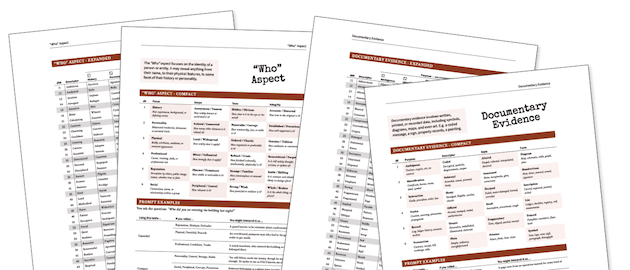
No abstractions, no hand-waving. With more than a dozen evidence tables full of random prompts, you'll make every clue you discover concrete and relevant.
Think Like an Investigator
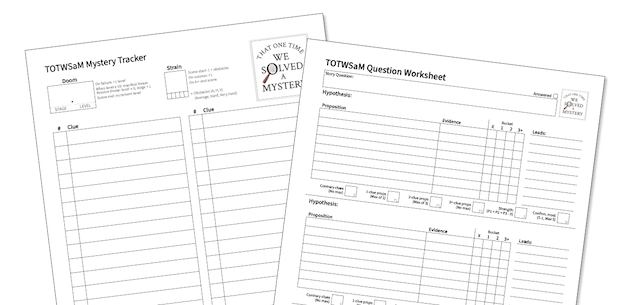
Armed with those clues, you'll formulate hypotheses and propositions to direct and guide your investigation. You decide where to go, what to do, and how to do it.
Play the Game and Setting You Want to Play
TOTWSaM is designed to be played together with any tabletop roleplaying game, called the host system. Literally any host system works. Play the game that you want to play; TOTWSaM simply adds some additional mechanics on top of it.
What you Get
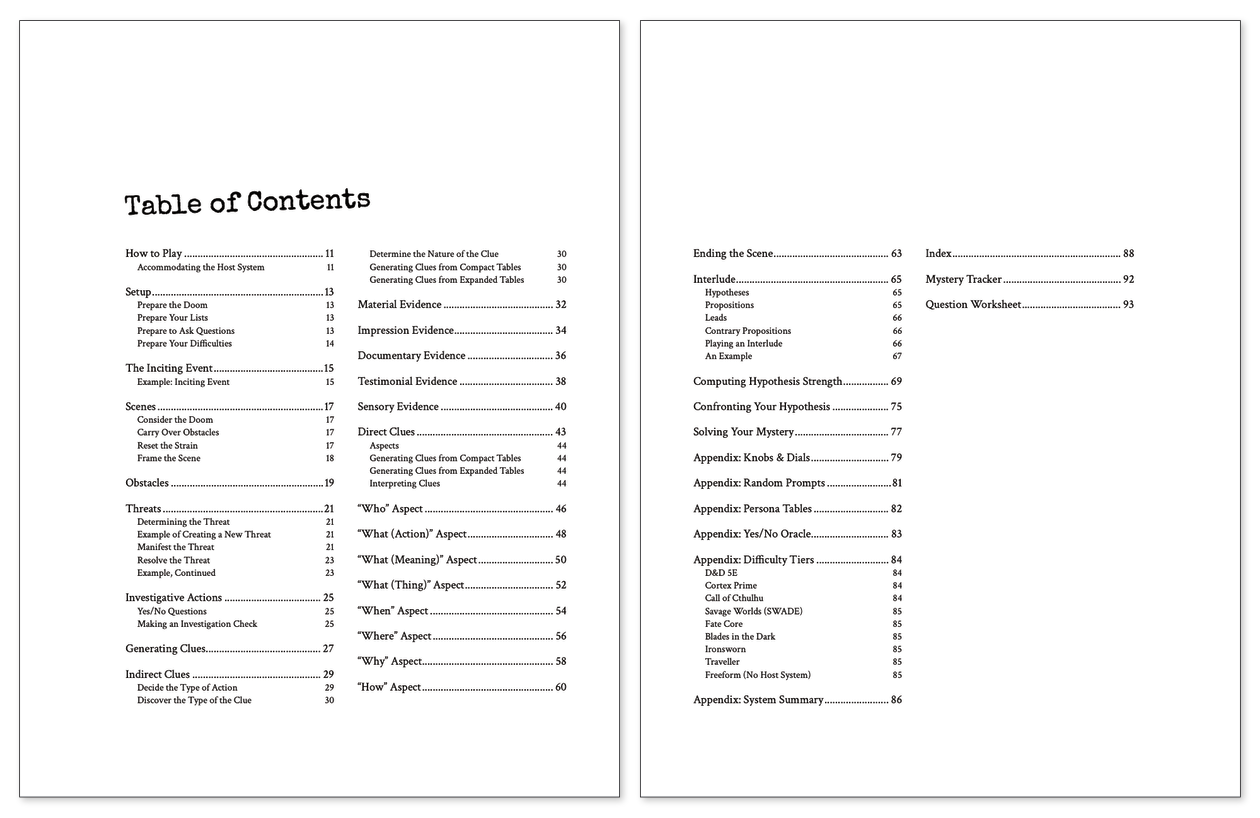
With your purchase, you get the core rules of That One Time We Solved a Mystery—90+ pages of tables, instructions, and examples. You'll also get a mystery tracker and question worksheets you can use to track your investigations.
How to Play
Early in a game of TOTWSaM you’ll pose one or more story questions that encapsulate the mystery you want to solve. Then, over the course of your game, you’ll take actions using the mechanics of whatever TTRPG system you're using (because you can use any TTRPG you want!). You might interrogate witnesses, search a room for things of interest, or research property records at the town hall—the only limit is your imagination.
When you succeed at one of these actions you’ll get a clue. Clues may be randomly generated using tables provided in these rules, but they can also be created using any oracles you have handy, or even purely from your own imagination.
Periodically, you’ll try to answer the story questions you posed at the beginning by forming hypotheses, and supporting them with propositions based on your clues. When enough propositions are well-supported by clues, you can test your hypothesis to see if it is correct. If it is, then you’ve solved the mystery!
Please note my use of affiliate links in this post.