World of Warcraft the Roleplaying Game
Developed by Mike Johnstone, Andrew Bates and Luke Johnson
Published by Sword Sorcery
www.swordsorcery.com
400 full color pages
ISBN: 1-58846-781-3
Stock Number: WW7210
$39.95
The World of Warcraft came is another effort by Sword and Sorcery to bring the Warcraft setting to the d20 engine. This time around, they’ve almost gone the full OGL route meaning that the book is almost complete in and of itself.
In looking at the book, I’m going to get my ‘grievances’ list out of the way first.
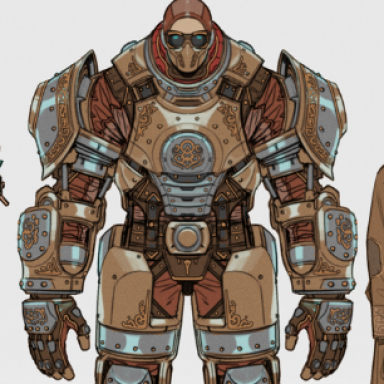
Use of computer art in the book. I can’t imagine anyone seeing the cartonish computer art, despite being state of the art for a computer, thinking that it looks good next to the rest of the art in this book.
Name changes on statistics. I’ve been told that the names for the stats here reflect the online game. Hopefully it’ll bring in more players, but as it stands, since it is a d20 product, they should’ve stuck with the core names for dexterity and other stats.
It’s not complete. When reprinting vast sources of material and you’re OGL, at least then there is the idea that “Well, this needed to be reprinted because player’s aren’t going to have the Player’s Handbook.” Since this book doesn’t include any notes on gaining experience, people are still going to have to have the Dungeon Master’s Guide.
Spell System isn’t different enough from core rules.
Classes are not always compatible with the core classes, making borrowing things from this book tricky.
Some of these are more annoyance then anything else. The computer art especially is an annoyance when compared to the rest of the book. We have artists like Rene & Michel Koiter with others like Jose Aello, Samwise Dider and Trevor Jacobs among the list of talent here.
Others are more troubling. For example, since the book isn’t OGL and is a d20 product, why do we need so much material reprinted? Things like Weapon Focus, Weapon Specialization, Whirlwind attack and a host of other feats don’t need to be reprinted if the reader still has to go to the Player’s Handbook to see things like experience point tables, or use the Dungeon Master’s Guide to calculate experience points. In an OGL book like Conan or Arcana Evolved, you have those tools in the book. You don’t need to reference the Player’s Handbook. Here, if feels like massive padding.
So once you get those things out of the way, what do you have? You have a pretty good d20 interpretation of the World of Warcraft. The book starts off with a brief introduction to the setting and in less than thirty pages, gives the reader a pretty good idea of what’s going on. Those playing in the online version of the game will probably be more than familiar with all this information though. The two page spread is nice in that it looks like something from an old Atlas but the up close sections of the maps don’t do anything for me other than put names on the map.
After that we have rules for generating ability scores. Standard 4d6 with arrangement as you like. The changes to ability scores includes agility for dexterity, stamina for constitution, intellect for intelligence, and spirit for wisdom.
When looking at the races, we have those that are similar in many ways to the standards like high elves and humans, but most of the other races here have a little twist to them. For example, we have orcs, but these aren’t the typical orcs of most campaigns but one with their own civilization and methods of war.
We have the night elves, an ancient and powerful race alongside the might tauren, a minotaur like race whose strength should never be underestimated. For those who want to play something a little different, we have the forsaken, an undead player race right off the bat.
One of the nods they took from Arcana Unearthed is racial levels. Taking a racial level makes the character more of what the race is known for. For example, a dwarf that takes racial levels becomes better at fighting giants, gaining attack bonuses and dodge bonuses as well as more robust against spells. A high elf becomes more agile and better able to master his magic. And a tauren? They become stronger and more in tune with their race’s weapons.
Most of the mechanics look spot on, but the forsaken are an exception. As they are undead, their own racial levels are a d12. However, they don’t use standard d12 when they enter another class. Now granted, the forsaken has a ton of special abilities, but it goes against the type when the race doesn’t gain it’s type hit dice when it’s undead. Could be problematic as unless the character takes racial levels and gains the special ability, increased hit die, where they use the next higher type of die that the character will suffer from low hit points thanks to no stamina modifier.
In looking at classes, it starts off with the level dependent benefits like ability score increases and feats. It follows the standard progression of ability every four and feat every three. It notes the different between good and poor base saves, and the three different types of base attack bonuses.
The core classes are broken down into eight different types; arcanists, barbarian, healer, paladin, rogue, scout, tinker and warrior. The switch here is that the arcanists and healer are actually three paths, each path representing a class on it’s own. The arcanists is very similar to the standard wizard, but they get arcana in addition to bonus feats and use a d6 hit dice. Arcanist can follow the path of the mage, necromancer, or warlock. The first is in essence a standard mage, the latter a master of the undead and death magic, the last a dealer with demons.
The healer gets d8 hit dice, medium bab, good fort and will saves, bonus feats, inspiration, numerous little benefits as they raise in level, and can take druid, priest or shaman as their paths.
Other classes are similar to the core like barbarian and fighter. The rogue class though gets a boost as they gain their special abilities starting at third level and every three levels after. Hating waiting till past tenth level for that old crippling strike? Not anymore!
Those looking for more alternatives to their character will have to wait until they can enter a prestige class. Some of those found here look familiar, similar if not identical to those found in the Dungeon Master’s Guide. Included are the following: Archmage of Kirin Tor, Assassin, Beastmaster, Berserker, Duelist, Elven Ranger, Fel-Sworn, Gladiator, Infiltrator, and Mounted Warrior. Between the core classes and PrCs, players should have a ton of options to play through before coming close to exhausting them.
In terms of skills, we have one of the traditional problems. Some of the most learned characters, like arcanists, still get few skill points because in game design, they should have a high intelligence or intellect to give them bonus skill points. In terms of skills, they borrowed another page from Arcana Evolved and used Stealth instead of Move Silently and Hide in Shadows. Most of the other skills are drawn right from the player’s handbook but some others have more details. For example, Craft has quite a bit of information on it, also noting some of the trade skills and how they work in the table top RPG as opposed to the computer game.
Feats include a lot of the standard material in terms of power attack, cleave, improved sunder, and other favorites. There are new types thought like the Shout Feat and Technology Feats. Unlike many d20 fantasy games, Warcraft has guns and a bit of steam tech behind it.
In looking at some of the things that makes a Warcraft game different than a standard d20 fantasy game, alignment is an interesting issue. In most d20 fantasy games, orcs are evil. They’re pretty much there to be ground up into fine chunks of spicy experience points. In Warcraft, where the orcs are a major race, that’s no longer true. It can lead to some interesting opportunities and it’s too bad that Sword and Sorcery went with the traditional alignment system of nine alignments from lawful good to chaotic evil.
Another difference is that there are affiliations. We have the following; alliance, horde, burning legion, scourge and independent. Your affiliation comes with an affiliation rating. This rating effects skill checks when dealing with someone from another affiliation. If you’re trying to use Bluff, Diplomacy, Gather Information or Perform as a member of the Horde against the Scourge or Burning Legion, that’s a –6 to the check. Intimidate however seems to work quite with that as a bonus, which might not make the most sense in all situations.
Once all your game affects are finished, the player needs to add in some standard things like name, gender, age, height and weight. Of interest is that the book uses the new convention of separating starting age by type of class. Warriors types are grouped into one category, while skilled characters in another, and arcane spellcasters in another.
So after you’ve been through over one hundred and fifty pages to generate your character, what do you do next? Well, one thing you might notice is that your character is nude. You now have to outfit the character. The equipment chapter includes starting wealth for the introduced classes as well as a wealth by level chart. Another interesting bit about Warcraft are the goblins. These little guys set up shop anywhere and always want to be paid in gold. They add a different touch to the game’s atmosphere.
The weapons have some great illustrations of the unique bits of the setting including the taurn halberd and totem, as well as the moonglave, a shuriken like throwing weapon, and good old flintlock pistols and blunderbuss weapons. The sole armor illustration isn’t that good. It’s a shame too as the original Everquest book had a fantastic illustrated section of equipment.
In addition to weapons and armor though, we also have the standard adventuring equipment like oil, torches, different outfits for clothing, and numerous types of mounts and the goods that go with them. One thing added that I don’t see on too many equipment lists is buildings. While I probably don’t agree with the 100,000 gold piece price tag on a mansion, it’s nice to see something like that added.
Because Warcraft has a different default technological level, it has rules for making such devices. It includes a list of FD, functional difficulty benchmarks, as well as eight steps to go through to create your device. I haven’t done into any level of depth with this section yet as I haven’t had any players interested in using technological devices to that level, nor have I used any as NPCs as I’m running a by the book campaign at the moment. On paper it seems simple enough, but as with anything, could have a few loops that players can take advantage of.
For the lazy though, there are also several example technological devices. This includes gnomish combat armor and goblins army knives, as well as repeating pistols and goblin zeppelins.
Because this is in essence a self-contained game, there is a huge section on combat. The bad news for some is that it still uses Attacks of Opportunity. The worse news is that it doesn’t include the fancy diagrams and other neat things that I’ve seen in other alternative core books. For a brand new player, that could be quite a stretch to understand. An experienced player on the other hand, doesn’t need to see the information at all.
In many other ways, it’s the standard d20 rules. This includes a huge list of actions in combat, notes on if it incurs an attack of opportunity, what type of action it is, standard, move, full-round, free action, no action, or one with a action type that varies.
In terms of dying, the book takes another page from Arcana Evolved. Instead of dropping at zero, you have between zero and your Stamina bonus. Instead of dying at negative ten, you die when your hit points go past your Stamina score in negatives. So if you have a fifteen Stamina, you die at negative fifteen. Instead of a flat ten percent chance to stabilize, you have a percentage chance equal to your Stamina.
Now that is annoying. If you’re going to go through the trouble of changing a game mechanic, why not change it to something that makes sense in terms of d20 rules where a d20 is used for most things? For example, a Fortitude save?
In trying to be a complete game, it includes all the different conditions a character can be in. These are our old favorites like fatigued, disabled, sickened, and prone, as well as things like dealing with ability score lose, handling energy drain, how darkvision works, and other bits.
Another big section of the book is spellcasting. Here, spellcasters aren’t quite sorcerers. However, they do get a maximum prepared spells per level based on their primary ability score. For example, an arcanist caster with an eighteen Intellect can memorize nine spells per level. You can cast each prepared spell as many times as you want as long as you don’t go over your spells per day for that level. It’s certainly not a mana system and it’s still not as simple as running a sorcerer from core rules, but it’s a good alternative that lets players have some flexibility.
Spells are broken down into lists. The lists include the general class, as well as the specialized paths. Each list is broken down into levels. Unlike standard d20, there are no breakdowns of spells by school.
After the spells, the book moves into Warcraft campaigns. This includes another nod from Arcana Evolved in the form of Hero Points. Unlike say Action points, made popular by games like Eberron or their variant in Unearthed Arcana, Hero Points are much more potent but limited in the number you get. They allow you to “break” the rules for a particular action and can be real lifesavers.
After that, the GM is given some advice on the different types of campaigns. For example, diplomacy is a common theme in the setting because the races do not get along due to years of war and hardships felt on both sides of the Horde and Alliance. In addition, we have the forsaken as a new race that no one really trusts, but they win up allies with the Horde as they fight against the Scourge. The campaign types are nice little seeds that could each be fleshed out into it’s own chapter if space was permitting.
To help represent the rest of the world, the GM has NPC classes. This includes the aristocrat, commoner, expert, and soldier. Yeah, because they call the fighter in this version the warrior, the warrior is now the soldier. One of the nice things about a pure point based system is you don’t have to name everything under the sun and worry about what effects that single name change will have on everything else.
Some advice on running the different affiliations, as well as specific campaign hooks for the affiliations, is also provided. For example, gnomes have invented a new weapon and wish to retake the city of Lordaeron, quick little throwaway ideas that a GM can work into different elements of the campaign.
The book ends with rules on Community. Like I noted for Taint in Heroes of Horror, I really don’t want to see game mechanics reprinted again and again. This is now the third time I’ve seen these rules. With so much else that could’ve been done here, including expanded adventure seeds, NPCs to act as patrons, rules for gaining experience points instead of referring to the Dungeon Master’s Guide, or any number of things, we get Community rules.
There is a three page index and thankfully, because of the different names of statistics, we have a new character sheet. Unfortunatly, like the rest of the book, the character sheet itself is a full color character sheet (a tanned brown) which is going to make copying it problematic. There’s also a single page devoted to ads, the manga book Dragon Hunt. Me? I’m waiting on the next books in that series as I bought that one many moons ago and waiting for the next book in the series. Anyone reading this review have an idea when thatsecond book in the Sunwell Trilogy is going to be out?
As a d20 book that you can steal from, I’d be nervous as the game balance in the core classes is all over the place compared to the standard counter parts. In addition, the use of Action Points and different elements of Arcana Evolved indicate a different thinking than went into the Player’s Handbook so if you’re buying this as an expansion for your standard game, make sure to playtest whatever you’re looking at.
Much like the Player’s Handbook doesn’t cover gaining experience points, this one doesn’t either so you’ll still need the DMG despite some other material from the DMG being covered here. In addition, there are no default monsters, so you’ll either need the Manual of Monsters, a Warcraft themed book or the Monster Manual to get started.
As a standalone book or an alternative to the Player’s Handbook, it’s a solid book. At 400 pages to be under fifty dollars, much less $39.95, is amazing, especially as a full color book. Despite the use of computer-generated art, there is a lot of fantastic art here and the full book is in color unlike some hardback books with full color illustrations within it. As it’s a d20 game as its core, there are still numerous elements that can be swiped into a standard game like the Taurens.
As our review system doesn’t incorporate multiple ratings, I’d consider this a four star standalone product or a three star d20 product for use of pillaging.