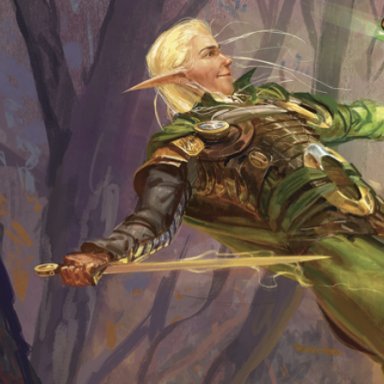
Drawing a stick figure, snapping a quick picture of someone, and typing “female human warlock casting a spell” are all pretty similar levels of skill and effort; I
would call all of them art, but I use the term in a maximalist sense.
This level of skill and effort is just enough for different things with different tools. If you want a picture of a pig with tree bark skin, that’s much easier with AI, takes skill with pen and ink, and would require both some real creativity and effort with photography. If you want a realistic picture of a person you know, that’s trivial with photography, takes real skill with pen and ink, and is very very difficult with AI alone (realistically you’d go through photography.) If you want a frog sitting on a balloon held by a bunny on a unicycle, that’s pretty easy to draw (not draw well, but clearly get the point across), while difficult with AI (you’d at least need to learn some extra features like ControlNet) and nearly impossible with photography. Hands are famously hard for AI; they’re also tricky for many traditional artists, while being a cinch for photography.
If you want to get beyond the basic level in traditional art you’ll want to practice to improve your manual dexterity, especially in how you hold your shoulder and wrist; you’ll want some experience with different tools and how they convert speed and pressure into different lines and hues and so on. (A digital artist working with photoshop, which most people would now class as another trad artist though that was hugely controversial a few decades ago, has some overlapping but still different set of tool-specific skills.) More generally you’ll want to be able to look at things and break them down into fundamental 3D objects, to see value when looking around you, and so on.
You’ll want to develop a whole repertoire of references, and this is basically larger than many human lifetimes. When I started practicing with pen and ink I started looking at tree bark completely differently. This thing I had taken for granted was in fact this whole world to stare at in detail.
If you want to get good at using Stable Diffusion there’s a lot of overlap. 90% of what you’re doing is looking at something you had generated and either saying “this is naughty word,” “I want to explore variations of this,” “let’s bump this up to refine in higher detail” or “this specific part of the picture is bad, let’s fix it.” The observational skills thus are extremely similar; you need to know perspective to notice when the perspective is bad, anatomy to notice when the anatomy is bad, and so on. (You and lay viewers can notice that “something is off” without this, most of the skill difference is in placing the origin of the problem.)
Tool-specific skills: ControlNet if you want any control over composition. Knowledge of models. Ability to do textual inversion and Loras. And yes, prompting - knowing what specific words mean to the model, from fiddly things like how “female sorcerer” differs from “sorceress” to exactly what “volumetric lighting” is to knowing artists and art movements.
I had basically zero interest in art history before, now I’m super into it, in the same way trad art got me into tree bark. I’m glad on both counts even if (as with most of my obsessions) it never results in anything.
My guess is that a lot of the initial reaction to MJ/SD arises from being very impressed, or scared, that a naive user can create something that would objectively require a great deal of skill using traditional methods. The same is true of photography and indeed photography
did drive a lot of hardworking artists out of business. In our house we have some inherited oil portraits of some long-dead relatives they had commissioned, my phone background right now is a photo of my son my wife snapped on a whim - that particular use of painting has become far less common. But painting is still a thriving artistic medium today and over the twentieth century many of the interesting movements and innovations in painting were in exploring what it could do that photography couldn’t. I’m an optimist about the long-run future of painting in that sense.
(For another optimistic model, look at chess: computer programs (full computer programs doing the whole process, not just humans using computer tools) objectively play better than any human, but human v human chess has never been more popular, over both IRL and streaming.)
that is a strawman, a billionaire will never be in a position to make that choice.
The point is this - people don't "need" anything beyond survival needs and data indicates that more wealth does not bring more happiness. That billionaire is not happier because she has a different choice on luxury.
Your argument is that at some point it is enough, but that is a fundamentally flawed argument and billionaires feel a "need" more money for the things they want to the same degree that the poor or working class feel a "need" for additional things they want.
At the end of the day there is no "need" for a second jet and no "need" for electricity and neither of those things will make you happier just because you have them.
This is orthogonal to the main topic of the thread, but declining marginal utility of income is a real thing. Going from a hovel to a studio apartment with running water, Wi-Fi, and A/C really does make you significantly happier, moving from that studio to a mansion in a fancy suburb makes a bit happier than that, and by the time you’re buying your second jet it’s meaningless.