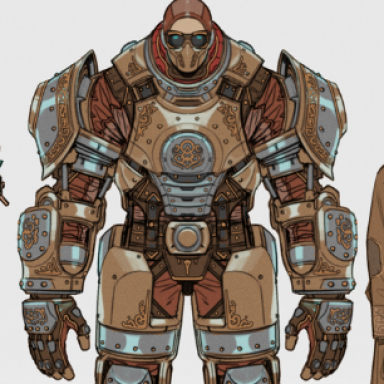
Vraille Darkfang
First Post
I apologize who how bad my first attempt (due to shame & trying to protect your good sense, I won’t show the link here) was. To any who actually had their DM run them through that as written, tell your DM:
Vraille Darkfang is a sadistic bastard who used to works as an interrogator for some South American country. He said the unfortunate incidences with my bladder were nothing but a bad dream & I got this coupon:
“Good for 2,000 XP or a single +1 Magic Weapon of your choice*”
*Special Materials extra. XP may not be used to pay for Item Creation Feats. Cash value: 1/200th of a copper piece. Void in Kyrnn, Ghelsbad, and where prohibited by law or chaos. Expires: 12/28/Year varies by DM.
Party level:
This encounter works best with PC’s below 10th level. A party lacking a lot of Arcane Magic can go higher, but be prepared to buff up some of the things below.
The Encounter:
While returning home from their latest adventure, the party passes a wooden wagon on the side of the road. A single wheel sits, apart, upon the road and the rest the wagon rest, angled, upon a broad ditch bordering the road. A dwarf, clad in rich (now muddy) clothing struggles with one corner of the wagon, attempted to put a new wheel upon the craft.
The wagon is a complex combination of broad, sturdy wooden planks supported by bands of iron & stout steel bolts, and resembles more common caravan wagons which travel the trade ways. However, a few features set it apart. Each of the wheel areas of the wagon are surrounded by iron & steel and the mechanism seems strange. The wagon also carries massive, round oak casks, stacked perilously high bound by taught steel cables.
[A Knowledge (engineering) DC-20 check, dwarves get +4 bonus, reveals this as a type of trade wagon used almost exclusively by dwarves in mountainous regions where few decent trails exist. The wagon has semi-independent wheel-well axles that allow each wheel a degree of movement impossible with traditional wagons. Only the wealthiest of dwarves, or the most precious cargo, is shuttled via these expensive conveyances. If the check succeeds by 10 or more, the PC will also notice this wagon is severely outdated, newer, improved versions have existed for over a century. Of course, dwarves are a stubborn lot and are unlikely to build a new wagon when their old one still works fine.]
As the party approaches the dwarf will throw down his tools in disgust & hail the party (if the party is cautious & sneaks up in fear of an ambush or some such, the dwarf will not notice them until they show themselves). The mud-caked figure will introduce himself as Wilburt Hoppescrag, brewer of master ales & purveyor of all things alcoholic and yeasty. He asks the PC’s for help fixing his wagon, and in return he’ll treat them to a warm fire, fine meal, and “Ale so smooth you’ll cry & spirits so strong you’ll forget your name”. The wagon is very easy to fix, once he has someone to prop up the wagon so he can replace the broken wheel. He’ll then treat the party to affine meal, with all the beer, mead, ale, spirits they care to drink (he also has water for their mounts/animals, as well as a bottle of wine or two he ‘keeps for those who don’t like the REAL stuff’.
[Like any creature alone, in a hostile wilderness, the PC’s will be suspicious & will have various questions for Wilburt. Here’s how he’ll respond to various questions (Bluff: +17, plus Glibness, Diplomacy +17).
“Why are you traveling alone?” “Cheaper & I have my own methods to defend myself (point to a wands hidden beneath his jacket, Detect magic will reveal other auras about his person of varying strength, including the ales he is carrying. He’ll explain the enchantment upon the ales as designed to preserve its taste & flavor over the long journey, which is true, but there are other enchantments as well).
“Where are you from?” “High Dwarven Thanedom (or a nearby dwarven settlement.”
Where are you going?” “The Grand Market at the Free City Oyzuk (or any nearby major trading city)”.
He’ll pose as a successful merchant with sufficient magical resource to insure his personal safety. Should the PC’s beat any of his Bluff/Diplomacy checks, he’ll reveal his ‘true’ reason for journeying to Oyzuk. He’ll show a secret compartment in is wagon, filled with various powerful narcotics and (non fatal) poisons. He’ll try to get the PC’s to look the other way, even offering 100 gp a piece to ‘forget about him’. Should the PC’s continue to badger him or overtly threaten him. He and his wagon will vanish].
Assuming the party helps him & takes him up on the offer of a free meal:
He entertains with stories of the history of his homeland (former homeland, as the dwarven lands he speaks of fell to the hands of humanoids centuries ago). He’ll be a good host & keep the party’s drinks filled. All of his drinks are truly exquisite, though his food exists mainly of dried meat soaked in water & heated on the fire; crusty, hardened bread; and bland, but filling, beans. He’ll listen to the party & ask to hear of their adventures. At times he’ll seem wistful and remorseful. If asked, he’ll just say how he’s remembering the old times when his dwarven thanedom was at its peek. He’ll allow them to rest there, but he wants to be on his way during the night (he claims his darkvision gives him an edge by traveling at night & resting during the day). He’ll fare them well, & tell them to stop by the Over-Hung Centaur if they should journey to Oyzuk, telling them to look for the sign, can’t miss it.
[The fun stuff]
For each drink that a person (or animal) takes, roll a Fort & Will (enchantment) save for it. Females and non-mammalian creatures are immune to this effect. (A horse is affected, a lizardman is not). The base Save DC is 15, but you can move it up or down based on how prevalent you want the effects to be in your future games (I’d go no higher than 20 in any case). Once a creature fails a save, it need not continue to roll saves, likewise if it rolls a natural 20 for either save, it need not roll another save & is immune to the effects described below:
Once every 1d4 days (for one month) when a affected creature attempts to urinate he will subconsciously do so on a small glyph (see below). When they begin to urinate, an electrical charge will flow out of the glyph and into the creature. The damage is 1d6 points of electrical damage a round for 1d6 rounds. They may attempt a Fort save (DC 15, or what you set the above DC to) for half damage. The save is made the first round and if successful they take half damage each round. In no case will they take more d6 in damage than they have HD or levels (a 1st level barbarian will only take 1d6 damage every time and a 3 HD horse will take between 1-3 d6 of damage). Should the creature roll a natural 20 for a save, then he has shaken the curse & will no longer half to worry about getting zapped. After 1 month (or a Break Enchantment, Wish, Miracle or similar spell) the curse will fade & the animal will take no further electrical damage.
Those who urinate in Magic Dead areas will be immune to the effect.
Wheel of The Stormlord (Greater Artifact)
This ancient item gives those attuned to it the power to inscribe small, glyphs of lightning upon surfaces. The runes 1d6 electrical damage/HD (max 6 HD). See above for how the damage ‘plays out’.
This is how Wilburt is ‘zapping’ people. The Fort save in the drink is for resisting the elixir in the ale that attunes the drinker to the Stormlord Wheel. The Will save is for the drinker to subconsciously ‘activate’ the Wheel just before urinating & placing the glyph ‘at ground zero’. The elixir will fade after 1 month, thus ending the artifact's effect.
There is a 25% chance Wilburt is using a Scrying device or spell whenever a creature is ‘zapped’.
Remember that not only are male PC’s affected all male humanoid/mammalian creatures are potentially targets as well since he has enchanted the water (just to be safe). Thus any stallion warhorses or monkey familiars the party has might fall victim to this as well.
[What really happened]
Wilburt is a dwarf. He wistfully remembers the peek of his dwarven homeland. Everything else (including the he part) is a lie.
The South Dwarven Thanedom (his, its, true homeland) fell to advancing ice & hordes of cold subtype creatures over 2,000 years ago. A few survived to join up with their kin of the High Dwarven Thanedom, but most died & no survivors remained behind. Or, that is the tales that are told.
In reality, a small, fortified dwarf-hold (Delvkine’s Delve) deep within the mountains held out for several years, as the only entrance was a heavily fortified keep where all the male dwarves constantly held watch. One day, while most of the able bodied men were at the Keep, a force of gegulons was Gated into the inner section where the women looked after the children, elderly, and others incapable of fighting. By the time the devils were driven off, all the women-folk were dead. It seemed as if the dwarves were due to die off regardless of how well they fought.
Then came “The Device”. The most zealous clerics and runecasters devised a device that would allow the dwarves to ‘reproduce’ again. The device resembled a combination of alter & torture device. A massive marble block, emblazoned with all the holy symbols of those gods still represented in Delvkine’s Delve. The signet-runes of the high casters of the hold were also chiseled into the stone block. Each glowed a sickly red. Even worse were the Necromantic Runes which covered the entire top of the block and glowed with a brilliant purple light. A great grove ran the center of the block, which corresponded to the giant, adamantine, rune encrusted blade suspended above. Attached to the top of the blade was an immense bowl. This, the clerics & runecasters said, would allow them to live once more.
But the cost would be high, and the pain would be great. The device would only work for those incapable of reproducing in any other fashion, whether by budding, cell division, or other, more traditional, ways. Those, those ‘volunteering’ would first be castrated before being strapped upon the device. Then, once securely fastened the giant blade would slowly descend, it progress measured by the slow drip of blood that eased from the bowl above and allowing the counterweights to slowly lower the blade towards the altar. Once the blade first cut dwarven flesh, it would begin to glow with a read light & the smell of burnt flesh would fill the air. After 2 hours the blade would finally sink into the stone below & the dwarf would have been sliced in twain, from skull to pelvis, the magic of the blade keeping him alive. Then the magic of the stone would take over & each half of the cloven dwarf would begin to regenerate. Several pain filled hours later, two whole dwarves would stand where one had been strapped to the pale marble block. But, they were not the same.
The blade would take fragments of the original dwarf’s mind, but the new dwarves remembered little of their previous life. In giving ‘birth’ to these 2 beings, the spirit of the original dwarf was slain.
Now, after 2,000 years, the Device has begun to fail. Now, when the blade slices, the two halves rise as mutated, degenerate monsters bent upon a path of psychopathic destruction. If a cure is not found soon, Delvkine’s Delve, will be no more. Wilburt, an experienced runecaster wishes to restore them to their original, dwarven, biology. To this end he has begun examination of the urinary & reproductive systems of male humanoid & mammalian subjects. He thinks he is close to bringing about a way for the dwarves to ‘regrow what has been long lost’. The party is just being used for research purposes to test out a theory about how electrical stimulation affects soft, spongy tissues.
If the party manages to track him down & threatens him. He will tell them his story & feel he is totally justified in his actions. If they complain about the pain the suffered, he refers to the ‘bisection’ process above. He’s trying to preserve his clan. For a dwarf nothing is more sacred. He does not wish to fight the party but he will, not to kill them, just so that he may flee & continue his research elsewhere.
Treat Wilburt as a Dwarf Wizard of at least 15th level, higher if he could not survive a single round of combat against the party. (Again, he’ll fight not to kill, but to flee). He try to appeal to the PC’s sense of duty & apologize fro the harm done him, but he’s been having trouble finding people who’ll wiling volunteer (though there was that one Drunken Master Halfling who really, really, really, needed a drink).
That’s that.
A lot better I hope. If you use this, let me know how it turns out.
If people want more detail about turning Wilburt from an encounter to an adventure or series of adventures, I’ll try to post more.
Next up will either be:
The Orcs Seeking Protection form Castration Scrolls, or
The Begging Efreet.
Vraille Darkfang is a sadistic bastard who used to works as an interrogator for some South American country. He said the unfortunate incidences with my bladder were nothing but a bad dream & I got this coupon:
“Good for 2,000 XP or a single +1 Magic Weapon of your choice*”
*Special Materials extra. XP may not be used to pay for Item Creation Feats. Cash value: 1/200th of a copper piece. Void in Kyrnn, Ghelsbad, and where prohibited by law or chaos. Expires: 12/28/Year varies by DM.
Party level:
This encounter works best with PC’s below 10th level. A party lacking a lot of Arcane Magic can go higher, but be prepared to buff up some of the things below.
The Encounter:
While returning home from their latest adventure, the party passes a wooden wagon on the side of the road. A single wheel sits, apart, upon the road and the rest the wagon rest, angled, upon a broad ditch bordering the road. A dwarf, clad in rich (now muddy) clothing struggles with one corner of the wagon, attempted to put a new wheel upon the craft.
The wagon is a complex combination of broad, sturdy wooden planks supported by bands of iron & stout steel bolts, and resembles more common caravan wagons which travel the trade ways. However, a few features set it apart. Each of the wheel areas of the wagon are surrounded by iron & steel and the mechanism seems strange. The wagon also carries massive, round oak casks, stacked perilously high bound by taught steel cables.
[A Knowledge (engineering) DC-20 check, dwarves get +4 bonus, reveals this as a type of trade wagon used almost exclusively by dwarves in mountainous regions where few decent trails exist. The wagon has semi-independent wheel-well axles that allow each wheel a degree of movement impossible with traditional wagons. Only the wealthiest of dwarves, or the most precious cargo, is shuttled via these expensive conveyances. If the check succeeds by 10 or more, the PC will also notice this wagon is severely outdated, newer, improved versions have existed for over a century. Of course, dwarves are a stubborn lot and are unlikely to build a new wagon when their old one still works fine.]
As the party approaches the dwarf will throw down his tools in disgust & hail the party (if the party is cautious & sneaks up in fear of an ambush or some such, the dwarf will not notice them until they show themselves). The mud-caked figure will introduce himself as Wilburt Hoppescrag, brewer of master ales & purveyor of all things alcoholic and yeasty. He asks the PC’s for help fixing his wagon, and in return he’ll treat them to a warm fire, fine meal, and “Ale so smooth you’ll cry & spirits so strong you’ll forget your name”. The wagon is very easy to fix, once he has someone to prop up the wagon so he can replace the broken wheel. He’ll then treat the party to affine meal, with all the beer, mead, ale, spirits they care to drink (he also has water for their mounts/animals, as well as a bottle of wine or two he ‘keeps for those who don’t like the REAL stuff’.
[Like any creature alone, in a hostile wilderness, the PC’s will be suspicious & will have various questions for Wilburt. Here’s how he’ll respond to various questions (Bluff: +17, plus Glibness, Diplomacy +17).
“Why are you traveling alone?” “Cheaper & I have my own methods to defend myself (point to a wands hidden beneath his jacket, Detect magic will reveal other auras about his person of varying strength, including the ales he is carrying. He’ll explain the enchantment upon the ales as designed to preserve its taste & flavor over the long journey, which is true, but there are other enchantments as well).
“Where are you from?” “High Dwarven Thanedom (or a nearby dwarven settlement.”
Where are you going?” “The Grand Market at the Free City Oyzuk (or any nearby major trading city)”.
He’ll pose as a successful merchant with sufficient magical resource to insure his personal safety. Should the PC’s beat any of his Bluff/Diplomacy checks, he’ll reveal his ‘true’ reason for journeying to Oyzuk. He’ll show a secret compartment in is wagon, filled with various powerful narcotics and (non fatal) poisons. He’ll try to get the PC’s to look the other way, even offering 100 gp a piece to ‘forget about him’. Should the PC’s continue to badger him or overtly threaten him. He and his wagon will vanish].
Assuming the party helps him & takes him up on the offer of a free meal:
He entertains with stories of the history of his homeland (former homeland, as the dwarven lands he speaks of fell to the hands of humanoids centuries ago). He’ll be a good host & keep the party’s drinks filled. All of his drinks are truly exquisite, though his food exists mainly of dried meat soaked in water & heated on the fire; crusty, hardened bread; and bland, but filling, beans. He’ll listen to the party & ask to hear of their adventures. At times he’ll seem wistful and remorseful. If asked, he’ll just say how he’s remembering the old times when his dwarven thanedom was at its peek. He’ll allow them to rest there, but he wants to be on his way during the night (he claims his darkvision gives him an edge by traveling at night & resting during the day). He’ll fare them well, & tell them to stop by the Over-Hung Centaur if they should journey to Oyzuk, telling them to look for the sign, can’t miss it.
[The fun stuff]
For each drink that a person (or animal) takes, roll a Fort & Will (enchantment) save for it. Females and non-mammalian creatures are immune to this effect. (A horse is affected, a lizardman is not). The base Save DC is 15, but you can move it up or down based on how prevalent you want the effects to be in your future games (I’d go no higher than 20 in any case). Once a creature fails a save, it need not continue to roll saves, likewise if it rolls a natural 20 for either save, it need not roll another save & is immune to the effects described below:
Once every 1d4 days (for one month) when a affected creature attempts to urinate he will subconsciously do so on a small glyph (see below). When they begin to urinate, an electrical charge will flow out of the glyph and into the creature. The damage is 1d6 points of electrical damage a round for 1d6 rounds. They may attempt a Fort save (DC 15, or what you set the above DC to) for half damage. The save is made the first round and if successful they take half damage each round. In no case will they take more d6 in damage than they have HD or levels (a 1st level barbarian will only take 1d6 damage every time and a 3 HD horse will take between 1-3 d6 of damage). Should the creature roll a natural 20 for a save, then he has shaken the curse & will no longer half to worry about getting zapped. After 1 month (or a Break Enchantment, Wish, Miracle or similar spell) the curse will fade & the animal will take no further electrical damage.
Those who urinate in Magic Dead areas will be immune to the effect.
Wheel of The Stormlord (Greater Artifact)
This ancient item gives those attuned to it the power to inscribe small, glyphs of lightning upon surfaces. The runes 1d6 electrical damage/HD (max 6 HD). See above for how the damage ‘plays out’.
This is how Wilburt is ‘zapping’ people. The Fort save in the drink is for resisting the elixir in the ale that attunes the drinker to the Stormlord Wheel. The Will save is for the drinker to subconsciously ‘activate’ the Wheel just before urinating & placing the glyph ‘at ground zero’. The elixir will fade after 1 month, thus ending the artifact's effect.
There is a 25% chance Wilburt is using a Scrying device or spell whenever a creature is ‘zapped’.
Remember that not only are male PC’s affected all male humanoid/mammalian creatures are potentially targets as well since he has enchanted the water (just to be safe). Thus any stallion warhorses or monkey familiars the party has might fall victim to this as well.
[What really happened]
Wilburt is a dwarf. He wistfully remembers the peek of his dwarven homeland. Everything else (including the he part) is a lie.
The South Dwarven Thanedom (his, its, true homeland) fell to advancing ice & hordes of cold subtype creatures over 2,000 years ago. A few survived to join up with their kin of the High Dwarven Thanedom, but most died & no survivors remained behind. Or, that is the tales that are told.
In reality, a small, fortified dwarf-hold (Delvkine’s Delve) deep within the mountains held out for several years, as the only entrance was a heavily fortified keep where all the male dwarves constantly held watch. One day, while most of the able bodied men were at the Keep, a force of gegulons was Gated into the inner section where the women looked after the children, elderly, and others incapable of fighting. By the time the devils were driven off, all the women-folk were dead. It seemed as if the dwarves were due to die off regardless of how well they fought.
Then came “The Device”. The most zealous clerics and runecasters devised a device that would allow the dwarves to ‘reproduce’ again. The device resembled a combination of alter & torture device. A massive marble block, emblazoned with all the holy symbols of those gods still represented in Delvkine’s Delve. The signet-runes of the high casters of the hold were also chiseled into the stone block. Each glowed a sickly red. Even worse were the Necromantic Runes which covered the entire top of the block and glowed with a brilliant purple light. A great grove ran the center of the block, which corresponded to the giant, adamantine, rune encrusted blade suspended above. Attached to the top of the blade was an immense bowl. This, the clerics & runecasters said, would allow them to live once more.
But the cost would be high, and the pain would be great. The device would only work for those incapable of reproducing in any other fashion, whether by budding, cell division, or other, more traditional, ways. Those, those ‘volunteering’ would first be castrated before being strapped upon the device. Then, once securely fastened the giant blade would slowly descend, it progress measured by the slow drip of blood that eased from the bowl above and allowing the counterweights to slowly lower the blade towards the altar. Once the blade first cut dwarven flesh, it would begin to glow with a read light & the smell of burnt flesh would fill the air. After 2 hours the blade would finally sink into the stone below & the dwarf would have been sliced in twain, from skull to pelvis, the magic of the blade keeping him alive. Then the magic of the stone would take over & each half of the cloven dwarf would begin to regenerate. Several pain filled hours later, two whole dwarves would stand where one had been strapped to the pale marble block. But, they were not the same.
The blade would take fragments of the original dwarf’s mind, but the new dwarves remembered little of their previous life. In giving ‘birth’ to these 2 beings, the spirit of the original dwarf was slain.
Now, after 2,000 years, the Device has begun to fail. Now, when the blade slices, the two halves rise as mutated, degenerate monsters bent upon a path of psychopathic destruction. If a cure is not found soon, Delvkine’s Delve, will be no more. Wilburt, an experienced runecaster wishes to restore them to their original, dwarven, biology. To this end he has begun examination of the urinary & reproductive systems of male humanoid & mammalian subjects. He thinks he is close to bringing about a way for the dwarves to ‘regrow what has been long lost’. The party is just being used for research purposes to test out a theory about how electrical stimulation affects soft, spongy tissues.
If the party manages to track him down & threatens him. He will tell them his story & feel he is totally justified in his actions. If they complain about the pain the suffered, he refers to the ‘bisection’ process above. He’s trying to preserve his clan. For a dwarf nothing is more sacred. He does not wish to fight the party but he will, not to kill them, just so that he may flee & continue his research elsewhere.
Treat Wilburt as a Dwarf Wizard of at least 15th level, higher if he could not survive a single round of combat against the party. (Again, he’ll fight not to kill, but to flee). He try to appeal to the PC’s sense of duty & apologize fro the harm done him, but he’s been having trouble finding people who’ll wiling volunteer (though there was that one Drunken Master Halfling who really, really, really, needed a drink).
That’s that.
A lot better I hope. If you use this, let me know how it turns out.
If people want more detail about turning Wilburt from an encounter to an adventure or series of adventures, I’ll try to post more.
Next up will either be:
The Orcs Seeking Protection form Castration Scrolls, or
The Begging Efreet.