A great service but an average book
DM’s Idea Pipeline 2004 Collection
by Michael Hammes and Philip Reed
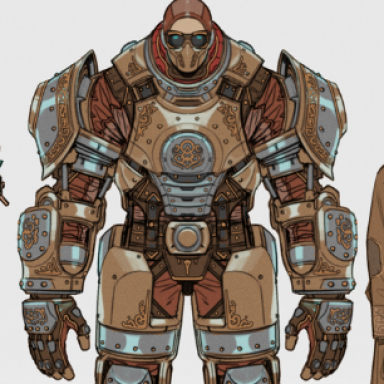
Cover art by Christopher Shy
Layout and production by Philip Reed
Published by Ronin Arts
www.roninarts.com
DM’s Idea Pipeline is a 74 page product that retails for $9.95 in pdf and $19.95 in print and pdf. Ronin Arts gave me this product because I’m a longtime subscriber (June 29th, 2004) to the DM’s Idea Pipeline and my membership term has included all the material included in this document. The author’s even include a note to this effect in the document.
“Special thanks to the subscribers. Your participation in the DM’s Idea Pipeline has led to this collection and the monthly collections still being released. We hope that you enjoy this complimentary product and will continue to enjoy the material published through the DM’s Idea Pipeline.”
An Overview
The book is arranged into 11 sections (12 including OGL) that are divided up according to the type of content presented (feats, variant classes, prcs, spells, treasures, rumours, contacts and npcs, locations, events and monsters). It is interesting to not that the product has been arranged in this pattern. It is possible that the material could have been arranged by months (as we first received it) to highlight the diversity of “The Pipeline” on a month by month basis, or it could have been arranged by theme (such as the Cerulean Ankheg theme or the Golden Potato theme).
A word about Michael and Philip design and the Pipeline process (Reviewer speculation)
Unlike most products in which Michael and Philip collaborate it is possible with some effort to identify who has written what. It is my belief that the two authors prepare material for The Pipeline in different ways. The organizing question for Michael seems to be, “What are I going to include in the Pipeline this week” and so often we get a series of thematic items that by weeks end tell a little story or provide a mini-ecology for a campaign. The organizing question for Philip seems to be, “What do I want to write today” and so we often receive a strange jumble of things that are linked to things been reading, writing, or wanted to try. On top of this Pipeline subscribers often provide input to the author’s on things they would like to see. If you like Philip Reed and Michael Hammes’s tightly focused products like the “A Dozen Series” then this collection may be a little too eclectic for you but it does provide a glimpse into the minds of two of the most prolific pdf authors for the d20 system.
Introduction (1 page)
The introduction of this product is simple and to the point providing information on what the pipeline is and how long its been going. This collection covers June 2004 – December 2004; as the Pipeline was started in June of last year. It also includes a note about each of the authors, the open game content declaration and the OGL.
Feats (6 feats)
This section of the book contains 31 new feats. Some of the feats here were designed to fill in gaps in the existing feat trees, a few partially replicate class abilities, and other are just new options for character customization. The section includes a Feat chart with includes all the feats and organizes them similar to the PHB. Many of the feats included would be beneficial to clerics and paladins. Some of my favourite feats in this section include the Spirit chain (which appears as though Philip has a Shaman class rattling around his head the just hasn’t been given form yet.) that all focus on the character’s interaction with the spirit realm. Other feat I like include Arcane Rage (sacrificing spells to keep raging), Deadly Accuracy (increasing the range of sneak attacks), and Touch by the Dead (allows you to blend in with the undead). The last although not listed as such is really a “Survivor Feat” as detailed in another Ronin Arts’ product called Fantasy Player’s Compainion: Hard to Kill whereby to qualify your character needs to be a victim of a tragedy. These have seen a lot of use in my campaign, as tragedy is my parties middle name.
Variant Classes and Specialty Priests (7 pages)
This section contains one variant core class (Rogue Variant: Highway Bandit) and eight (yes, that’s eight) specialty priests. The Highway Bandit is an amalgam of Rogue and Fighter with a good BAB, d8 HD, Bonus feats at the loss of sneak attack, trap sense, and trapfinding. The specialty priests fill a missing role in the 3.5 edition of the game. You see back in 2nd edition there was book called the The Priest’s Handbook that had rules for customizing your cleric according to his faith. A parties’ cleric no longer had to be the party healer, decked in chainmail, carrying a large shield and mace; instead they could fill any number of spellcaster roles, may or may not wore armour, and had a variety of weapons to chose from. Life was grand in 2e. Then with the advent of 3e the cleric has regressed to having spontaneous healing, wearing chainmail, and carrying a large steel shield and heavy mace. If you want customization you need to look for an appropriate prestige class. Yuck. But no longer, the guys behind the Idea Pipeline have rewarded us with specialty priests for the Air, Death, Destruction, Earth, Evil, Fire, Sun, War and Water Domains. Each has slight modifications and adjustments to the Core Cleric class. I’ve had a great time with my Priest of Fire in the Mega Dungeon (XXXXX XX XXX XXXXXXXXX; identity concealed due to playtest NDA) and the variation has not provided unbalanced. I particularly like the idea of Domain spontaneous casting, because it seems to me that a Death God would rather grant Death spells than Cure spells.
Prestige Classes (4 pages)
This section details four new prestige classes. The first is called the Bonded Hero (3 levels) is essentially a prestige class that details the strength and power heroes receive from working together for an extended period of time. The more heroes in a party that advance in this class the greater the powers of this class. This is unique in design to any other things that I’ve seen in prestige classes as most seem to be focused on the “what will I get” attitude instead of “what will we get” [I have seen one such situation similar in the Book of Erotic Fantasy with the Dominate and Submissive PRCs and how they work together.] Although I don’t really care for the Bonded Hero as its written here, I hope others will expand upon the idea of collaborative or collective PRCs. The Devotee of Fire (3 levels) was designed around the same time as the variant Priest of Fire and is prc for devout followers who are neither cleric nor paladin. The class gains the ability to bless water (an important skill, as they and priests of fire can only drink blessed water), wreath themselves in flames, and cover their weapon in divine fire. The Divine Vessel (5 levels) is a bland prc used to quickly accumulate Divine feats as seen in the Feat section of this book. The Harmonic Archer (5 levels) is the direct result of a request on EN World boards for a Arcane Archer sort of PRC that would be great for Bards. Philip entered the discussion on the boards and created this PRC to meet the EnWorlder’s needs. He made it freely available to that EnWorlder and it also became part of the pipeline as well. I think its one of the strongest PRCs in the book.
Spells (5 pages)
This section contains 18 new spells (6 transmutation, 6 evocation, 1 illusion, 4 necromancy, and 1 enchantment). The spells range in level from 0th level - Twinge (necromancy) to 9th level – Devolve (transmutation). Most of the spells are of 0-4th levels with no spells at 5th,7th, or 8th levels. The spells seem to be set at an appropriate level and most have good accessibility to classes, with the exception of Accelerated Arrow which would be a nice spell to add to the Ranger list. Some spells that have made it into our campaign include
Accelerated Arrow – double range increment and +1Dice of damage to 50 projectiles
Mass Death Knell – works against multiple target, change a bitter defeat into a stunning turnaround.
Twinge – good for a quick disarm
Treasures (18 pages)
This section includes so many things its hard to decide what to mention. If you are the owner of the Tome of Horror’s II or Denizens of Avadru then there are some ideas in this section on what to do with the bodies of slain opponents. A good number of the items in this section have been made from the pieces of those monsters. Most of the items are mundane item and a few are magical items; none of the items are generic. All items have information on their appearance, appraise information (history), value, and special rules for the item much like has been firmly established in the “A Dozen Series” and “101 Mundane Items”. Favourite items in this section include:
The Cloak of Sleep – composed of a semi-intelligent plant that slowly kills the wearer
Tear-Away Clothes – for the enterprising cutpurse
Cerulean Armour – made from Ankheg Chitin
Verminous Helmet – ceremonial drow helmet
Assassin’ s Strap Crossbow – to help keep your hands free and to quickly poison
Elf Hide Satchel – who says Goblin’s cannot work leather
Dragon Tongue oil – flaming weapons
Succubus Essence – another new ingredient to act as a supplementary spell component
The Robin and the Kestrel – a song used to embarass a local nobleman (not actually used in game but just such a fun idea)
Rumors (5 pages)
Rumors are by far one of my favorite things that Ronin Arts has released for the d20 system. I believe there are 3 other sources for rumors for d20 fantasy (A Dozen Disturbing Rumors, A Dozen Troubling Rumors, Athenaeum Arcane: Ghostly Rumors) and if you play Dragonmech (Secrets and Lies). The thing is that rumors are not rumors in the traditional sense but instead invitations to adventure. Basically, they are plot hooks and adventure ideas hidden among background information. Each has an accurate rumor for successful Gather Information checks and an incorrect rumor for those that fail their Gather Information check as well as follow up. There are 9 rumors in this section including 1 that has the wrong title (Another Foul Creature Roams the Sewers would be best called A Foul Creature Prowls the Graveyard). These are grab and go ideas that either require flexibility in the DM or preplanning. In our campaign we have done both and in one arc we worked totally from the various rumors as the focus for low levels. Most of the rumors seem generally targeted at the lower player character levels. I guess by high level, the player’s actions should instigate the rumors instead of investigating them.
Contacts (12 pages)
This section reprints contact rules that originally appeared in another source and then details 15 Non-player characters that could serve as contacts for the player characters. Within this particular set are a dock worker, a diplomat, a huckster, a town crier, a desert guide, a conwoman, a pickpocket, a trader, a jailer, a demonologist, a sheriff, a minstrel, a tinker, a forester, and ankheg hunter. The npcs are well detailed and could be picked up and dropped into a campaign, Several of these npcs are the result of “theme weeks” so in other sections you will find mundane items, events, locations or monsters that are linked to the npcs giving some sections of the product a mini-campaign feel.
Locations (7 pages)
Detailing 10 locations for the PCs to travel to it should be noted that these locations are all “urban” in feel and are actually closer to businesses or town locations than one might expect from the title. Included a location to hire a desert guide, a wine shop, trading post, smoked eel shoppe, library, candle store, messenger service, conservatory, book binder, and horse market. Recently our game has been very dungeon focused so except for the trading post and a quick bite at the smoked eel shoppe the locations have not received much attention in my game. All the locations contain information on the owner, the store itself and a write up on services and prices.
Events (5 pages)
The events cover a fairly wide variety for only containing seven articles. This section includes natural phenomena, community events, and procedural events for a campaign. In the Bard only campaign I play we are currently headed to compete in the Otterway Valley Music Competition, we were press ganged into service in a recent playtest we played (and the rules here provided with some additional background), and when travel to the Mithorad guilds we faced a terrible tax regime. All of which were may easier with this section.
Monsters (4 pages)
We do not get a lot of monsters in the pipeline but in this collection we receive 6 entries. First up is the Cerulean Ankheg, which in and of itself is not amazing, is essentially a more powerful Ankheg but the good thing is its part of a “theme week” so in the collection you will also find an Ankheg hunter, a war club, a poison made from it, and armour from its chitin. Second is a hazard known as necromantic slime, which based on feedback from the Pipeline lead to the development of A Dozen Dungeon Hazards for regular release. Next is a firefly swarm that is an extraplanar vermin swarm that could be based in any elemental fire plane or fire-based demiplane like the Ring of Fire from the The DM Dictionary of Demiplanes. There are also a lightning bug, the tormentor scorpion, and ‘Old Gristy’.
‘Old Gristy’ is more of a creature of legend than a monster, it is the sort of creature that people talk about in hushed conversations of open boasting as it is “is the oldest, biggest, and wisest boar in the duke’s forest and it is the duke’s stated goal to mount the boar’s head over his fireplace. However, to this day the wily old boar has evaded the duke and his hunting partners every time.” The great thing is the statistics of Old Gristy have been developed three ways, as a Boar, as a Dire Boar, and as a Fiendish Dire Boar so that you can use the Gristy you prefer.
What’s Missing?
An index either organized by type, theme or some other method.
How’s the Editing?
No obvious problems noted.
What version of the game is the book written for?
This is a 3.5 edition book. I did not notice any areas that showed errors in the interpretation of the rules.
What about Open Game Content?
From the book:
All of the text in this book is presented as open game content. While this means absolutely nothing to
your campaign it does give other publishers permission to use this material as long as they follow the
open game license (see below).
So where do I stand?
It’s really kind of a difficult product to rate. The things I like about the DM Pipeline subscription service sort of harm the book as a collection. The ideas in the collection are good and useful, many are very good, and some like the variant priests have become an integral part of my campaigns, and yet overall the book lacks the conformity and focus that people who buy Ronin Arts expect. What it means to be a “Ronin Arts” product is sort of violated by this book.
For Example:
If someone were to ask me “What’s a good planar book” I’d say The DM Directory of Demiplanes
If someone were to ask me “What’s a good book for variant magic rules” I’d say Forbidden Arcana
If someone were to ask me “What’s a good source of non-standard items” I’d say 101 Mundane Items
but I can’t think of the question that would make me recommend the DM Pipeline 2004 Collection as a “good book for XXXXX” because it just covers too many things. I know I will use “the Pipeline” for ideas but it’s not a book I will go to first because it’s hard to remember what exactly it contains.
As a book I can only give the DM Idea Pipeline 2004 Collection a 3 out of 5.
As a subscription service the DM Idea Pipeline has been the best purchase I’ve made for d20. In the last year I’ve received 5 items a week from Michael and Philip and each day it’s a surprise to see exactly what it waiting in my email box. The service often gets to look at ideas that may be developed into other products and the pipeline subscribers are often asked what they would like to see. It’s like the Pipeline is a way to talk directly with the authors of the books to try and get exactly what you need for your game. I better go I’m backlogged on Pipeline reading as my internet has been crap this week and I haven’t read about the Tower of Despair demiplane, Krag Orc, or Krag Maurader (varient NPC class) from earlier this week.