Jdvn1
Hanging in there. Better than the alternative.
Fails, Maces, and Morningstars is EN Publishing's sixth 'complete arsenal sourcebook,' and a
lot of their work is top-notch. When I got my reviewer's copy of this, I was optimistic (I always like to try out new stuff!).
The zip file for this product contains only the pdf, nothing more. No printer-friendly version or all-text veresion, or anything you see with some pdfs. It's not necessary to have that sort of thing, but it's often nice to have the variety. The pdf is not very color-intensive, though, so that's better for printing. The pdf is bookmarked according to the table of contents, so you can easily go to any section you're looking for.
Chapter one starts with the History of flails, maces, and morningstars. It's interesting information, but it makes me wonder, "Well, maces came from clubs... okay... well, so didn't hammers? Why aren't hammers addressed in this pdf?" Though it might have extended the pdf a bit. From history, it gives statistics on the weapons--this is also interesting. It lists more information on maces, flails, and morningstars, like according to one of the descriptions, a flail can be 10' long. That's some flail! That is mostly for color, though, and reach flails are not mentioned otherwise.
There are rules, for example, for wooden and practice maces--if you want a lighter or cheaper weapon, or if you want to deal subdual damage. There is also a table for different sizes of each weapon--from fine to colossal. Price, damage, weight, and hp is listed for each weapon. This does not often come up in my games, but when it does it can be a hassle to figure out. These are useful tables. There is a brief Racial Preferences section, which is neat, but largely unuseful, I think.
Then, it's three pages of "Optional Rules and Alternate Uses." The first thing covered here was sheathing--how people carry around these weapons. This provides useful ideas for wearing a flail at your hip and not having it bang on your knee all the time. It also recommends prices for such mechanisms, but I don't recommend ever charging your players for a sheath or sheath-like item. Then it discusses flails with multiple heads, and critical misses, though I wouldn't use that rule at all. The fourth optional rule is "Head Shape and Extras" which is stuff you can add to the head of your flail, mace, or morningstar, at the expense of extra cost. Most of the features are neat, allowing you to adjust the type of damage done by the weapon. The last optional rule is "Weapon Groups" which is easily imagined. The chapter ends with four "Optional Uses," which are crushing (like a mortar and pestle), climbing (using the flexible part of a flail), flying fox (sliding down a rope with a similar part of the flail), and swinging (wrapping a flail around an object to swing from). They're interesting uses that I would not expect to see in any other place.
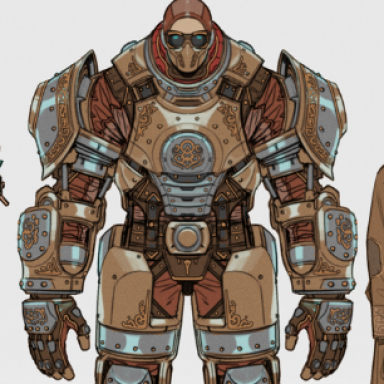
Let me take this time to mention that chapter one ends on page eight, and there has been one picture so far (on page seven). Furthermore, the picture is the same picture from the cover of the pdf. I'll usually only mention the art in a pdf if it's really good or really bad, but in this pdf, it's really awkward. I don't expect anyone to buy a pdf for its art, since there's no way you can know what art is in it beforehand--there's no art gallery posted anywhere like for the WotC books. The only way you might have an idea of the pictures inside is if you happen to know the artist credited on the advertisement for the pdf. So, I don't expect anyone to pay much notice to the art in a pdf, unless that's the point of the pdf. But to repeat a picture? Now you're just taking up space. I didn't think that was a good idea at all. Furthermore, this same picture is repeated on page twenty-nine. The same picture used in the pdf three times. That's outrageous. Seven pictures in the product (counting the cover, not counting the watermark), and three of them are the same (for those interested, there are two watermarks, and they're also the same as one of the pictures). Let's get some variety in the pictures here, or just stop taking up the space. To his credit, Danilo Moretti is a talented artist. I have another issue with the art that I'll mention in chapter two.
Chapter two is Variants--of flails, maces, and morningstars, that is. The first section outlines some new types of these weapons. The weapons are the Flail-Mace, the Godentag, the Holy Water Sprinkler, the King's Walking Stick, the Mace-Axe, and the War Mace. While these weapons are interesting, this section is somewhat lacking. The flail-mace is a mace that can open up into a flail, the mace-axe is a weapon with a blunt side and an axe side, the godentag is similar to a morningstar, and the holy water sprinkler is similar to a flail. A war mace is an oversided mace that deals all types of physical damage. The king's walking stick is a morningstar with inset pistols, and information is provided for the weapon, the gunpowder, and a bag of rounds. The only other information I would like would be how many shots a pound of gunpowder will serve for.
Also, you would not find this out if you were not frequenting a particular EN World forum, but the king's walking stick apparently has four inset pistols. This is not mentioned anywhere, but is, in theory, deducted from the fct that masterworking the pistols costs 1200gp. When using some of these weapons, it is most useful to use the stats for each weapon, and ignore everything else. The description text in many places is rather confusing (and, as you can see, incomplete), for example, the flail-mace. It is a free action to hit the switch to turn the head of the mace into a flail, and a full-round action to close it again. The mace head breaks open into four flail heads, with some chains coming from somewhere, through something else... in my game, I could only describe this as, "You have a mace. As a free action, some 'magic' happens and it's a flail. No one understands how." This section would benefit greatly from some art to show how these weapons might work, or at least what they would look like. That there is no art to do this, in my opinion, severely detracts from this section.
The next portion of the chapter is 'Craftsmanship' in which the mundane part of a weapon can be enhanced. There are options to add to a weapon's hardness, hit points, reduce its weight, and to give it two different properties (add rust monster antennae to a wooden weapon, and add 'tangle thorn vines). There is also an 'optional rule' though it's more of a new encounter. These features are all interesting, and follows suit with some of EN Arsenal's previous pdfs. I like having these features (as well as some of the previous ones from chapter one), because they let you really customize a weapon. The new encounter--'Tangle-Thorn Hazard'--is also interesting, and I will definitely use it in my games.
Chapter three is Fighting & Feats, which starts with "Tricks & Techniques." Although there aren't any tricks. This only mentions which weapons can be used for bashing, disarming, grappling, setting (against a charge), and tripping, and which weapons get extra bonuses. Then the feats come in. There are not a lot of feats in this pdf, but the ones they list are useful. Feats that strike me (pun not intended) as interesting are Entangling Flail (use a flail for a grapple), Greater Trip (extra tripping bonuses), Trip Mastery (trip everyone around you), and Strike Around (shields are less effective versus chain weapons). The Stay Down feat is interesting, but it probably is unnecessarily weakened by the line "Once you have tripped an opponent..." I've mentioned almost half of the feats, and there are more that are useful, so I think this is a good selection of feats.
Chapter four is Prestige Classes, the longest chapter in the pdf, and each of the three prestige classes are good. The Painted Witch Doctor is a shaman-like prestige class that specializes with his 'badge of office' which is a weapon that denotes his status (usually a mace or morningstar). He gets abilities that are u sed for curing as well as some geared towards disabling opponents. It is possible to qualify for this prestige class at second level, but that is only one of the quirks. As a class skill, Painted Witch Doctors get Craft (alchemy)--specifically. A Painted Witch Doctor's spell DCs use the Painted Witch Doctor level, which means his save DCs will be very low--and the spells only go up to fourth level, so any spells they have that require a save will be pointless (and that's half of the spell list). It is odd that the spirit badge abilities require a melee touch attack, and that in order to use all of its abilities, you have to prepare for six hours every day. Also, the abilities cannot be used on non-tribe members, on penalty of ability damage. It seems to me that the tribe could ban proper usage of the badge of office, but that it would be a case-by-case issue. Some of the most powerful abilities a Painted Witch Doctor gets are his Face Paintings. He can spend time (and xp) to put on a costume in order to effect his opponents (with paralyzation, fear, etc). For a 30 minute prep time, though, a duration of 2 rounds/level seems too short. The effects should last as long as the face paint is on. With all the time consuming abilities this class gets, a large part of the day is spent in preparation rather than adventuring or doing anything useful at all. A Painted Witch Doctor can also use a standard action to imbue his badge of office with a face painting ability, and there is no cost listed (no xp cost). If you are expected to pay the xp cost from the painted face ability, it is not mentioned. So, this is a neat prestige class, with some pretty bad mechanical problems. Does the fact that it is a prestige class for third level characters balance it out? I don't think so.
The second prestige class is the Shadow Lord. This is a prestige class for those in the Plane of Shadows. He learns to create a mace from Shadow, and later he can make a flail. The mace is more powerful, though, because by 10th level the mace becomes a +5 mace, but the flail is only a +4 flail. I am not sure why there is a difference between the two. He also gets five different spells, castable once per day each, and I am also not sure why these aren't listed as 1/day spell-like abilities. It would save space, be easier to explain, and work exactly the same way. At eighth level, the Shadow Lord can walk through shadows 1/day as a spell like ability, as the Shadow Walk spell. This should probably be more than once per day (since this is a minimum level 17 character by now), but that is a simple change. This prestige class is actually really neat--you get bonuses to Hide, there's a minor physical transformation, your weapon gets other qualities, and you eventually gain reach. I really enjoyed this prestige class. On my first read-through, I wondered, "Why is this necessarily a Plane of Shadows thing? Could there be a Light equivalent? Or some other equivalent?" But having read through, it works really well with Plane of Shadows. You could change things to fit it into another flavor, but this is a fairly distinctive class. The end of the prestige class description has a description of the Shadow Kings organization. It is very well done, and I like the layout of it too. I won't go into more detail about this to avoid gushing.
The last prestige class here is the Sonic Skald. This prestige class does not require being a Bard, but it fits a melee Bardic flavor pretty well. It is a sonic-based prestige class (I can tell you're surprised) that focuses on the mace. By the flavor, it should also work very well with a hammer too, but this pdf doesn't go into hammers. The idea is that when you hit something with a bashing weapon, there's a loud sound, and this becomes sonic damage. Clever, right? Right. The Sonic Skald eventually gets damage upgrades and can have area sonic effects. The Wake of Sound ability (effects everyone immediately around you) says that it only works on people that have just attacked you, but by the flavor, it should likely be everyone in melee with you, or everyone you threaten. The only balance issues I see with this is that the sonic damage might increase faster (at least, an increase from 1d6 to 1d8 is faily minor), and that a damage dealing capstone ability might work more often than 1/day, and that all sonic abilities should be countered by Silence, not just some of them. I can see melee-oriented Bards going for this prestige class, and also other classes. It would be nice if the perform prereq were used in the class.
Chapter five, Magic. The last chapter. This starts with four new spells. The first two spells are rather neat, and are for the Darkness domain. The third spell has four different uses, each of which are not overly useful. I would venture to change the spell level of this spell (and the next), but everyone has widely differing views on spell level. Being able to catch an item thrown to (not at) you for one minute does not seem like it would cost a Paladin his third level spell slot, much less his first. Each of the four abilities has to do with grabbing things--grappling, catching items, deflecting, and stopping a fall. The fourth spell seems like a powerful spell to me, as there is no save and it forces a creature (or all creatures in a 15' radius sphere) drop all one-handed (and smaller) weapons. It does not affect natural weapons or unarmed creatures, but there is no mention of gauntlets.
Then it goes into Weapon Abilities. These are mostly realy interesting weapon abilities, and I'd allow a player to use any of these. Some abilities help with disarming, against disarming, give reach, help with tripping, and a variety of others. I would make two of them flat money costs instead of a +1 (to make it same cost as Glamer), and I am not sure why one ability has a prerequisite of 'weeping wounds' (not a real spell, at least in the SRD), but they're still neat abilities.
After Weapon Abilities come Magic Items. We have two major magic items, two medium magic items, and one artifact. They're all really neat, but I would have liked to have seen more lower-level magic items, and possibly some mundane items. The artifact is a very poweful item that gives a number of abilities, once of which is immunity to enchantment and divination spells with the mind-affecting descriptor. Which makes me wonder why the weapon can use these spells against its owner, so the author should address that issue, though it is likely not a huge deal. The weapon is really powerful and is a neat read (don't mess with the wielder of that weapon!). One of the major items and one of the medium items are psionic items, so it is nice to see psionic support, even if it is minor. The major weapon lets you manifest astral construct, so that is a boon to psions.
Zarkadia is the deity of flails and morningstars, and there is a lot of information on him. He is a CE deity with a very interesting backstory, and he also makes for a nice segue into the two new domains--Darkness and Prison. I was surprised the Darkness domain does not include the Darkness spell, but both domains are still neat.
Overall, I liked this pdf. You get some interesting option rules, interesting background information, 6 new weapons, 6 mundane enhancements, 11 feats, 3 prestige classes, 4 spells, 8 weapon abilities, 5 magic items including 1 artifact, a deity, and two domains. For under five dollars? It's a good deal. This is a four-star pdf that suffered enough mechanical problems (in my opinion of course) to bump it down to three stars. There is little I can use without changing, but rest assured that any GM can use something in here.
lot of their work is top-notch. When I got my reviewer's copy of this, I was optimistic (I always like to try out new stuff!).
The zip file for this product contains only the pdf, nothing more. No printer-friendly version or all-text veresion, or anything you see with some pdfs. It's not necessary to have that sort of thing, but it's often nice to have the variety. The pdf is not very color-intensive, though, so that's better for printing. The pdf is bookmarked according to the table of contents, so you can easily go to any section you're looking for.
Chapter one starts with the History of flails, maces, and morningstars. It's interesting information, but it makes me wonder, "Well, maces came from clubs... okay... well, so didn't hammers? Why aren't hammers addressed in this pdf?" Though it might have extended the pdf a bit. From history, it gives statistics on the weapons--this is also interesting. It lists more information on maces, flails, and morningstars, like according to one of the descriptions, a flail can be 10' long. That's some flail! That is mostly for color, though, and reach flails are not mentioned otherwise.
There are rules, for example, for wooden and practice maces--if you want a lighter or cheaper weapon, or if you want to deal subdual damage. There is also a table for different sizes of each weapon--from fine to colossal. Price, damage, weight, and hp is listed for each weapon. This does not often come up in my games, but when it does it can be a hassle to figure out. These are useful tables. There is a brief Racial Preferences section, which is neat, but largely unuseful, I think.
Then, it's three pages of "Optional Rules and Alternate Uses." The first thing covered here was sheathing--how people carry around these weapons. This provides useful ideas for wearing a flail at your hip and not having it bang on your knee all the time. It also recommends prices for such mechanisms, but I don't recommend ever charging your players for a sheath or sheath-like item. Then it discusses flails with multiple heads, and critical misses, though I wouldn't use that rule at all. The fourth optional rule is "Head Shape and Extras" which is stuff you can add to the head of your flail, mace, or morningstar, at the expense of extra cost. Most of the features are neat, allowing you to adjust the type of damage done by the weapon. The last optional rule is "Weapon Groups" which is easily imagined. The chapter ends with four "Optional Uses," which are crushing (like a mortar and pestle), climbing (using the flexible part of a flail), flying fox (sliding down a rope with a similar part of the flail), and swinging (wrapping a flail around an object to swing from). They're interesting uses that I would not expect to see in any other place.
Let me take this time to mention that chapter one ends on page eight, and there has been one picture so far (on page seven). Furthermore, the picture is the same picture from the cover of the pdf. I'll usually only mention the art in a pdf if it's really good or really bad, but in this pdf, it's really awkward. I don't expect anyone to buy a pdf for its art, since there's no way you can know what art is in it beforehand--there's no art gallery posted anywhere like for the WotC books. The only way you might have an idea of the pictures inside is if you happen to know the artist credited on the advertisement for the pdf. So, I don't expect anyone to pay much notice to the art in a pdf, unless that's the point of the pdf. But to repeat a picture? Now you're just taking up space. I didn't think that was a good idea at all. Furthermore, this same picture is repeated on page twenty-nine. The same picture used in the pdf three times. That's outrageous. Seven pictures in the product (counting the cover, not counting the watermark), and three of them are the same (for those interested, there are two watermarks, and they're also the same as one of the pictures). Let's get some variety in the pictures here, or just stop taking up the space. To his credit, Danilo Moretti is a talented artist. I have another issue with the art that I'll mention in chapter two.
Chapter two is Variants--of flails, maces, and morningstars, that is. The first section outlines some new types of these weapons. The weapons are the Flail-Mace, the Godentag, the Holy Water Sprinkler, the King's Walking Stick, the Mace-Axe, and the War Mace. While these weapons are interesting, this section is somewhat lacking. The flail-mace is a mace that can open up into a flail, the mace-axe is a weapon with a blunt side and an axe side, the godentag is similar to a morningstar, and the holy water sprinkler is similar to a flail. A war mace is an oversided mace that deals all types of physical damage. The king's walking stick is a morningstar with inset pistols, and information is provided for the weapon, the gunpowder, and a bag of rounds. The only other information I would like would be how many shots a pound of gunpowder will serve for.
Also, you would not find this out if you were not frequenting a particular EN World forum, but the king's walking stick apparently has four inset pistols. This is not mentioned anywhere, but is, in theory, deducted from the fct that masterworking the pistols costs 1200gp. When using some of these weapons, it is most useful to use the stats for each weapon, and ignore everything else. The description text in many places is rather confusing (and, as you can see, incomplete), for example, the flail-mace. It is a free action to hit the switch to turn the head of the mace into a flail, and a full-round action to close it again. The mace head breaks open into four flail heads, with some chains coming from somewhere, through something else... in my game, I could only describe this as, "You have a mace. As a free action, some 'magic' happens and it's a flail. No one understands how." This section would benefit greatly from some art to show how these weapons might work, or at least what they would look like. That there is no art to do this, in my opinion, severely detracts from this section.
The next portion of the chapter is 'Craftsmanship' in which the mundane part of a weapon can be enhanced. There are options to add to a weapon's hardness, hit points, reduce its weight, and to give it two different properties (add rust monster antennae to a wooden weapon, and add 'tangle thorn vines). There is also an 'optional rule' though it's more of a new encounter. These features are all interesting, and follows suit with some of EN Arsenal's previous pdfs. I like having these features (as well as some of the previous ones from chapter one), because they let you really customize a weapon. The new encounter--'Tangle-Thorn Hazard'--is also interesting, and I will definitely use it in my games.
Chapter three is Fighting & Feats, which starts with "Tricks & Techniques." Although there aren't any tricks. This only mentions which weapons can be used for bashing, disarming, grappling, setting (against a charge), and tripping, and which weapons get extra bonuses. Then the feats come in. There are not a lot of feats in this pdf, but the ones they list are useful. Feats that strike me (pun not intended) as interesting are Entangling Flail (use a flail for a grapple), Greater Trip (extra tripping bonuses), Trip Mastery (trip everyone around you), and Strike Around (shields are less effective versus chain weapons). The Stay Down feat is interesting, but it probably is unnecessarily weakened by the line "Once you have tripped an opponent..." I've mentioned almost half of the feats, and there are more that are useful, so I think this is a good selection of feats.
Chapter four is Prestige Classes, the longest chapter in the pdf, and each of the three prestige classes are good. The Painted Witch Doctor is a shaman-like prestige class that specializes with his 'badge of office' which is a weapon that denotes his status (usually a mace or morningstar). He gets abilities that are u sed for curing as well as some geared towards disabling opponents. It is possible to qualify for this prestige class at second level, but that is only one of the quirks. As a class skill, Painted Witch Doctors get Craft (alchemy)--specifically. A Painted Witch Doctor's spell DCs use the Painted Witch Doctor level, which means his save DCs will be very low--and the spells only go up to fourth level, so any spells they have that require a save will be pointless (and that's half of the spell list). It is odd that the spirit badge abilities require a melee touch attack, and that in order to use all of its abilities, you have to prepare for six hours every day. Also, the abilities cannot be used on non-tribe members, on penalty of ability damage. It seems to me that the tribe could ban proper usage of the badge of office, but that it would be a case-by-case issue. Some of the most powerful abilities a Painted Witch Doctor gets are his Face Paintings. He can spend time (and xp) to put on a costume in order to effect his opponents (with paralyzation, fear, etc). For a 30 minute prep time, though, a duration of 2 rounds/level seems too short. The effects should last as long as the face paint is on. With all the time consuming abilities this class gets, a large part of the day is spent in preparation rather than adventuring or doing anything useful at all. A Painted Witch Doctor can also use a standard action to imbue his badge of office with a face painting ability, and there is no cost listed (no xp cost). If you are expected to pay the xp cost from the painted face ability, it is not mentioned. So, this is a neat prestige class, with some pretty bad mechanical problems. Does the fact that it is a prestige class for third level characters balance it out? I don't think so.
The second prestige class is the Shadow Lord. This is a prestige class for those in the Plane of Shadows. He learns to create a mace from Shadow, and later he can make a flail. The mace is more powerful, though, because by 10th level the mace becomes a +5 mace, but the flail is only a +4 flail. I am not sure why there is a difference between the two. He also gets five different spells, castable once per day each, and I am also not sure why these aren't listed as 1/day spell-like abilities. It would save space, be easier to explain, and work exactly the same way. At eighth level, the Shadow Lord can walk through shadows 1/day as a spell like ability, as the Shadow Walk spell. This should probably be more than once per day (since this is a minimum level 17 character by now), but that is a simple change. This prestige class is actually really neat--you get bonuses to Hide, there's a minor physical transformation, your weapon gets other qualities, and you eventually gain reach. I really enjoyed this prestige class. On my first read-through, I wondered, "Why is this necessarily a Plane of Shadows thing? Could there be a Light equivalent? Or some other equivalent?" But having read through, it works really well with Plane of Shadows. You could change things to fit it into another flavor, but this is a fairly distinctive class. The end of the prestige class description has a description of the Shadow Kings organization. It is very well done, and I like the layout of it too. I won't go into more detail about this to avoid gushing.
The last prestige class here is the Sonic Skald. This prestige class does not require being a Bard, but it fits a melee Bardic flavor pretty well. It is a sonic-based prestige class (I can tell you're surprised) that focuses on the mace. By the flavor, it should also work very well with a hammer too, but this pdf doesn't go into hammers. The idea is that when you hit something with a bashing weapon, there's a loud sound, and this becomes sonic damage. Clever, right? Right. The Sonic Skald eventually gets damage upgrades and can have area sonic effects. The Wake of Sound ability (effects everyone immediately around you) says that it only works on people that have just attacked you, but by the flavor, it should likely be everyone in melee with you, or everyone you threaten. The only balance issues I see with this is that the sonic damage might increase faster (at least, an increase from 1d6 to 1d8 is faily minor), and that a damage dealing capstone ability might work more often than 1/day, and that all sonic abilities should be countered by Silence, not just some of them. I can see melee-oriented Bards going for this prestige class, and also other classes. It would be nice if the perform prereq were used in the class.
Chapter five, Magic. The last chapter. This starts with four new spells. The first two spells are rather neat, and are for the Darkness domain. The third spell has four different uses, each of which are not overly useful. I would venture to change the spell level of this spell (and the next), but everyone has widely differing views on spell level. Being able to catch an item thrown to (not at) you for one minute does not seem like it would cost a Paladin his third level spell slot, much less his first. Each of the four abilities has to do with grabbing things--grappling, catching items, deflecting, and stopping a fall. The fourth spell seems like a powerful spell to me, as there is no save and it forces a creature (or all creatures in a 15' radius sphere) drop all one-handed (and smaller) weapons. It does not affect natural weapons or unarmed creatures, but there is no mention of gauntlets.
Then it goes into Weapon Abilities. These are mostly realy interesting weapon abilities, and I'd allow a player to use any of these. Some abilities help with disarming, against disarming, give reach, help with tripping, and a variety of others. I would make two of them flat money costs instead of a +1 (to make it same cost as Glamer), and I am not sure why one ability has a prerequisite of 'weeping wounds' (not a real spell, at least in the SRD), but they're still neat abilities.
After Weapon Abilities come Magic Items. We have two major magic items, two medium magic items, and one artifact. They're all really neat, but I would have liked to have seen more lower-level magic items, and possibly some mundane items. The artifact is a very poweful item that gives a number of abilities, once of which is immunity to enchantment and divination spells with the mind-affecting descriptor. Which makes me wonder why the weapon can use these spells against its owner, so the author should address that issue, though it is likely not a huge deal. The weapon is really powerful and is a neat read (don't mess with the wielder of that weapon!). One of the major items and one of the medium items are psionic items, so it is nice to see psionic support, even if it is minor. The major weapon lets you manifest astral construct, so that is a boon to psions.
Zarkadia is the deity of flails and morningstars, and there is a lot of information on him. He is a CE deity with a very interesting backstory, and he also makes for a nice segue into the two new domains--Darkness and Prison. I was surprised the Darkness domain does not include the Darkness spell, but both domains are still neat.
Overall, I liked this pdf. You get some interesting option rules, interesting background information, 6 new weapons, 6 mundane enhancements, 11 feats, 3 prestige classes, 4 spells, 8 weapon abilities, 5 magic items including 1 artifact, a deity, and two domains. For under five dollars? It's a good deal. This is a four-star pdf that suffered enough mechanical problems (in my opinion of course) to bump it down to three stars. There is little I can use without changing, but rest assured that any GM can use something in here.