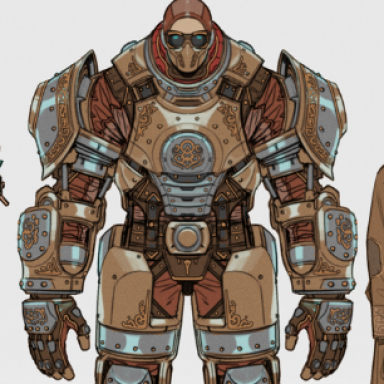
Crothian
First Post
Whether Hell existed before the first angels fell, or if it was created to hold them even as they fell, we cannot know. If there was a Hell before the Fall, it must have been an empty, dark place. Perhaps it was a midden for Creation, a refuse tip filled with rejected matter, or maybe it was a shadow of Heaven, cast by the mortal world blocking the radiant realm's perfect light.
Lucifer rebelled.
The angels fell.
We have only the tales of mortals to guide us on this. We, the heirs of angels, must piece together our heritage from the scraps of monkey-myth. We can surmise that some divine force exiled Lucifer and his followers. We use their word, God, because it is a convenient shorthand for our unknown enemy. The demon race was bred to overthrow this enemy and take His throne and whatever else we forget, we should never forget that destiny.
A full third of the Host fell, according to some accounts. For their sins – for pride, for rebellion, for desiring to be like God, for unknowable and ineffable reasons – they were banished and they fell. Lucifer fell fastest and hardest of all.
His impact on the stony ground of Hell was a cataclysm that can be likened only to the first instant of Creation. He smashed down through thousands of miles of burning rock, opening the Pit in his wake. The other fallen angels rained down like stars around him. There they lay in agony for uncounted ages, burning in the fires and writhing as the Corruption entered their once-holy forms.
Time did not pass in Hell then as it does now. Time exists only in the mortal realm – it is why it is the mortal realm. In the Heavens, motion is provided by the primum mobile, the first cause, the motive force of God and this motion allows events to unfold in perfect order in Heaven. In Hell, there was neither time nor motion. It was a single, eternal moment of utter torment.
No torture was ever so painful. All the arts of the Astyanath are as nothing compared to what God did to His angels.
Through Will alone, Lucifer arose from the Pit where he lay. He forced his way through the unyielding reality of a timeless realm and cut a hole in the world. His blade sliced a portal from Hell into the mortal realm and time flowed forth. He freed Hell from its timeless state and brought the potential for change to the infernal realm.
In that second moment of Hell, it ceased being what it had been and became Lucifer's kingdom.
Infernum is the roleplaying game of your nightmares, of demonic hordes rampaging through Hell to assault fortresses built from the skulls of the innocent, seas of blood and lava lapping at blackened shores and gigantic gothic factories belching infernal smoke into a sky that is on fire.
Dare you walk through Hell itself?
Lucifer rebelled.
The angels fell.
We have only the tales of mortals to guide us on this. We, the heirs of angels, must piece together our heritage from the scraps of monkey-myth. We can surmise that some divine force exiled Lucifer and his followers. We use their word, God, because it is a convenient shorthand for our unknown enemy. The demon race was bred to overthrow this enemy and take His throne and whatever else we forget, we should never forget that destiny.
A full third of the Host fell, according to some accounts. For their sins – for pride, for rebellion, for desiring to be like God, for unknowable and ineffable reasons – they were banished and they fell. Lucifer fell fastest and hardest of all.
His impact on the stony ground of Hell was a cataclysm that can be likened only to the first instant of Creation. He smashed down through thousands of miles of burning rock, opening the Pit in his wake. The other fallen angels rained down like stars around him. There they lay in agony for uncounted ages, burning in the fires and writhing as the Corruption entered their once-holy forms.
Time did not pass in Hell then as it does now. Time exists only in the mortal realm – it is why it is the mortal realm. In the Heavens, motion is provided by the primum mobile, the first cause, the motive force of God and this motion allows events to unfold in perfect order in Heaven. In Hell, there was neither time nor motion. It was a single, eternal moment of utter torment.
No torture was ever so painful. All the arts of the Astyanath are as nothing compared to what God did to His angels.
Through Will alone, Lucifer arose from the Pit where he lay. He forced his way through the unyielding reality of a timeless realm and cut a hole in the world. His blade sliced a portal from Hell into the mortal realm and time flowed forth. He freed Hell from its timeless state and brought the potential for change to the infernal realm.
In that second moment of Hell, it ceased being what it had been and became Lucifer's kingdom.
Infernum is the roleplaying game of your nightmares, of demonic hordes rampaging through Hell to assault fortresses built from the skulls of the innocent, seas of blood and lava lapping at blackened shores and gigantic gothic factories belching infernal smoke into a sky that is on fire.
Dare you walk through Hell itself?