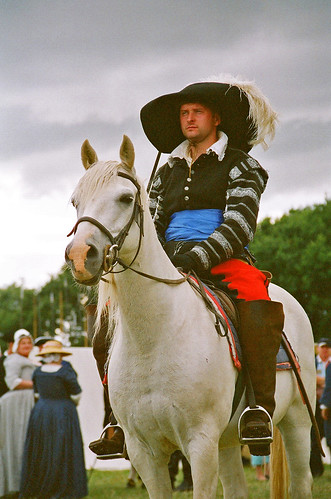
The cavalier has been around since 1E AD&D, so is far closer to being core than "...draconians, warforged, and bladesingers." That is all Mearls means.
So "core" is what is closest to original, and the further down the time line something appears, the further away from core it is. So it is basically a alternate way of talking about the progression over time of the game as new classes and races appeared.
I think part of the problem is that there are at least four different definitions of core, at least two of which are used in the article.
There's a definition where 'core' simply means "non-setting specific". So, the Cavalier is core because it's not associated with Eberron or Dragonlance. (Of course, in that case the Bladesinger should also be core.

)
There's a definition of 'core' which means "appears in the Core Rulebooks". In which case the Paladin has been core since AD&D 1st Ed, and the Barbarian in 3e. The Cavalier, having come in in UA, has actually not ever been core. But 5e could change that.
There's a definition of 'core' which means "the vital elements of the game". Mearls mentions this in his post as some sort of "true core game". In which case it's entirely possible that none of the Paladin, Barbarian, and Cavalier will actually be core - there will likely only be 4 truly 'core' classes under that definition.
And there's your definition that core represents "close to original".
To be honest, though, I think perhaps it's a bit of a "Humpty Dumpty" term - it means whatever the writer means it to mean when he writes it. I don't really have a problem with that.
I do know that WotC have previously mentioned that they want 5e to include all the classes that were core in all previous versions of the game. Technically, that wouldn't include the Cavalier, but I recall that I did find it a little jarring that 3e included the Barbarian but not the Cavalier, so I don't think including it is particularly outrageous. Whether they include it as a class in its own right, as a sub-class of Paladin, as a parent class of Paladin, or as a Fighter build (or even as something else), is open to discussion. My preference would be for fewer, broader classes, but I won't particularly object if they go in the opposite direction.