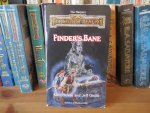
#066 Tymora's Luck by Kate Novak & Jeff Grubb (Lost Gods 2)
Read 8/4/20 to 9/4/20
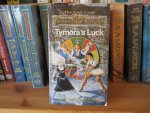
Book 2 (Lost Gods)- and more of the same really, although there are some nice new-ish places to visit, mostly in the Lower Planes, which are less than welcoming. The story is someone or something is draining the godly powers of Tymora and her unfortunate sister, Besheba- the pair were once two halves of a whole- the goddess Tyche, who embodied luck- good and bad.
And so it goes again, with Joel (and Finder), and Jas, and Holly and a few others we know so well, like Wilanda- from the previous Last Gods novel. The new kid on the block here is the Kender, Emilo Haversack, and just to say from the beginning, the little guy is by far the best character in the book.
So, there's lots of action here- Jas feels oh so guilty as it's during her magical operation (to remove her Slayer-curse) that Tymora succumbs, her godly powers draining away. From this moment the hunt is on- first port of call Beshaba's residence (after a bit of back and forth), then on to Iyachtu Zvim's fortress, and finally... well, we get to go lots of places (real and imagined), like I said at the start. There are also deities aplenty here, which shouldn't come as a surprise to anyone, the (BIG) clue is in the title of this series of novels.
There's good stuff to be had (from a DMs perspective)- particularly during our visits to the Lower Planes, and specifically in the various locales/Bond villain-style lairs of the bad-to-the-bone deities. There are likewise some excellent moments with a variety of the aforementioned deities, again something for me to keep in mind for my game.
But... it's not as good as the first one, in part- but not as a whole, the plot is easy on the brain- I'd got it something like 25 pages in, or else very quickly. The thing is mapped out (sorta) like an opera- with scene titles to fit, and quotes from the great and the good regarding the art, but... again, it's not much of an opera, more a pantomime (but not for kids).
He's behind you (Holly).
There's some nice stuff in Sigil (again), and with the meetings of the Sensate, counterbalanced by the oddness of Lord Sirrion (and his partner in crime, let's just call him- Dawn). The omelette toting Tinker Gnomes, and... well, lots of bits that just feel like, well... the next bit that needs to unfold to make it all hang together, and some of it feels stretched very tight in order to cover the distance.
This, plus that, equals... it seems a bit mechanical in places, don't get me wrong I raced through it but that was mostly me with my head out of the window admiring the places that we were visiting, the plot- and how it would eventually unfold was locked in from very early in the mission.
I'd worked out who the real bad guy was, how he had done it, and why, and where- and how it had to end, particularly early in the piece. That took the edge off.
Well written, lots of it just races by, and the action's good, but it just gets there in the end.
Read.
Stay safe and well.