Chaldfont said:
I have a question...
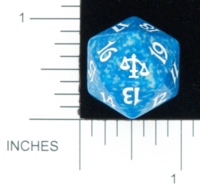
Ok, I must be pretty dense. I've been playing RPGs since the early 80s, but I've never noticed this before. I was playing Sunday and I had all my dice set to the highest number (a superstition my friend calls "charging the dice"). As I set them up I realized that there is no standardization to how the numbers are configured on the faces. What I mean is, if you set two different d20s with the 20 showing, the numbers surrounding the 20 will be different!
Correct ... the configuration varies from mold to mold ...
CLICK HERE for examples
I don't really know why this surprised me. For some reason, I thought there would be some kind of standard, maybe based on those legendary first dice used by the Forefathers of Gaming.
I may not be a forefather of gaming ... but I have been gaming for 30 years as of this month and I have never seen nor heard of a standard

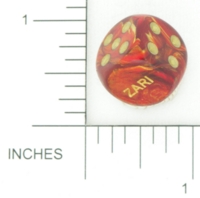
So my questions are: Is there a standard for d6s, maybe used by casinos by tradition?
Other than opposing sides adding to 7 (see below) and precision ... there is no standard
Some casinos use right hand dice .. others use left hand dice ...
CLICK HERE for explanation
Precision is determined by the local gambling commission ... but is typically 1/5000th of an inch
Is there even consistency between dice made by the same company?
Only with
Gamescience and even Lou's dice are only about 1/100th of an inch precise
As to configuration consistancy ... only
Chessex varies their configurations greatly ... as they use so many manufacturers
Do the orientations of the numbers have any affect on the probability of rolling certain numbers?
Only when using English (see below)
Atavar said:
My understanding is that a "properly" configured die is one in which two opposite sides of the die always add up to N+1
A better term would be 'accepted' configuration ... as dice have either conformed or not conformed to this standard for centuries
As for configuration affecting distribution, I think it may have an effect if one doesn't put a nice spin on a die when one rolls it. Spinning it well, though, when tossing it should eliminate any effect of the distribution, I'd think.
The term you are speaking of here is 'English' ...
If a die is well balanced ... and is truly rolled randomly ... dice tower ... or bouncing off a surface ... then distribution of the indicated indica (sides) has no bearing ...
If a die is thrown with English ... distribution can have an effect ... if a master thrower throws it with Engish ... then distribution should have little effect as they can virtually control the dice regardless of configuration ... it is amazing to watch
On another note, I remember back in 2ed days, when one rolled a d10 for initiative, and rolling low was good. I had a player who very often seemed to roll low. Occasionally, he'd roll very high. Then one day someone noticed that his d10's were 0-4, twice (so, 0-0-1-1-2-2-3-3-4-4). That's why he almost always rolled low (1-4) with the occasional high roll (0)
LOL ... I still play 2nd ed ... I need one of those