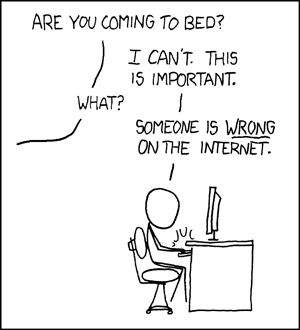
So again, it depends upon what you mean by "novel." I'm OK saying that LotR is a great book but problematic as a novel. I'm not quite ready to say it is a "poor novel."
Really. If nothing else, one man's "tightly plotted and well-paced" is another's "rushed and frantic." But, let me include some other relevant thoughts....
Back in the 1980s, people wore acid wash jeans, and mullet haircuts. At the time, they were awesome. Today, we laugh at them. There is no absolute high or low artistic quality to a mullet, or a powdered wig, or a hightop fade. They are all different fashions, and fashions change.
Art is a part of culture. And culture changes. And any given piece of art is made
within its culture, for a particular audience. Remove it from its culture and it loses impact. You can see this trivially in, say, Shakespeare, in that language change has made most of the puns in his plays absolutely opaque to a modern reader, and students need annotations to understand what is going on. But beyond plain language change, there's a host of tropes and structural conventions that come and go with time. And LotR was written in the 1930s and 40s.
How many of you who have not taken art courses can honestly say you actually know what Jackson Pollock is trying to get across to you?
I, myself, am a middle-class white American. I do not have the cultural referents to understand rap music - most of the meaning in it just goes by me unrecognized. I could not begin to claim I could say what is good or bad about a given piece, because I know diddly about the musical genre.
If you think Tolkien reads like a travelogue, with long slow boring bits that bore you to tears and you see no point to them, you have two possibilities: 1) You know more about writing than Tolkien, and he's just bad, or 2) those passages
actually serve a purpose in the book, and are meant to convey meaning to the reader, but that the use of the conventions he's employing is so rare in modern works, that you are missing the point of them?
Consider, for example, that the modern audience is habituated to television programs, paced so that something like a full story is now delivered in 40 minutes, beginning, middle, and end - and not for any reason of that being a better way to do art, but because of the economics of television, and the power of the money of those trying to sell advertising to you. Have you not considered that this relentless pacing might leech into other art forms, and that doesn't make the pacing "better" so much as, "what you are used to"?
In the final analysis - you do happen to be talking about a work that's sold 150 million copies. In the 2003 "Big Read" survey conducted in Britain by the BBC, The Lord of the Rings was found to be the "Nation's best-loved book". In similar 2004 polls both Germany and Australia also found The Lord of the Rings to be their favourite book. In a 1999 poll of Amazon.com customers, The Lord of the Rings was judged to be their favourite "book of the millennium". And it rated in the top five in PBS's "Great American Read" polling over this summer.
Not that the masses have some sort of final say, or a lock on The Truth. But there might be some strength to saying that you don't like it so much, rather than calling it a "poor novel".