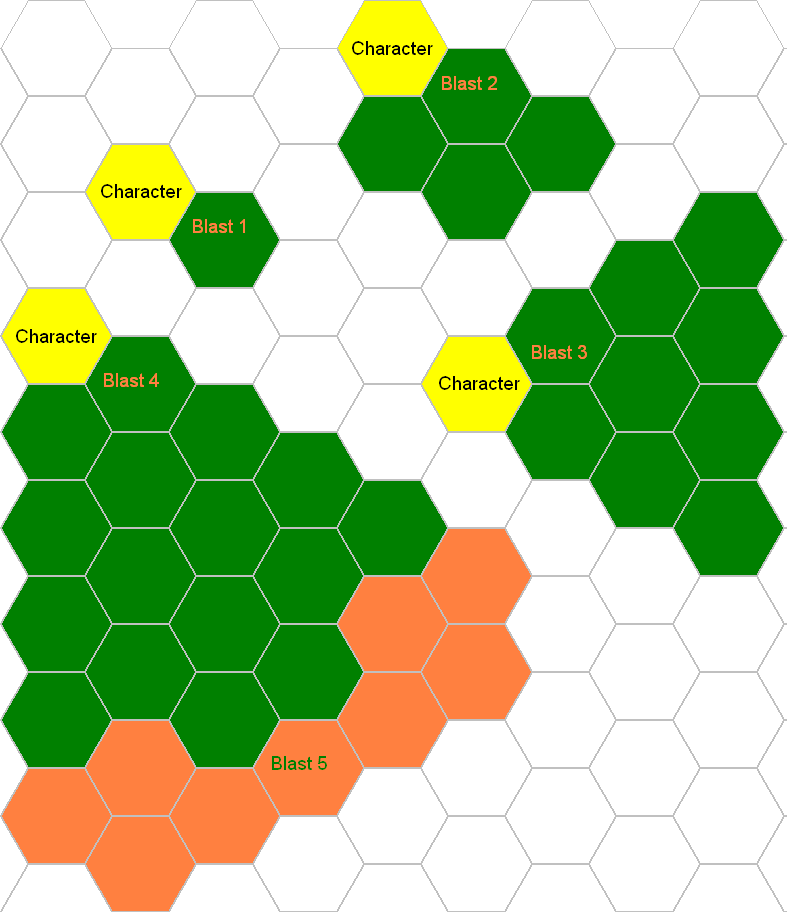
I have never played 4th Edition on anything but a Hex Map.
It works fine. Even better than a square grid in most circumstances.
Movement is easier, natural terrain is easier, blasts and bursts are easier to imagine.
It fundamentally changes your game in a few minor ways, but we ignore them for the most part.
A) Less monsters can flank you, you have less ability to flank monsters = Wash. Slightly in your favor.
B) Bursts hit less squares. For example, Burst 2 hits 19 squares in Hex and 25 squares in Grid. = Wash, monsters hit less of you as well.
C) Blasts are fine, just make sure the number of squares is equal to the blast rate. For example, Blast 3 is a 3x3 which equals 9 squares, so your blast should equal 9 hexes. Blast 5 is 25 squares, so your blast 5 should equal 25 squares.