First and foremost: I am glad D&D is having a renaissance, and I am glad lots of new people are coming into the hobby. I am glad there is a robust 3rd part of semi-pro support ecosystem out there. I am glad there are YouTube channels, streamers and tik-toks aplenty on the subject of running and playing the game. I am glad celebrities are "coming out" as fans.
All that said, if I am honest, I liked it better when D&D was a nerdy little hobby that felt a little weird and a little transgressive. I'm not lamenting exclusion -- it is great that everyone gets to discover D&D -- nor am I missing the unfriendly stereotypes of old school sword and sorcery -- although you can take Frazetta from my cold dead hands. It's more like as I see what is emerging for D&D in this new mainstream environment, I am... bored. Uninspired. It feels like TMNT on saturday mornings compared to its origins. It feels a lot like teh 2E transition, in fact, with everything glossy and clean and, well, safe.
Anyway, just thinking with my fingers, really. Like I said, it is good that D&D is popular and mainstream for any number of reasons. But the shape it is taking in the mainstream leaves me cold, a little sad even.
I feel the need to link this:
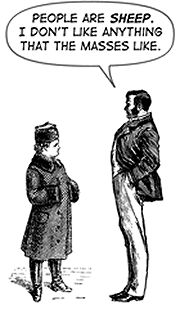
The hipster's mantra. There's only one thing worse than people not watching your favorite show; people actually watching your favorite show. You'd think that your favorite artist making it big by reaching Stage 5 of the Fandom Life Cycle would be …

tvtropes.org
See the section in the article that discusses the variant of this trope (It's popular,
so it sucks).
I am newer to the hobby than almost all of you that are active posters on these forums. I haven't even been in the hobby for 5 years yet, but I'm getting there. Critical Role has existed longer than I have been playing the game (although it did not get me into the hobby, my younger cousin did). I got into D&D because my hometown has a business called Lynchpin that's main purpose was to teach teens that needed practice developing social skills how to behave in public, and they used D&D as one of their main forms to do this. My ADHD cousin was introduced to D&D through Lynchpin, and he introduced me to it. I would very likely would not have gotten into D&D 5e (which is my favorite hobby and I don't see myself ever stopping playing/DMing D&D) if it were not for the popularity of the hobby. I never lived in the 70's/80's, but I'm guessing that my assumption that something like this would never have happened when D&D was a niche hobby is accurate. I owe my involvement in this hobby to its popularity and it becoming more mainstream and socially acceptable, and for that I will be forever grateful.
It makes me sad that others are sad about the hobby becoming more popular and mainstream. For me, that is and can only be an overwhelmingly positive thing. The more people get into the hobby, the more players and DMs there will be to go around. The more popular it is, the more advice on playing/DMing there will be on Youtube and other places on the internet (Matthew Colville's Running the Game series is how I learned to play the game and become a good DM). The more mainstream the hobby is, it's more likely for us to get actually good and enjoyable D&D movies and TV-shows for both kids and adults (seriously, Chris Pine and Benedict Cumberbatch are going to be in the D&D movie. If you had told me that when I started playing D&D, I wouldn't have believed you). The more people that are playing the game, the more people there are buying the products, thus giving more money to WotC for them to make more D&D products in the future. The more people are in the hobby, and the more educated they are on having a good experience in the game, there will be more unique and inspiring ideas added to the hobby. The way of progress for the game and community as a whole is almost entirely dependent on it becoming more popular and more mainstream.
Will there be some cute races and art in the books? Sure. That makes kids more likely to get into the game, and kids are the future of both the world and the hobby. Will all D&D be "cutesied"? Absolutely not. We literally just had Icewind Dale: Rime of the Frostmaiden and Van Richten's Guide to Ravenloft come out. Before that, we had Descent into Avernus and Ghosts of Saltmarsh. Sure, we're getting a Harry Potter-esque world through Strixhaven and cute Owl/Bunny-folk, and we've gotten Gnome Mind Flayers and Hollyphants, but we've also gotten a horror setting, a horror adventure, and an adventure
where you literally go into the depths of hell and ride on vehicles fueled by souls. That just shows the diversity of playstyles that D&D can include. That's a strength. That means D&D will reach more people, and there will be more to go around for everyone. To me, it seems a bit like saying "Get off my lawn!!! No Squid-Gnomes or Angelic-Elephants allowed in MY FANTASY GAME!", which is a bit selfish/self-centered. It isn't the old days anymore, it's the new days, and D&D is trying to make it into the mainstream. Letting people play what/how they like and have that be officially supported by the rules is good for all of us, even if it makes a few of the older players upset that D&D is changing.
So, I'm sorry for those of you that are tied down by nostalgia for the old-days when D&D was niche, dorky, and a reason that people got bullied/ridiculed. I'm glad I didn't experience those days, and I'm glad that they're long gone. I'm glad that D&D is becoming more and more popular, because that makes it easier for me to talk about it with other people without me automatically being thrown out of multiple social bubbles (I'm autistic, I don't need any more help alienating people that I meet).
I guess the best way to summarize this would be, "Sorry, not sorry". I'm sorry that it's making some of you upset, but I'm also not sorry that D&D is changing and becoming more inclusive of new playstyles and more open to new players. It's a good thing, and it sucks that it has to alienate (or seem to alienate) some older players in order to grow as a hobby.
Sorry, but I'm really not sorry (and I'm also sorry for that!).