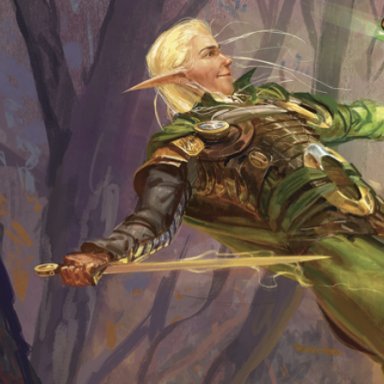
D&D 5E (2014) How to "fix" (or at least help) the fighter/wizard dynamic. (+)

How to best help Fighters get shenanigans to bridge the gap to Wizards?


I think you're overreacting a bit, but thankfully you don't have to use it.
I removed the comment because I doubt it is helpful for your needs in your thread. But, it is an informed, calm, guarantee. I will only play an RPG that has effective caster classes and similar.
 

log in or register to remove this ad

I removed the comment because I doubt it is helpful for your needs in your thread. But, it is an informed, calm, guarantee. I will only play an RPG that has effective caster classes and similar.
I appreciate that, but you are of course entitled to your opinion and views!

I have another version that keeps it normal until level 11, then slows things down a bit but still allows 9th level spells at 20th level.

(You get 7th level spells at 14th, 8th level spells at 17th, and 9th level spells at 20th.)
 
Last edited:

I appreciate that, but you are of course entitled to your opinion and views!

I have another version that keeps it normal until level 11, then slows things down a bit but still allows 9th level spells at 20th level.
Balancewise, the full-caster classes are fine overall.

I wouldnt mess with them substantially.

If a setting needs low-magic, just use the part-casters.


I do the opposite for the Feywild setting. There, the Fey embody magic. Martial classes dont exist. Only full-caster classes (plus Paladin and Monk) are available. For an eladrin or a satyr to learn how to be a Fighter or Rogue, they typically become part of a human culture in the Material Plane.
 

If a setting needs low-magic, just use the part-casters.
Because there are other features for most casters that aren't just spells.

But, we did nerf bards to make them half-casters. At one point Sorcerers were subclasses of Wizards and Warlocks were a subclass of Clerics, as well.

Anyway... back to the Fighter. :)
 

Because there are other features for most casters that aren't just spells.

But, we did nerf bards to make them half-casters. At one point Sorcerers were subclasses of Wizards and Warlocks were a subclass of Clerics, as well.
I love the full-caster Bard. Its mythological accuracy is significant.


Half-casters are an appealing setting approach.

For low-magic mages, the Paladin makes a great Tolkien Gandalf concept.

The Trickster makes a great "magician" concept.

The Ranger makes a great nature magic concept. Barbarian too.

The Monk makes a great East-Asian-esque concept.

I would reserve Eldritch Knight for a high elf culture specifically.

Psi Knight is awesome for a telekinetic concept.

The Artificer covers many concepts, including magic item creator, potion brewer, alchemist, and perhaps in the future a necromancer with an undead "pet".

5e has excellent options for this lower magic mood.


Anyway... back to the Fighter. :)
 
Last edited:


We just prefer it as a half caster like in 3E, as a full caster the class is too strong.

Theme-wise I think the class is pretty solid.
If you look into Celtic folkbelief about Bards, including Taliesin and Merlin, they are full casters. Some of the slot 9 spells like Shapechange derive from the reallife Bard traditions.


D&D doesn't reflect real world lore IMO, so I just go with it. ;)
D&D reflects real world lore for the Celtic Bard.

Moreover, mythological accuracy is increasing important because of cultural sensitivity, to represent various cultural heritages respectfully and accurately.


Enchanted Trinkets Complete

Remove ads

Top