buzz
Adventurer
I realize more and more that supers tends to be my favorite genre to game in, sometimes tying with fantasy for the top spot, sometimes nudging it to second place. Why?
You don't really need a balanced party. Supers games tend to work no matter what archetypes of which the team is composed; nobody needs to be "stuck playing the cleric". Sure, players tend towards teams with some diversity, but it's not requried. The all-brick or all-mentalist team isn't nearly the game-breaker that the all-thief or all-warrior team is. Well, at least when we're talking D&D fantasy, FTMP. Consequently, since no one type is necessary, carrying on with a session when players are absent is a lot easier. Those PCs simply "aren't featured in this issue," as it were.
You don't need to prep hordes of enemies. Supers games tend to feature a main villain or group of villains, and perhaps various mook types (agents, robots, etc.). PCs will likely encounter these villains more than once, usually with stretches of perparation and investigation in-between. And since the goal is not usually to kill them outright, the villains can recur. As for mooks, you make up one set of stats, and they all use them. In fantasy (again, mostly D&D for me), the assumption is that there will be many and varied encounters; this is why we have so many monster books, and why most of my prep is spent detailing statblocks.
World-building is easy. Start with reality, add supers... done! The basics are taken care of; no mapping out continents and writing up the history of "your" elves. You take the world as-is and then focus on incorporating supers. I.e., not on creating what "is", but just what "is different".
All genres are fair game. Supers is inherrently multi-genre (probably why most supers RPGs make for good generic RPGs, and vice-versa). Fight aliens in space one week, go to an alternate timeline the next, and then find yourself trapped in ancient Greece after that. Cleanse the palate by foiling the occasional bank robbery.
Personal stories and character background are de rigeur. A supers game would not be complete unless a PC's s.o. got captured occasionally, their secret identity was threatened, or friends/foes from their past showed up to complicate things. So many good roleplaying opportunities. In most D&D games I've played, these sorts of character issues are usually an afterthought at best; they don't affect raiding dungeons, so they never come up.
Kewl powerz. I like kewl powerz.
Now, I realize that there are some gripes about typical D&D fantasy in here, gripes which likely don't reflect the way a lot of people play. I'm a huge D&D fan, so I'm not trying to slam it. However, I have seen that the basic mindset with which my groups approach D&D (and even my Fantasy HERO game, to a certain extent) doesn't lend itself to much of what I list above. I have to wonder if this is why the interest level in the campaigns we run tends towards a limited lifespan, whereas the Champions game I'm in has been going strong for three years or so.
Anyway, examination of my tastes has got me thinking about the next fantasy game I run (likely an Eberron D&D game). I was toying with the idea of statting up the Justice League of Sharn*, and it made me consider the larger idea of applying the tropes of a supers campaign to a group of adventurers based in Sharn. Give them a base, have them fight crime (or at least investigate weirdness), set some key "supervillains" as the Big Bads of the campaign arc, involve personal complications, and so forth.
Basically, a change in my perspective to shake things up a bit.
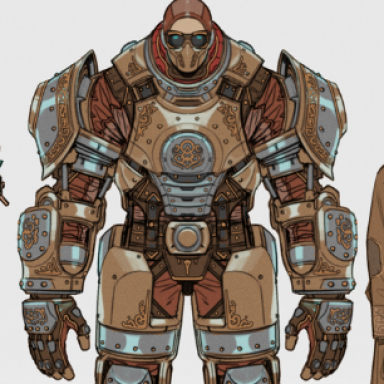
*"Kal," the warforged fighter with the adamantine body; the mysterious "Demon Bat," an urban ranger/vigilante; the aasimar paladin Diana; the mysterious changeling psychic warrior J'onn; etc.
You don't really need a balanced party. Supers games tend to work no matter what archetypes of which the team is composed; nobody needs to be "stuck playing the cleric". Sure, players tend towards teams with some diversity, but it's not requried. The all-brick or all-mentalist team isn't nearly the game-breaker that the all-thief or all-warrior team is. Well, at least when we're talking D&D fantasy, FTMP. Consequently, since no one type is necessary, carrying on with a session when players are absent is a lot easier. Those PCs simply "aren't featured in this issue," as it were.
You don't need to prep hordes of enemies. Supers games tend to feature a main villain or group of villains, and perhaps various mook types (agents, robots, etc.). PCs will likely encounter these villains more than once, usually with stretches of perparation and investigation in-between. And since the goal is not usually to kill them outright, the villains can recur. As for mooks, you make up one set of stats, and they all use them. In fantasy (again, mostly D&D for me), the assumption is that there will be many and varied encounters; this is why we have so many monster books, and why most of my prep is spent detailing statblocks.
World-building is easy. Start with reality, add supers... done!
The basics are taken care of; no mapping out continents and writing up the history of "your" elves. You take the world as-is and then focus on incorporating supers. I.e., not on creating what "is", but just what "is different".All genres are fair game. Supers is inherrently multi-genre (probably why most supers RPGs make for good generic RPGs, and vice-versa). Fight aliens in space one week, go to an alternate timeline the next, and then find yourself trapped in ancient Greece after that. Cleanse the palate by foiling the occasional bank robbery.
Personal stories and character background are de rigeur. A supers game would not be complete unless a PC's s.o. got captured occasionally, their secret identity was threatened, or friends/foes from their past showed up to complicate things. So many good roleplaying opportunities. In most D&D games I've played, these sorts of character issues are usually an afterthought at best; they don't affect raiding dungeons, so they never come up.
Kewl powerz. I like kewl powerz.
Now, I realize that there are some gripes about typical D&D fantasy in here, gripes which likely don't reflect the way a lot of people play. I'm a huge D&D fan, so I'm not trying to slam it. However, I have seen that the basic mindset with which my groups approach D&D (and even my Fantasy HERO game, to a certain extent) doesn't lend itself to much of what I list above. I have to wonder if this is why the interest level in the campaigns we run tends towards a limited lifespan, whereas the Champions game I'm in has been going strong for three years or so.
Anyway, examination of my tastes has got me thinking about the next fantasy game I run (likely an Eberron D&D game). I was toying with the idea of statting up the Justice League of Sharn*, and it made me consider the larger idea of applying the tropes of a supers campaign to a group of adventurers based in Sharn. Give them a base, have them fight crime (or at least investigate weirdness), set some key "supervillains" as the Big Bads of the campaign arc, involve personal complications, and so forth.
Basically, a change in my perspective to shake things up a bit.
*"Kal," the warforged fighter with the adamantine body; the mysterious "Demon Bat," an urban ranger/vigilante; the aasimar paladin Diana; the mysterious changeling psychic warrior J'onn; etc.
Last edited: