What makes setting lore "actually matter" to the players?

Lore matters to players when it matters to their characters. Lore matters to the characters when it has an immediate and direct impact on what they’re doing right now, something that’s coming up very soon, or something that happened in the recent past.

No one cares about the history of the world 1000 years ago unless it directly effects the current situation, provides relevant and necessary information about something they’re about to do, or something they’ve just done.

Basically, does this info matter to the actual game we’re playing right now? If not, it doesn’t matter. The geography and politics of continents on the far side of the planet are irrelevant…unless they’re somehow directly relevant to the current moment the PCs are experiencing.

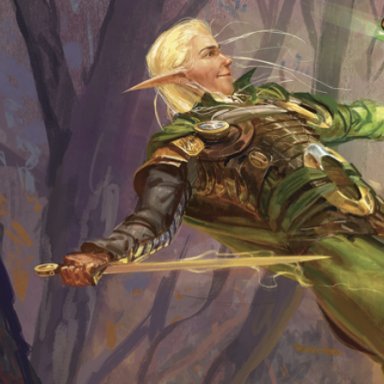
Randomly telling the players through their characters that the elves are different here will be met with blank stares or questions about why it matters. Or worse, the dreaded, “So what?”

Pit the PCs against one of your special and different elves and suddenly exactly how they are different really matters.
 

log in or register to remove this ad

Last time we talked about this ("how do you get your players to care about your setting" was the thread I think), I said that having your players co-create a bunch of the details is the only thing that I've seen really work. <snip>

We're setting up the end of the campaign right now, and each player has highlighted a number of burning questions they have about the lore and the world they'd really like to have answered. 9/9 players I've had across two instances of the game have said that learning more about this world their characters inhabit is one of the top reasons they are excited to show up to a new session each time.
I think zakael19 is on the right track in the sense that the thing that makes setting lore matter to the players... is the players. It could be by direct investment of effort through shared world-building as in zakael19's post. But it could also just be attitudinal whether directly invested or not. If the players WANT to know more about it, then the lore will matter.

If the players are neither invested nor have the attitude to want to know more, nothing in the lore itself - whether shallow or deep as the Marianas Trench - will really matter to them.
 

I think zakael19 is on the right track in the sense that the thing that makes setting lore matter to the players... is the players. It could be by direct investment of effort through shared world-building as in zakael19's post. But it could also just be attitudinal whether directly invested or not. If the players WANT to know more about it, then the lore will matter.

If the players are neither invested nor have the attitude to want to know more, nothing in the lore itself - whether shallow or deep as the Marianas Trench - will really matter to them.

Yeah, I've definitely heard people say they were super interested in some aspect of this world or that one, I just haven't seen it in play! Hell even the CR fans I had playing Call of the Netherdeep were interested in Exandria because of their fondness for the media; but not super interested in most of the lore of the module. When there was a callout to some beloved character or whatever, they were like "oooh, it's so and so from episode whatever the heck!"
 

To circle back around to lore broadly, I am a "shallow lore" person -- both in settings I prefer to play in, and when I create worlds for my games. Deep world building just doesn't interest me -- but I do like flavor. Star Wars is my Platonic Ideal for this kind of lore and world building. So much of it is just stuff thrown at the wall with no real concern over how it all ties together. And that is totally fine with me.
 
Last edited:

It did for me. I cant speak for the OP. My view is that Paizo was able to suit both the generic and unique setting lore.

I dont know, I got a lot of value out of it. I'd need to better understand why you didnt to answer beyond that.

I found the opposite to be true. Golarion is able to both encompass the generic same ol Tolkien stuff, while also giving some pretty unique and expanded ideas. It serves many kinds of players.

For me (trying to explain my own insanity here, lol) , and this is just my own thoughts of why Forgotten Realms/Golarion very much made matters worse....

Let's look at the Tengu.

There is absolutely nothing about their lore that could not be swapped out with humans from country X. The fact they lay eggs, and have feathers = absolutely of no consequence or value to their 1000+ years of culture, evolution, and purpose in the world.

You can remove this race entirely and nothing of the world even notices.

So the game has to become more generic, such that Tengu can live amongst humans, fit into human architecture, and have no function aside from whatever other people are up to.

This incredible lack of limitation or defining purpose is the very thing I rail against in fantasy.

They just don't matter.

And adding a hundred new things that don't matter is not adding depth or fun to a game. to me.

....

Entire ecosystems are build around how birds seed habitats, how eggs create predatory chains, how feathers determine species practices and habits - all surface things that underlay what should come next but never does for fantasy = ok but why?

Why Tengu? because we want humans decorated to look like birds, that's why. :P
 

And it got me thinking---what qualities must lore possess to rise to the level of "actually mattering" in play?
Or perhaps put another way, what qualities must players perceive about lore for them to consider it as "actually mattering" in play?

So, I’m getting ready to play Shadow of the Weird Wizard and have been reading the first chapter which goes into the setting and gods a bit, and I’m really glad our DM is using the rules for a completely different campaign because if this were indicative of the actual campaign setting, I’d be bored to tears. As much as I like the system, a points of light setting with a largely absent Weird Wizard who created everything bad and a pantheon with a god of death named “Lord Death”, and a god of the sun named “Mother Sun” or a god of the seas named “Oceanus” screams generic to me to the point where I wouldn’t pay attention as a player. I’ve seen this a few times now with some high profile games and settings.


My first thought when reading OP's post was this topic: D&D General - Wildly Diverse "Circus Troupe" Adventuring Parties

It does seem that a lot of the 'diverse' RPG races/species/ancestries fall into the Star Trek Next Generation thing of being little more then humans with slightly different skin tone or patterns and something glued on the nose bridge. And cultures that are very human like. At least ST-Original Series had a Horta. And the Horta had some unique abilities. Near immunity to phaser fire, moves through rock like humans through air and a different base chemical physiology. So not just a turtle with a spear. But would a modern RPG keep the things that make a Horta cool or turn it into a 'rock with a spear'.

Currently in two different games with 2 different systems. I am the only human in each. But in both, there is little difference between the cat person, the rat person, the other cat person, the robot(still needs fresh air apparently), yet another cat person, one each elf, another elf, and the human in each. Made fairly obvious when the robot failed a save vs poison gas. One of the cat folk is modeled after Puss in Boots and the player does a decent job of using the movies as a 'how to play the character' guide.(one example of lore matters somewhat, but character lore not setting lore.) All the rest are played as humans cosplaying as something else.

For most recent games, the setting lore that matters is stuff like:
Pirate setting in a city
Pirate setting on the ocean
Traveller exploration
Traveller accountants in space

And assume that most PCs are humans or humans wearing costumes.
 

Currently in two different games with 2 different systems. I am the only human in each. But in both, there is little difference between the cat person, the rat person, the other cat person, the robot(still needs fresh air apparently), yet another cat person, one each elf, another elf, and the human in each. Made fairly obvious when the robot failed a save vs poison gas. One of the cat folk is modeled after Puss in Boots and the player does a decent job of using the movies as a 'how to play the character' guide.(one example of lore matters somewhat, but character lore not setting lore.) All the rest are played as humans cosplaying as something else.

This too, kinda going along @RenleyRenfield 's point WRT Tengu.

I'll contrast this with a Forged in the Dark game I've run called Songs for the Dusk. It has 3 types of "people" in its post-post apocalyptic setting (heavy Destiny 2 vibes with some other stuff mixed in): Radiants (humans), Synthetics, and Adapted. For the latter, think your cat-people, dolphin splices, etc - and you can make that count with mechanics and lore. We had an adapted cat-person in my game and we made sure to play up what that would mean: the ability to see in very low light, use their skills to hear things where the other humans could not, define why they were made. Same thing for the lizard-splice, with harsh-weather survival traits, and a people's history of being engineered to survive the blasted environment in one of the nations. This had direct effects around how he could take punishment, but also how he stood out and such. Finally, we had a synthetic lifeform and we really delved into their place in this world + how they related to non-synths + ensured that being you know, not biological mattered.
 

Part of the problem with races other than human is that there are no players that are non-human. We cannot really understand the mind and customs of elves and dwarves, let along a plant or frog. We might take what we read and see on elves and mix it with Spock and add a few funny things to make my elf a bit different. But then all the PC elves are now different and add that 2024 dnd where now my elf can be raised by frog people so it is really different than a generic elf in the world.

The non-Tolkien or 1e races might not have enough lore or movies and stereotypes on them to make them anything other than bland. Some players add some cool ideas but others/most might just play them as a human and have cool powers.

Some worlds and DMs want to make a new cool thing and change existing lore. Dark Sun with halfling cannibals instead of country Englishfolk and such. Does it make it cool or add shock? Could the maker just make a new race to fit there? Whatever. I mean it could just be an off shoot and one group of that race, but it gets all the attention.
 

Remove ads

Top